Dimensions: height 181 mm, width 120 mm
Copyright: Rijks Museum: Open Domain
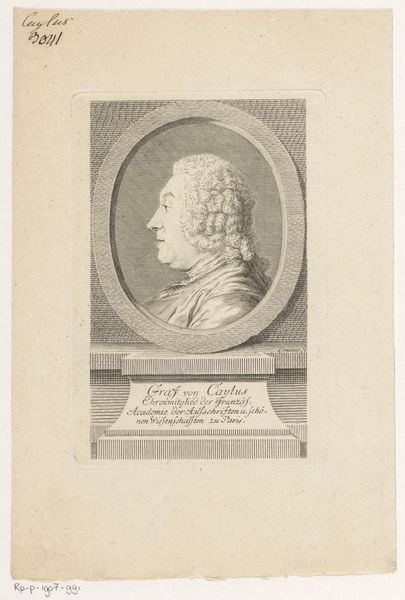
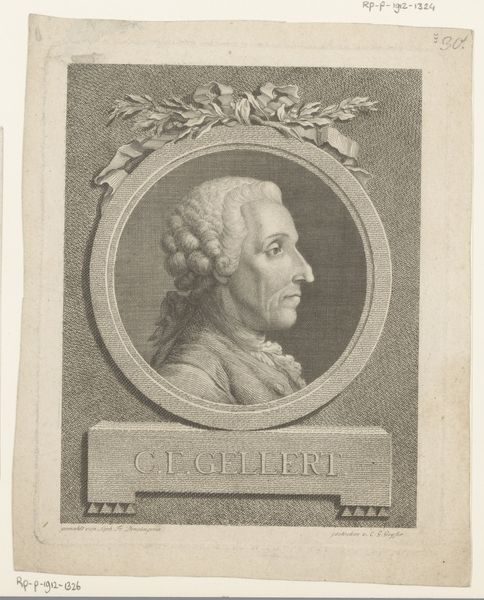
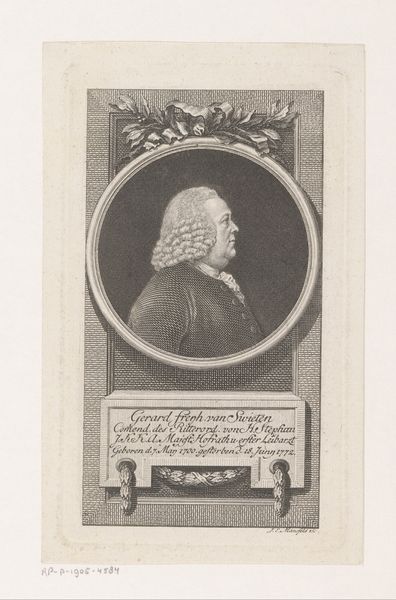
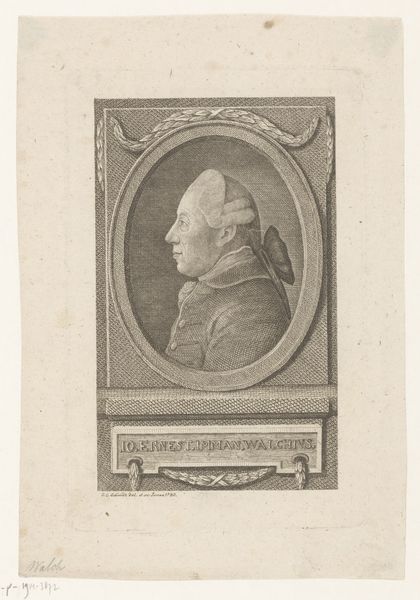
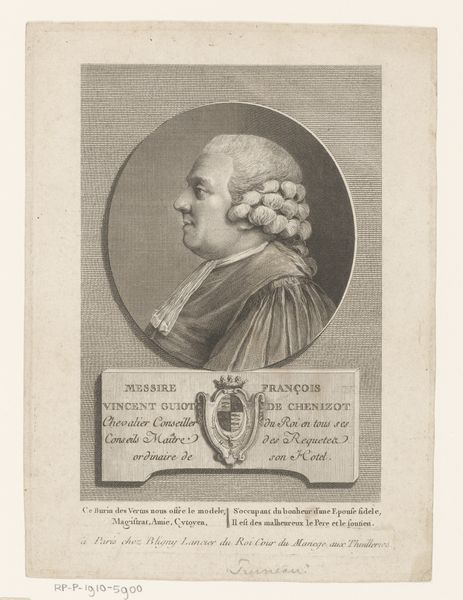
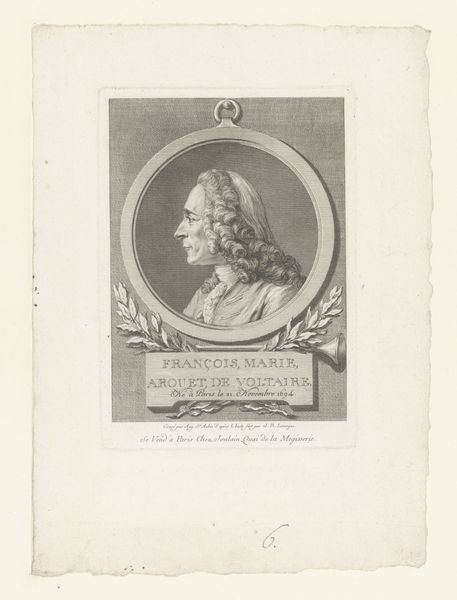
Editor: This is a line engraving from 1780 by Daniel Nikolaus Chodowiecki, titled *Portret van Friedrich Germanus Lüdke*. The detail is incredible. What jumps out to me is the way it uses line to capture both a likeness and a sense of status. How do you interpret this work? Curator: Well, portraits are always fascinating windows into the values of a culture. The elaborate wig and formal attire speak to Lüdke’s social standing, of course. But consider the profile view, often associated with classical antiquity and ideals of reason. What emotions are evoked for you when you study the ribbons and the figure above it, positioned atop the frame that encapsulates Lüdke's portrait? Editor: I hadn’t really noticed those details specifically, the figure reminds me of Cupid for some reason, I would have to guess that ribbons and frame represents his family, their memory is kept together in an embracing form. Why did the artist frame him this way, placing that little sculpture atop the figure? Curator: Yes, the framing is intentional, symbolic. The oval portrait is reminiscent of a cameo, an object meant to preserve and idealize a specific individual. Above the portrait, that sculptural adornment might also relate to virtue or accomplishment associated with the sitter, presented as worthy of remembrance for generations to come. Does it speak to any historical ideals, perhaps Enlightenment values? Editor: That makes sense. The commitment to realism, balanced with a kind of idealization through the classical profile and the commemorative frame... It’s a snapshot of a particular moment and set of beliefs. Curator: Precisely. And these visual languages evolve, are repurposed, but always carry echoes of the past. It is not just about what you see, but how it is encoded.
Comments
No comments
Be the first to comment and join the conversation on the ultimate creative platform.
 Collect
 React
React Comment
More like this