Pair of Vambraces (Arm Defenses) from a Costume Armor 1500 - 1550


metal, sculpture
medieval
metal
sculpture
sculpture
armor
arm
Dimensions: As mounted with top lames (29.158.363a, b), right: H. 24 3/4 in. (62.9 cm); W. 14 1/8 in. (35.8 cm); D. 11 3/8 in. (29 cm); Wt. 7 lb. 4.95 oz. (3315 g); left: H. 25 1/8 in. (64 cm); W. 12 1/4 in. (31 cm); D. 13 in. (33.2 cm); Wt. 7 lb. 2.45 oz. (3244 g)
Copyright: Public Domain
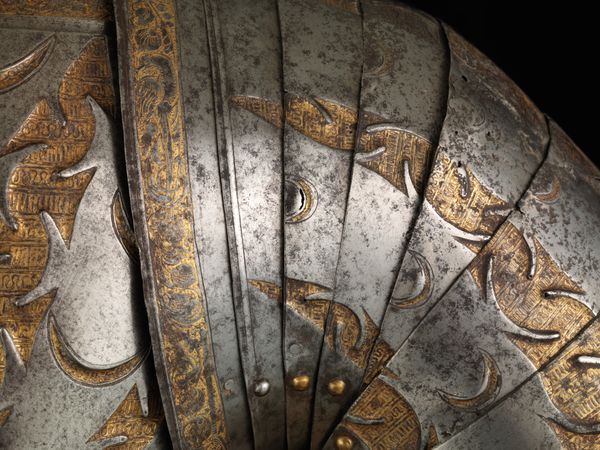
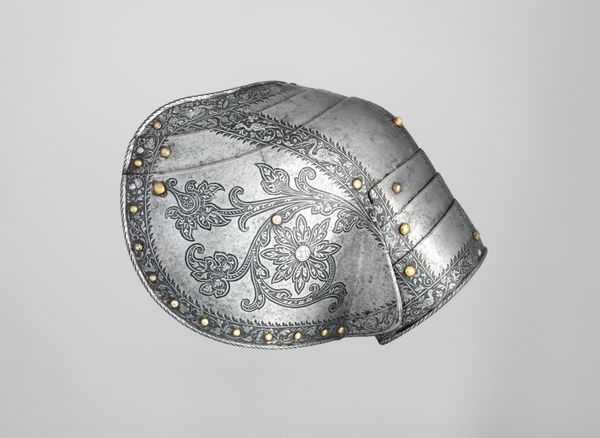
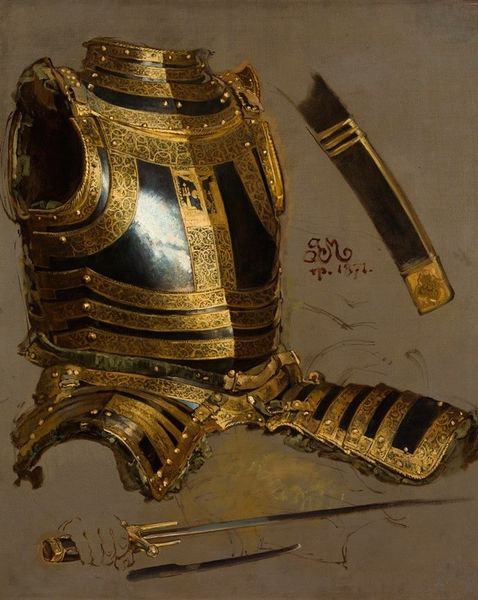
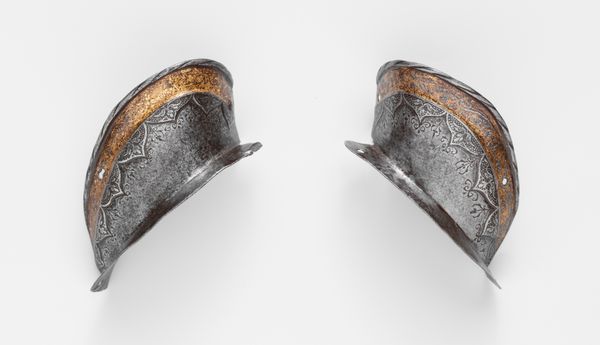
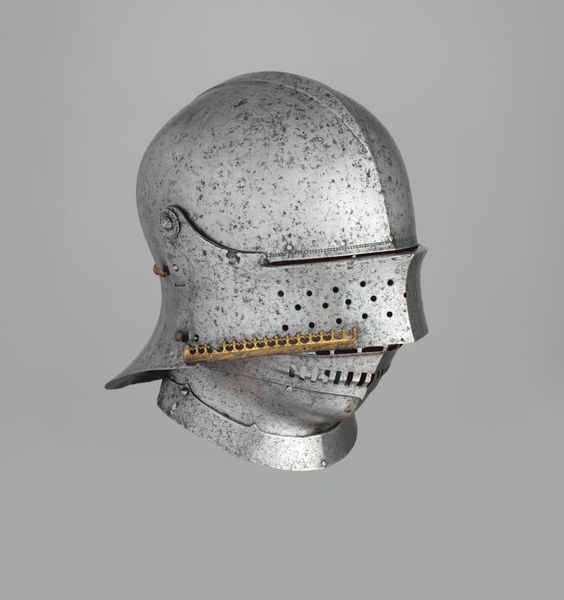
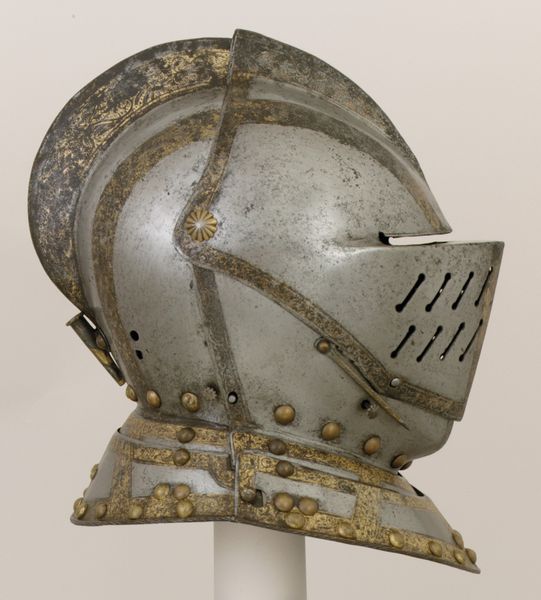
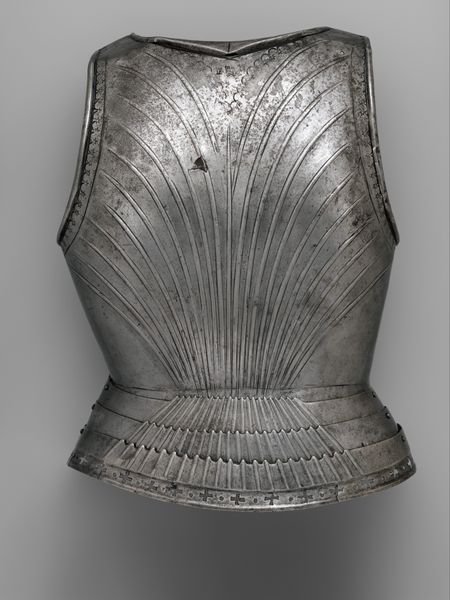
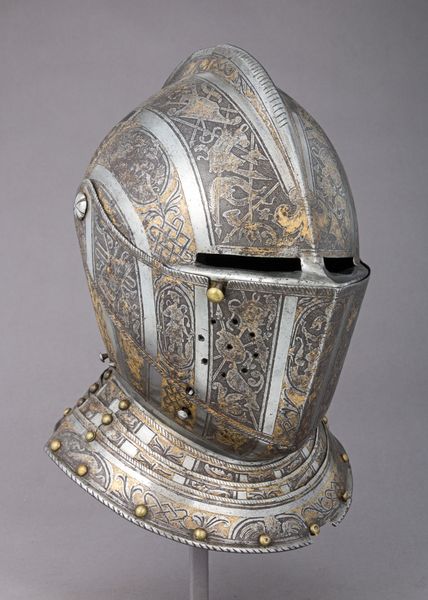
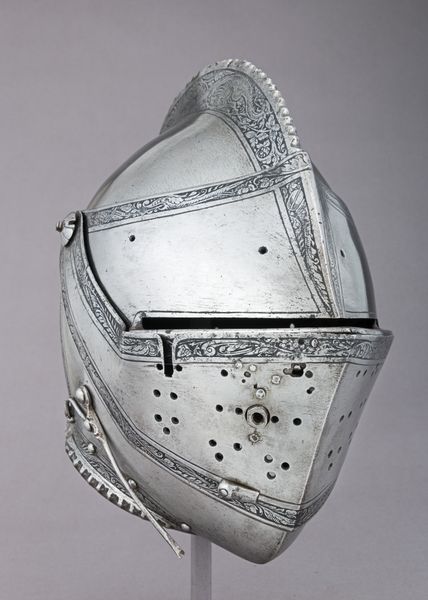
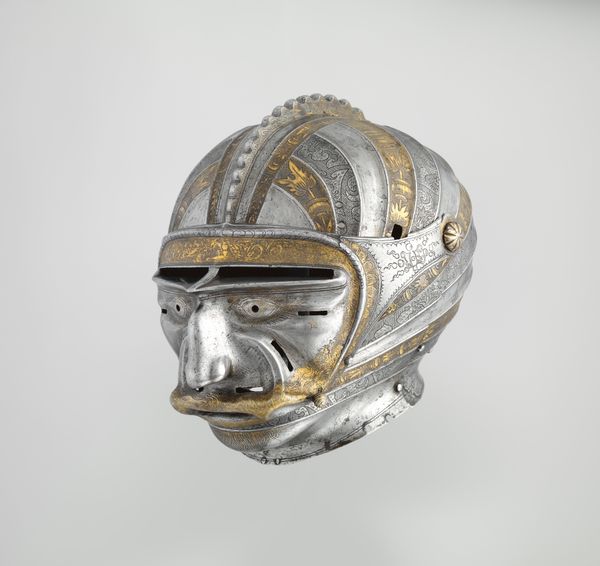
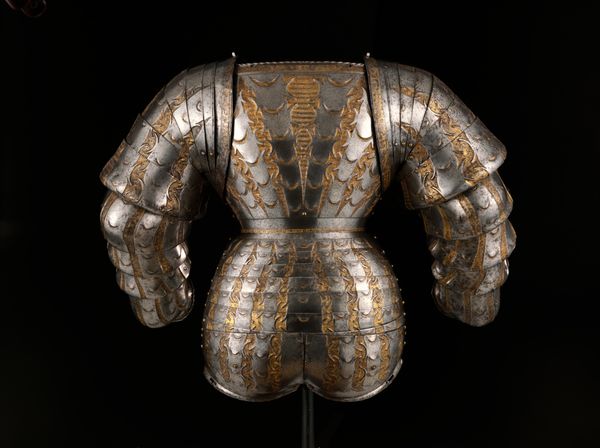
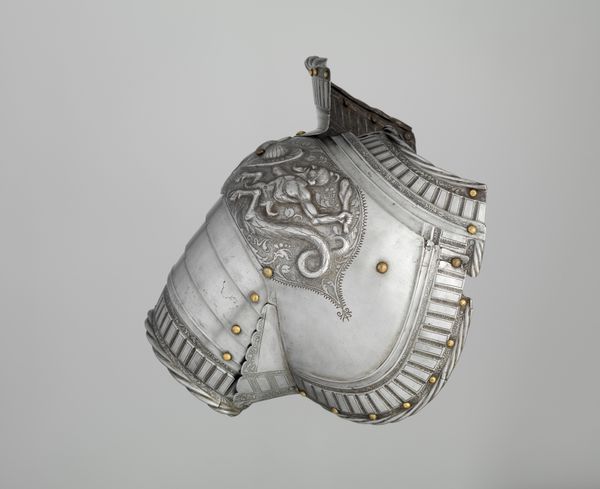
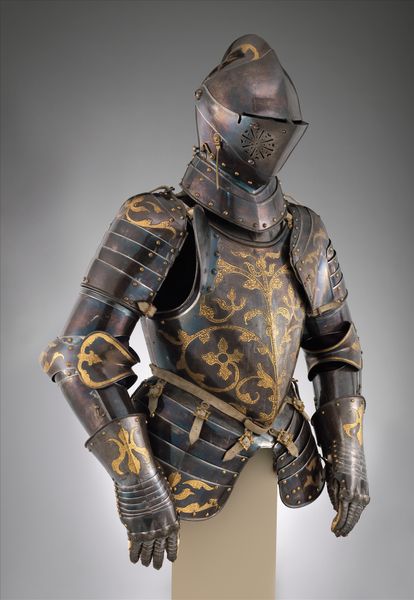
Kolman Helmschmid crafted this pair of vambraces, or arm defenses, as part of a costume armor in the early 16th century. Helmschmid was a member of a family of armorers to the Holy Roman Emperors, catering to the elite echelons of society. These vambraces, beyond their functional purpose, offer insights into the era's societal stratification and the performative aspects of power. Costume armors such as this one often incorporated elaborate designs and expensive materials. These armors served not just as protection, but as symbols of wealth, status, and cultural identity. They speak to the ideals of masculinity and nobility prevalent in the Renaissance. The gilded crescent moons and intricate patterns elevate this armor to an art form, reflecting the patron's taste and aspirations. What stories might this armor tell, if it could speak of the tournaments, processions, and ceremonies where it was once worn? It reminds us that even the most utilitarian objects can carry profound cultural meaning and express deep-seated human desires for recognition and belonging.
Comments
No comments
Be the first to comment and join the conversation on the ultimate creative platform.
 React
React Comment