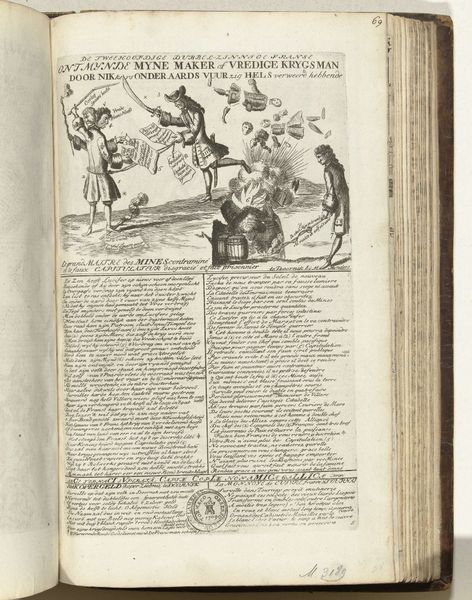
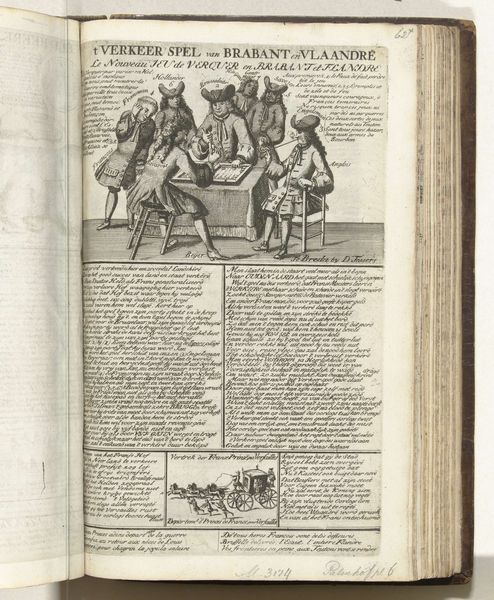
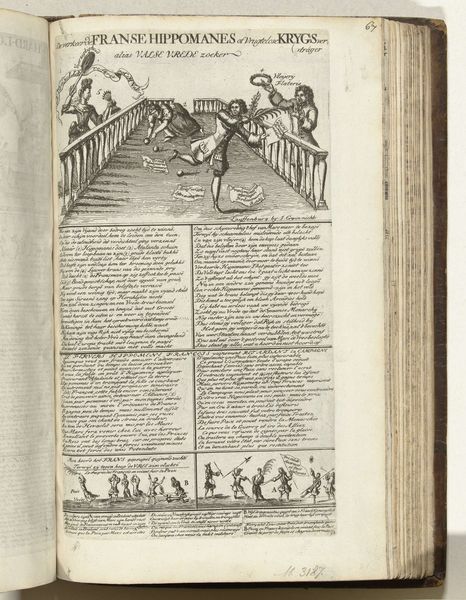
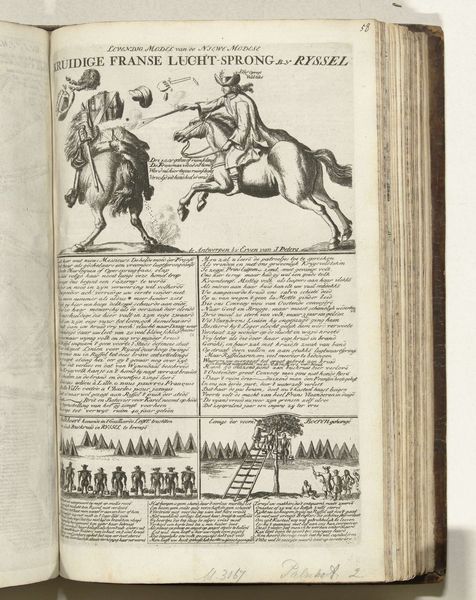
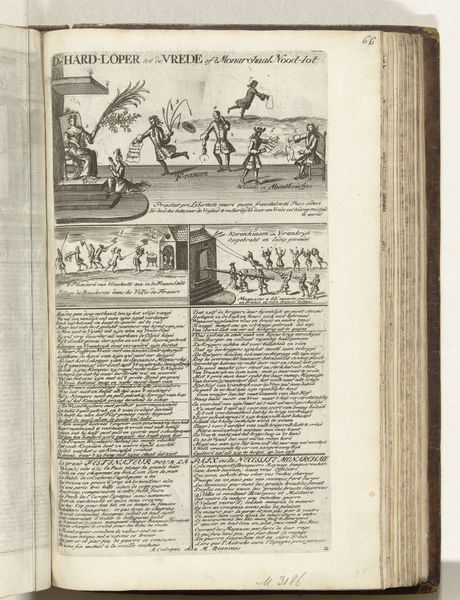
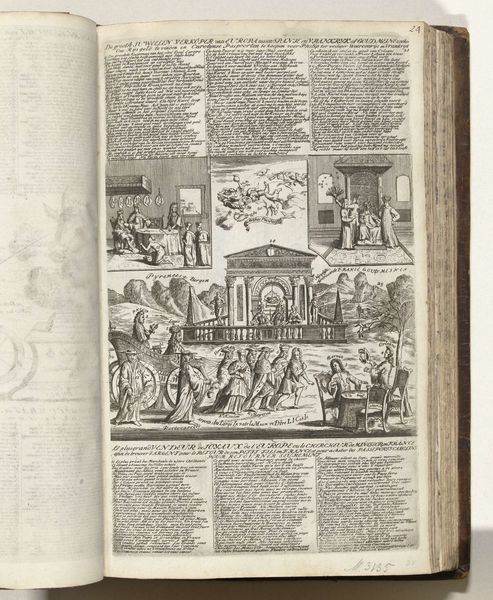
Allegorie op het mislukken van de vredesonderhandelingen te Geertruidenberg, 1710 1710
0:00
0:00

abrahamallard
Rijksmuseum
print, engraving
#
allegory
#
baroque
# print
#
cityscape
#
history-painting
#
engraving
#
watercolor
Dimensions: height 315 mm, width 200 mm
Copyright: Rijks Museum: Open Domain
Editor: So, this engraving, "Allegorie op het mislukken van de vredesonderhandelingen te Geertruidenberg, 1710" by Abraham Allard, feels dense, like there's a lot happening. What do you see when you look at it? Curator: I see a powerful visual statement about the failures of diplomacy in a time rife with conflict. This image uses allegory to comment on the futility of peace talks, situated within a specific historical context: the War of the Spanish Succession. Who benefits, do you think, when peace negotiations fail? Editor: I guess... the powers that profit from war? The elites? Is that who's being criticized here? Curator: Precisely. Note the placement of "Versailles" beneath the depiction of failed talks. Consider what Versailles represented in 1710 - absolutist power, centralized authority, and Louis XIV's expansionist ambitions. How might Allard be positioning the French monarchy within this allegory? Editor: Almost like they're the obstacle to real peace? The allegory on the carriage seems to depict peace as fragile and ultimately unattainable… Is that a comment on power structures? Curator: Absolutely. Think about whose stories are often left out of these narratives. How are women, commoners, or colonized people implicated in the "peace" that's being negotiated – or not negotiated – in settings like this? Where do their interests lie? Are their voices present in this discussion? Editor: I hadn't considered that, but it completely shifts my perspective. The failures weren’t just political; they represented deeper social inequalities. I am left with much to contemplate, especially who wins and who loses when peace is bargained between empires. Curator: Indeed. It is about broadening the historical analysis by centering on the experience and realities of all people affected by such discussions.
Comments
No comments
Be the first to comment and join the conversation on the ultimate creative platform.
 Collect
 React
React Comment
More like this