c. 1700
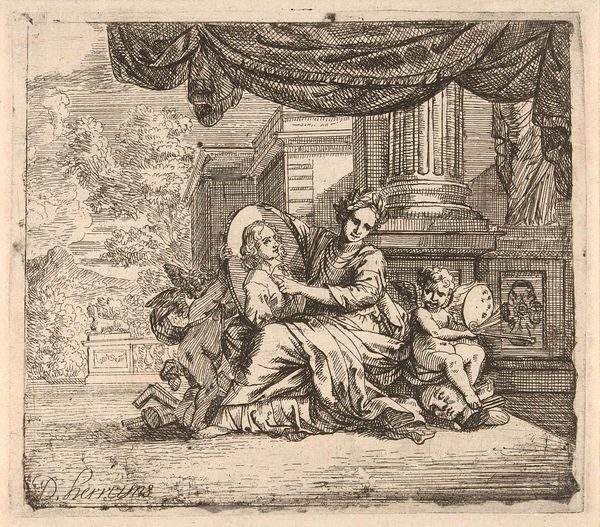
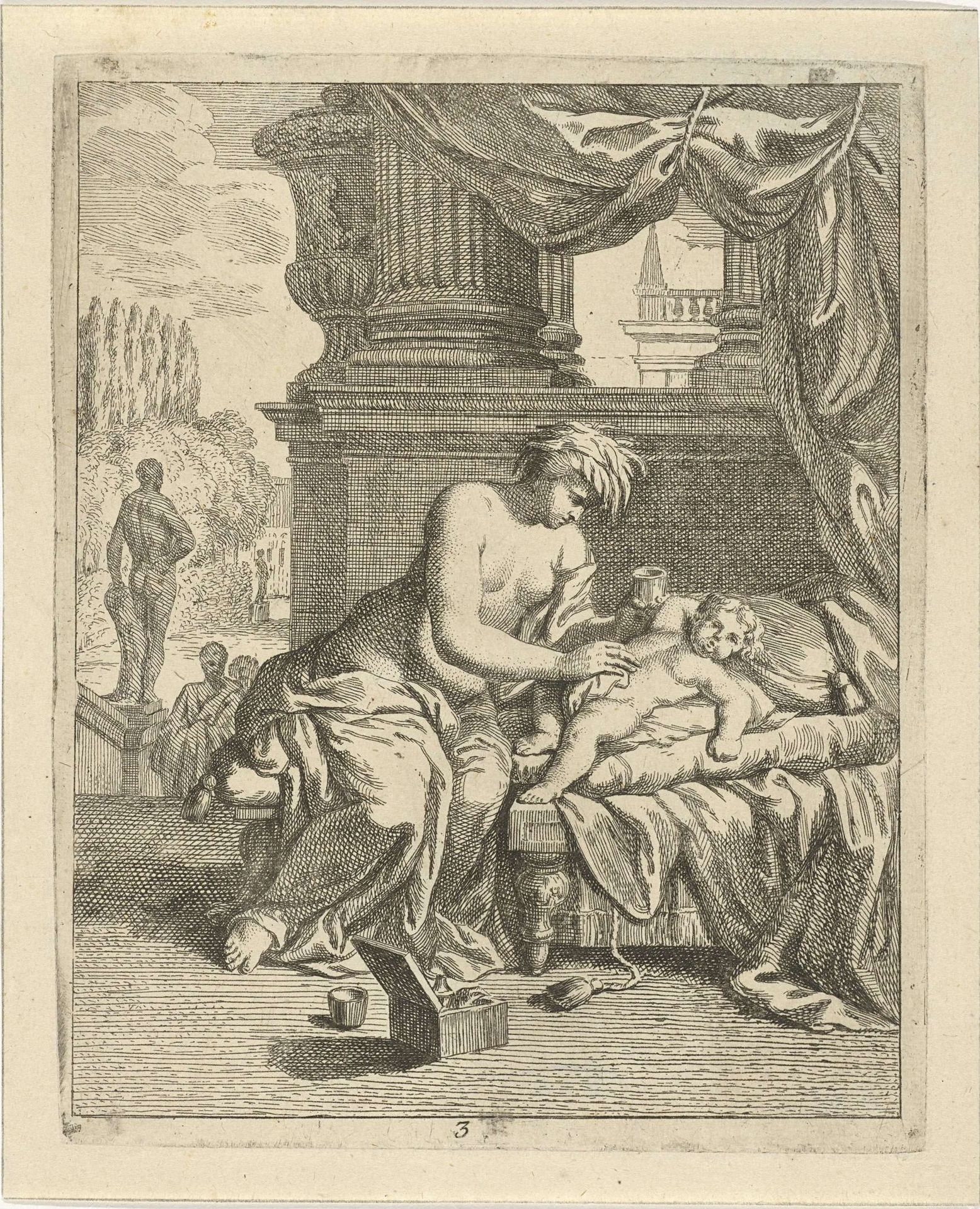
Thetis smeert Achilles in met ambrosia

Listen to curator's interpretation
Curatorial notes
J. Alexander Janssens rendered this depiction of "Thetis Anointing Achilles with Ambrosia" through etching. Thetis is depicted as she treats her son, Achilles, with ambrosia, the food of the gods. The ritual of anointing underscores the desire to immortalize her son and the impossible dream of shielding loved ones from mortality. We see parallels to this motif of divine protection in countless other works of art, in which a mother's touch holds transformative powers. Think of the Christian iconography of Mary, whose mantle offers solace and protection from worldly suffering. Consider how the symbol of maternal care has evolved through time, reflecting a deep, psychological yearning for safety and permanence, revealing itself across cultures. Here, the emotional intensity of a mother's love speaks to our subconscious fears and hopes, forging a link across time and history. The act of anointing, therefore, is a non-linear, cyclical progression, resurfacing, evolving, and accruing novel interpretations through disparate historical milieus.