drawing, print, engraving
#
drawing
#
narrative-art
#
pen drawing
# print
#
figuration
#
11_renaissance
#
genre-painting
#
northern-renaissance
#
engraving
Dimensions: width 287 mm, height 218 mm
Copyright: Rijks Museum: Open Domain
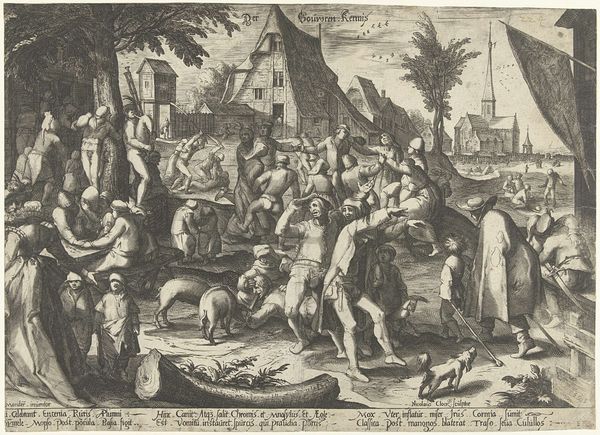
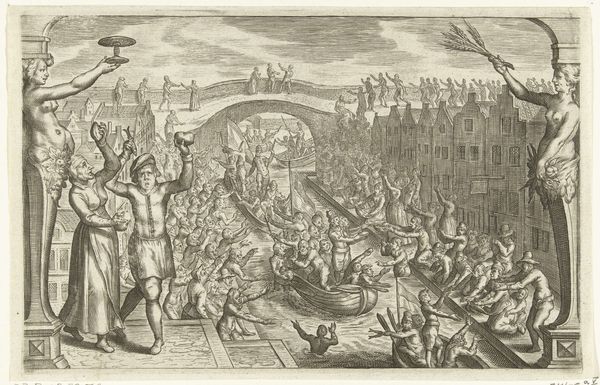
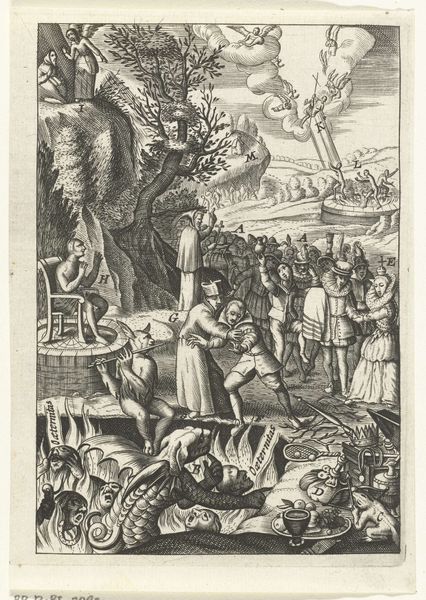
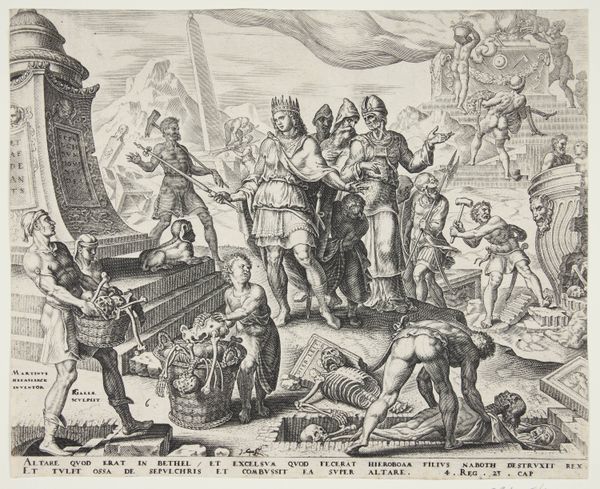
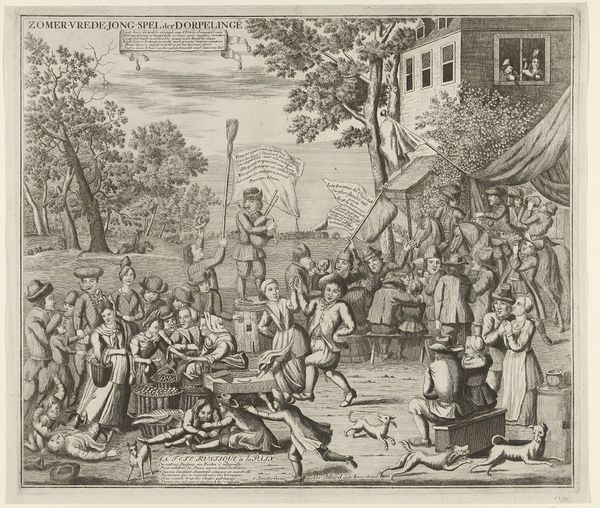
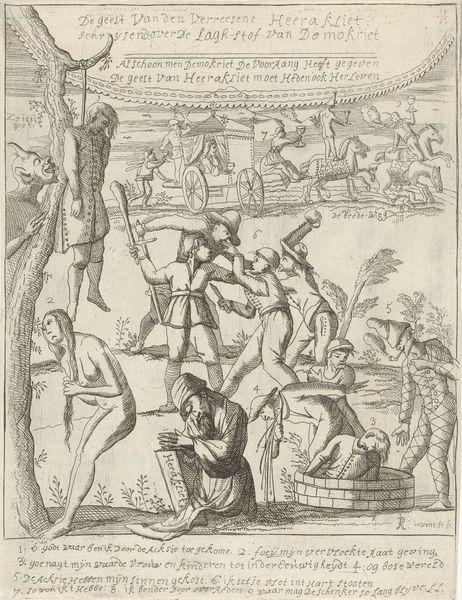
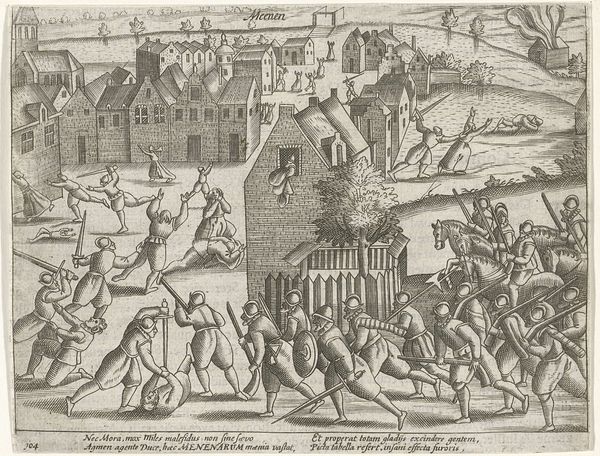
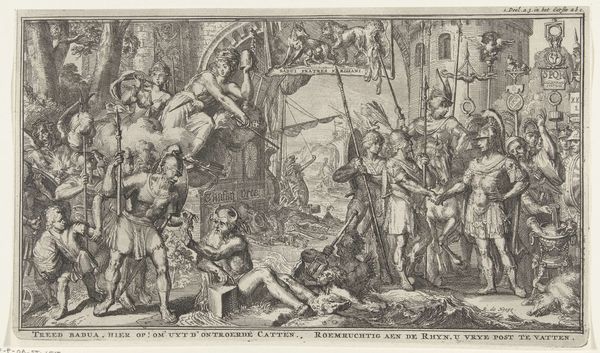
Editor: This is "Tobbespel," a pen drawing and engraving by Pieter van der Borcht I, sometime between 1545 and 1608. It’s a bustling scene, full of activity... kind of chaotic actually. I’m curious about the monkey-like figures. What’s your take on this piece? Curator: This engraving offers a fascinating glimpse into the socio-political attitudes of the Northern Renaissance. Look at how these monkey-like figures mimic human behavior. This was a common satirical device used to critique social norms. What do you notice about the setting itself? Editor: It looks like some kind of festival or public event. There are people in trees, some are operating a water pump, and others are… naked? Curator: Exactly! Public shaming or "tobbespel" like this was often a community event. Consider who's likely being targeted here. Is it the elite or some other social class facing societal judgement? Editor: The clothes some of them are wearing appear of a higher social class. Does the "game" symbolize something about social control, then? Curator: Precisely. These kinds of images were powerful tools for shaping public opinion, often serving as visual reminders of expected behavior and potential consequences of social transgression. Editor: So it’s not just a funny drawing of monkeys acting like humans, it’s actually making a political statement about class and societal expectations? Curator: In essence, yes. Prints like these circulated widely, contributing to the construction and reinforcement of social norms within their communities. Think of it as early social media! Editor: Wow, I had no idea there was so much historical context packed into a simple drawing. Thanks! Curator: My pleasure. It is by understanding the broader cultural forces that influenced its creation, can we fully appreciate art's profound role in shaping history and its influence.
Comments
No comments
Be the first to comment and join the conversation on the ultimate creative platform.
 Collect
 React
React Comment
More like this