About this artwork
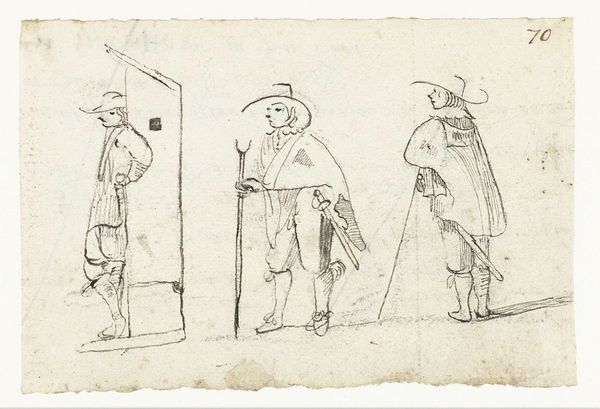
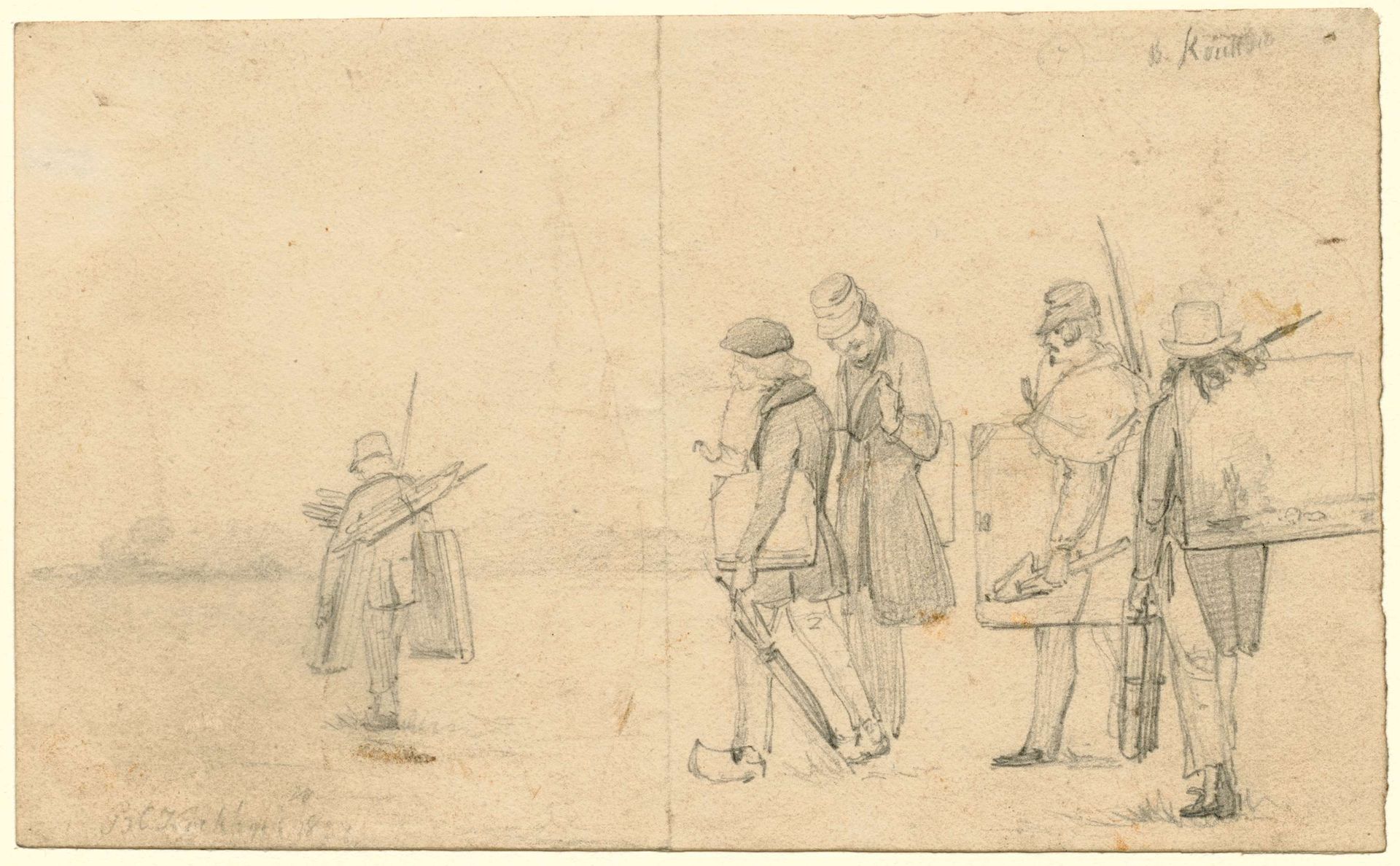
Barend Cornelis Koekkoek made this pencil drawing, titled 'Four painters (the Koekkoek brothers?) in the landscape', in the 19th century. The artist has captured a group of figures venturing out to paint ‘en plein air’, sketching directly from nature. The materiality is modest - graphite on paper - but the result is evocative. Koekkoek masterfully uses the pencil to capture the effects of light and atmosphere. This drawing provides a glimpse into the working methods of landscape painters in the 1800s. Each figure carries a box holding his materials - canvas, brushes, and pigments - all the tools required to translate the experience of the landscape onto paper. The work underscores the importance of direct observation and engagement with the environment. By focusing on the materials, the artist invites us to consider the labor and the act of art-making itself.
Vier schilders (de gebroeders Koekkoek?) begeven zich in het landschap
1813 - 1862

Barend Cornelis Koekkoek
1803 - 1862Location
RijksmuseumArtwork details
- Medium
- drawing, pencil
- Dimensions
- height 143 mm, width 234 mm
- Location
- Rijksmuseum
- Copyright
- Rijks Museum: Open Domain
Tags
Comments
Share your thoughts
About this artwork
Barend Cornelis Koekkoek made this pencil drawing, titled 'Four painters (the Koekkoek brothers?) in the landscape', in the 19th century. The artist has captured a group of figures venturing out to paint ‘en plein air’, sketching directly from nature. The materiality is modest - graphite on paper - but the result is evocative. Koekkoek masterfully uses the pencil to capture the effects of light and atmosphere. This drawing provides a glimpse into the working methods of landscape painters in the 1800s. Each figure carries a box holding his materials - canvas, brushes, and pigments - all the tools required to translate the experience of the landscape onto paper. The work underscores the importance of direct observation and engagement with the environment. By focusing on the materials, the artist invites us to consider the labor and the act of art-making itself.
Comments
Share your thoughts