painting, oil-paint
#
portrait
#
painting
#
impressionism
#
oil-paint
#
figuration
#
oil painting
#
genre-painting
#
lady
#
sitting
#
portrait art
#
fine art portrait
#
realism
Dimensions: 74 x 61 cm
Copyright: Public domain
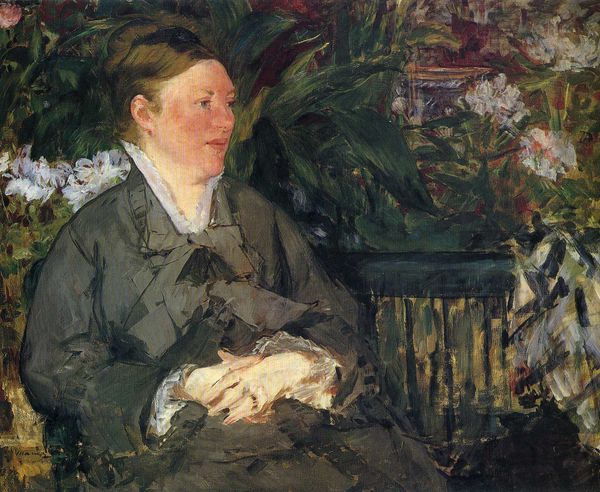
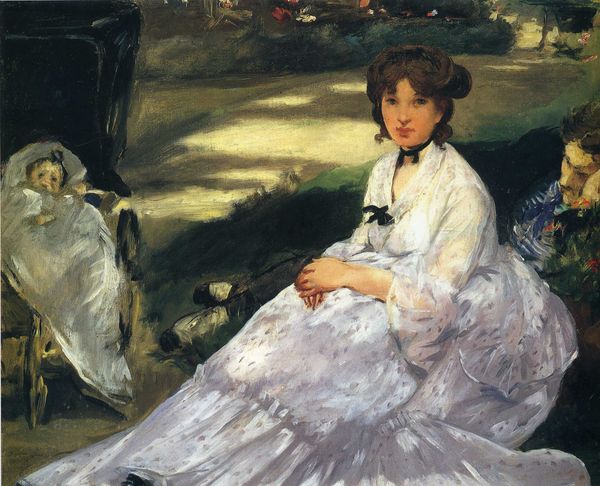
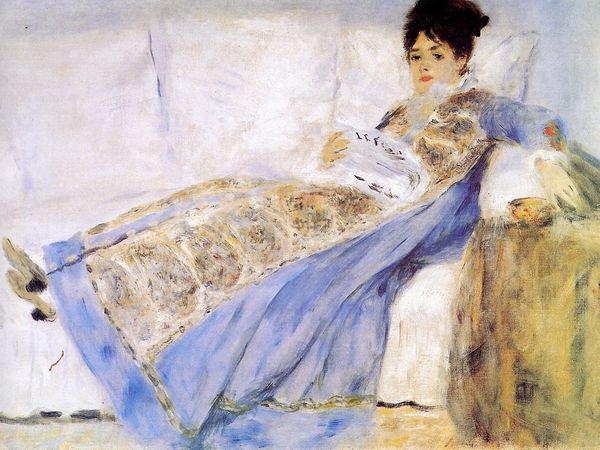
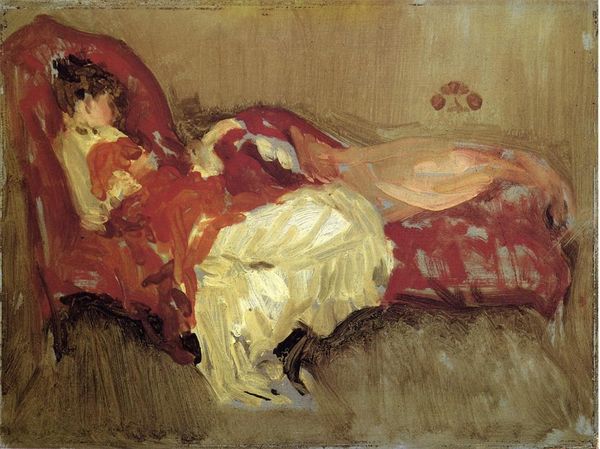
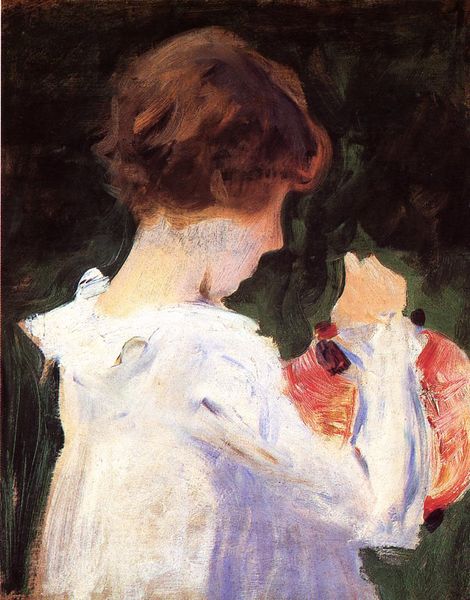
Curator: Let’s turn our attention to Édouard Manet's "The Reading," painted in 1869. It’s currently held at the Musée d'Orsay. What strikes you most about it? Editor: The paint itself. Look how thickly it's applied in some areas, creating texture. The woman's dress, especially, has a real materiality to it. The process is so evident! Curator: Indeed, but think about the cultural positioning. The subjects are Manet's wife, Suzanne Leenhoff, and son, Léon. Notice how Suzanne is the focal point, not merely in the domestic sphere but intellectually engaged, and then consider the social expectations placed on women during this time. Editor: And think about the labor that went into making that dress. Someone spent hours on that fabric, and Manet has immortalized it with these very deliberate brushstrokes. It raises questions about production and consumption. Curator: Absolutely. Also consider the symbolic weight given to female education. The simple act of reading becomes a radical act, a subversion of traditional patriarchal structures, reflecting emerging feminist ideologies. Editor: That makes me think of Manet's own labour. The application of the paint—how hurried, how deliberate—speaks volumes about the artist's own changing relationship with material. What did Impressionism as a movement mean in a historical moment dominated by production of so many new technologies? Curator: I think it speaks to the burgeoning fight for personal freedom and female empowerment in art and society. The painting represents a silent revolution brewing in late 19th-century Paris, hinting at women's expanding roles and agency within a transforming cultural landscape. Editor: I agree. When looking at Manet, one can easily forget that he, just like anyone else who paints, mixes paint with other stuff in order to create effects. These elements also contributed in crucial ways to what was happening at this particular moment. Curator: Thinking about "The Reading" through these intersecting lenses enriches our comprehension. It unveils Manet's participation in larger social narratives concerning identity, intellectual pursuits, and the dynamics of gender roles. Editor: For me, it's always exciting to delve into not only what the artist is depicting but how the means and process themselves make visible what previously went unnoticed. Curator: A valuable point that broadens our understanding of the artwork’s lasting resonance. Editor: Definitely. It brings it back down to earth, as well.
Comments
No comments
Be the first to comment and join the conversation on the ultimate creative platform.
 Collect
 React
React Comment
More like this