drawing, ink
#
portrait
#
drawing
#
ink drawing
#
narrative-art
#
baroque
#
dutch-golden-age
#
figuration
#
ink
#
genre-painting
Dimensions: height 126 mm, width 119 mm
Copyright: Rijks Museum: Open Domain
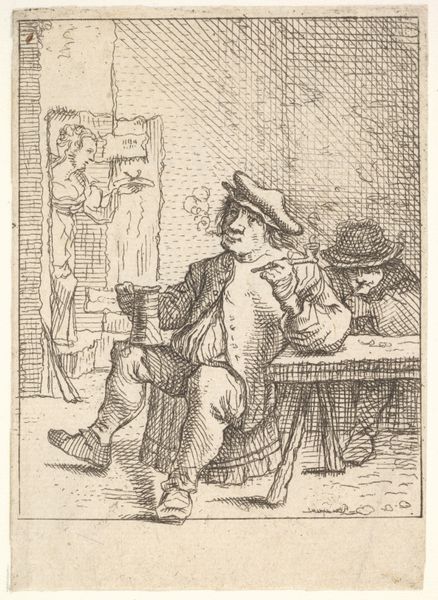
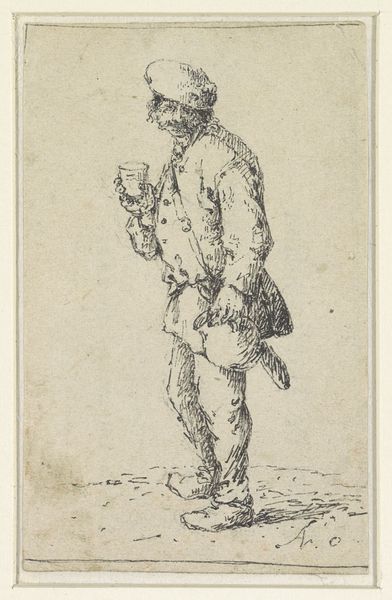
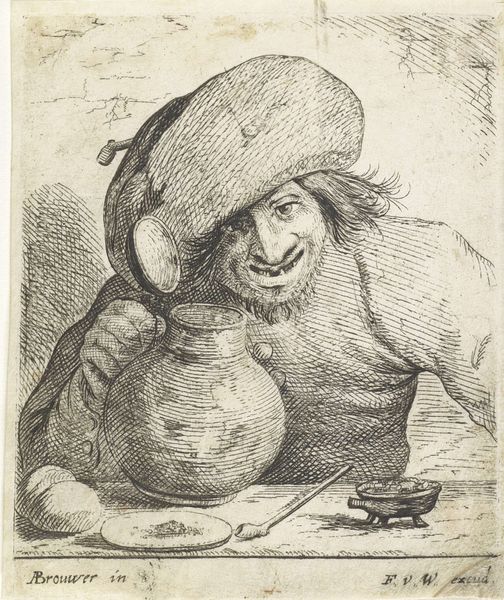
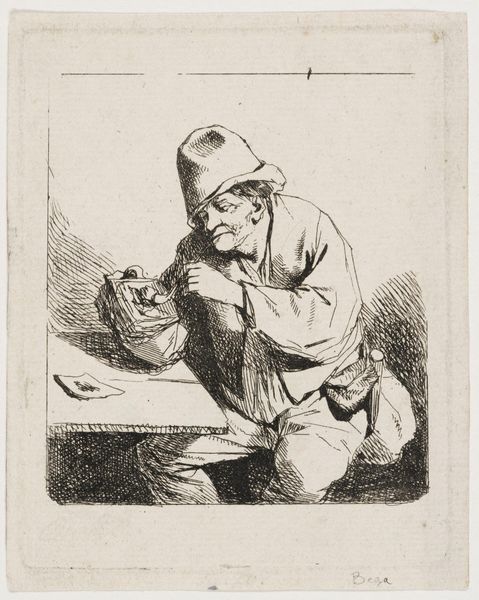
Editor: Here we have Cornelis Dusart’s “Drinkende man,” created in 1685 using ink. The man’s expression is striking; he’s clearly enjoying himself. What can you tell me about this piece? Curator: This work exemplifies how images can immortalize cultural memory. Look at how Dusart uses specific visual cues to depict this man – the raised glass, the open, laughing face, the unkempt attire. These aren’t just random details; they create an archetype of merriment that resonates across time. Editor: An archetype? Could you explain? Curator: Certainly! Think about it. What feeling does it evoke in you? It’s an image of revelry, but perhaps also a subtle caution about excess, no? These associations are tied to cultural and psychological responses to such depictions. What’s fascinating to me is how this “everyman” becomes a symbolic figure, embodying larger societal views on leisure, indulgence, even social class. Editor: So the ink drawing is more than just a happy man enjoying a drink? Curator: Exactly. The “Drinkende Man” taps into existing visual and emotional knowledge we have inherited through art, literature and even folklore. Consider the symbolic weight of holding up a drink versus the bowl on the table next to it. Editor: That’s really insightful. It makes me see how an image carries so much more meaning. Thanks! Curator: My pleasure! Analyzing symbols in this way illuminates so much about ourselves and the cultures that create them. It helps us see beyond the surface.
Comments
No comments
Be the first to comment and join the conversation on the ultimate creative platform.
 Collect
 React
React Comment
More like this