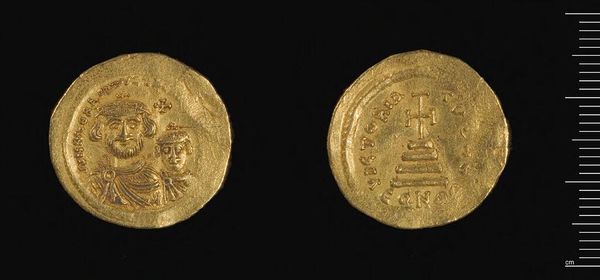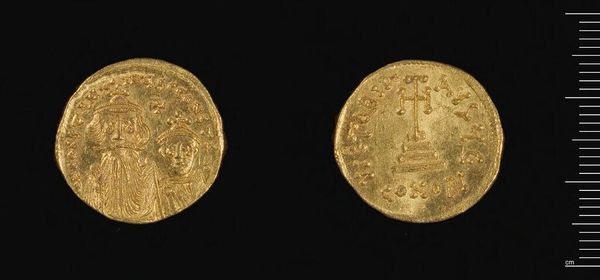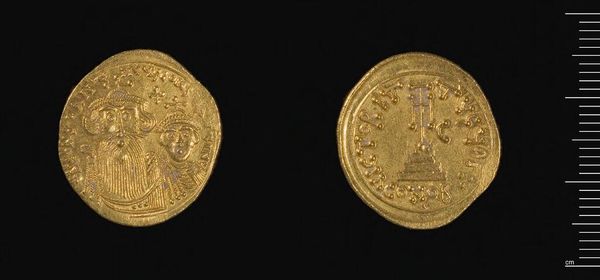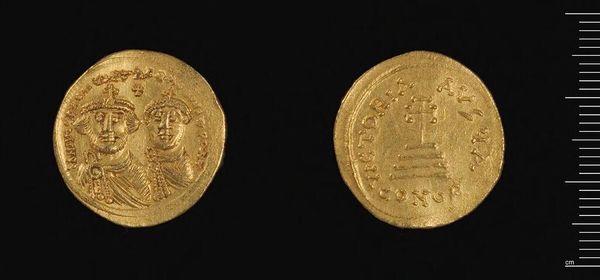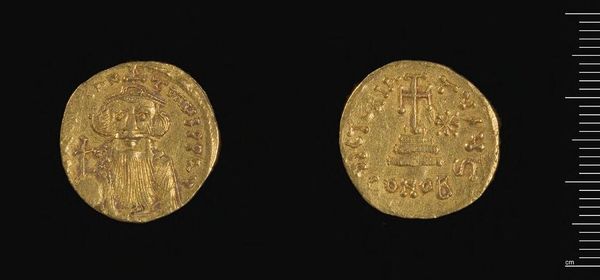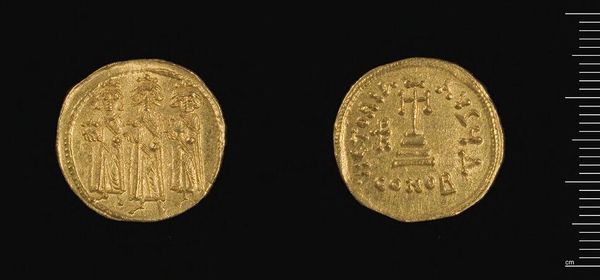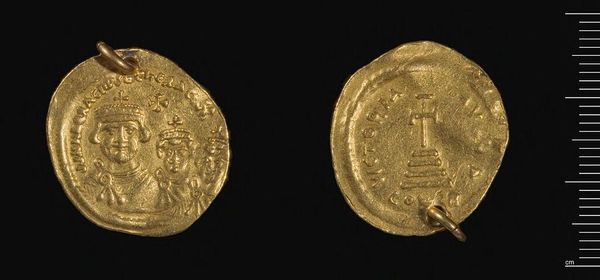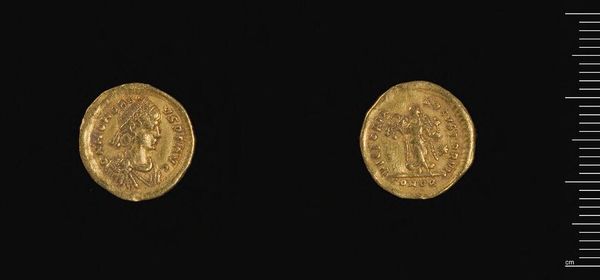
c. 613 - 618
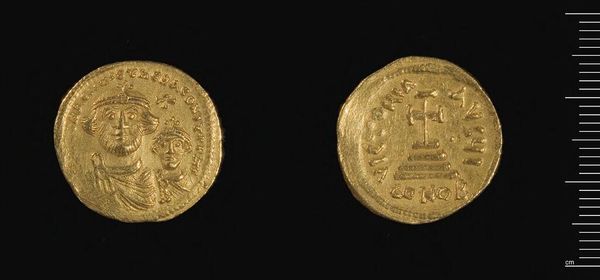
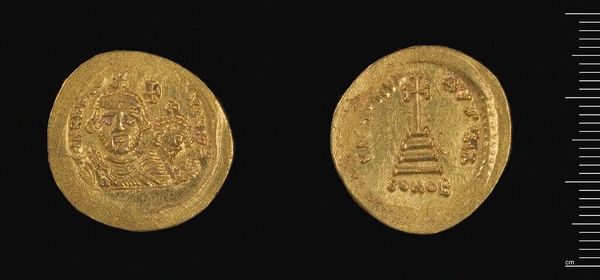
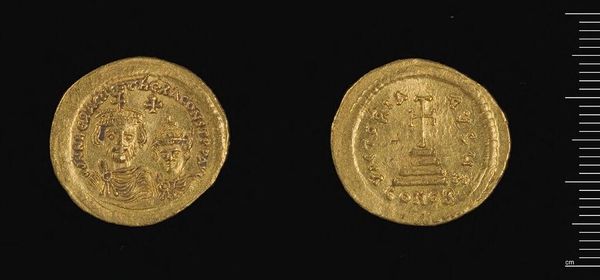
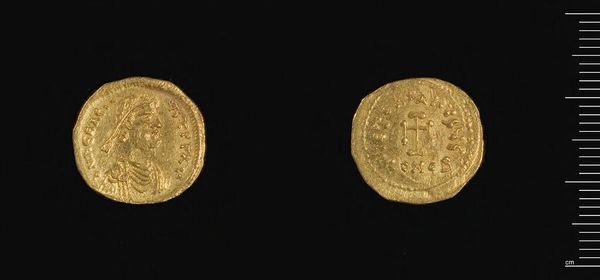
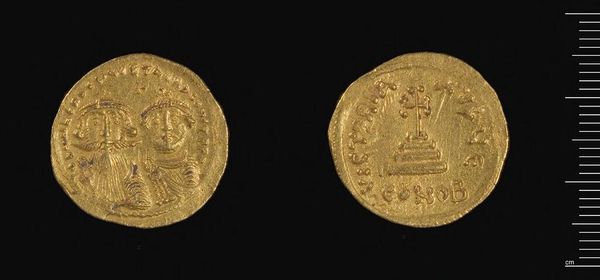
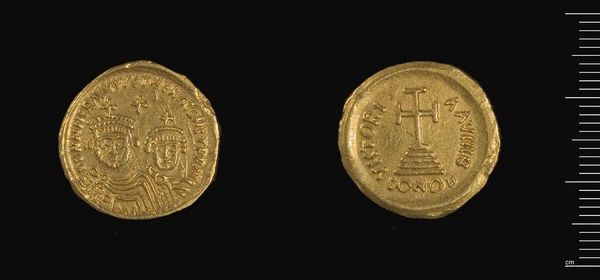
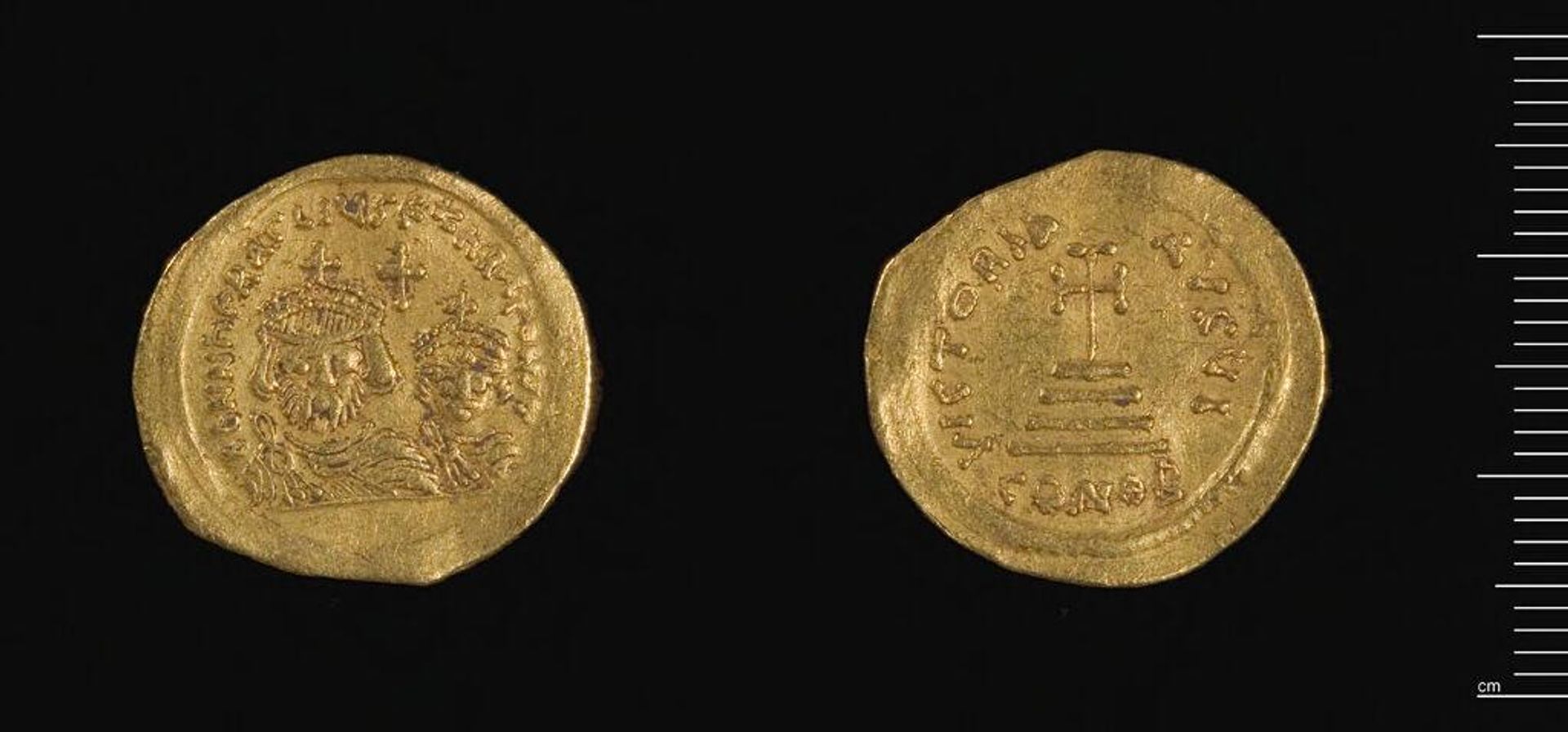
Coin of Herakleios

Listen to curator's interpretation
Curatorial notes
Curator: What strikes me immediately is the crisp detail on such a small object, a golden coin showing two crowned figures. Editor: Indeed. This is a "Coin of Herakleios", made by Abd-al-Malik of the Umayyads. Its existence speaks volumes about the complex political and cultural landscape of the time. Curator: How so? The figures appear to be Byzantine rulers. What were they doing on an Umayyad coin? Editor: The Umayyads initially adopted Byzantine coinage, maintaining its imagery to facilitate trade and maintain stability, while also asserting their own power. It’s about negotiating identity and authority in a world of shifting empires. Curator: So, even in mimicking, they were making a statement about their place in the world? Editor: Precisely. The imagery served a purpose, communicating power and legitimacy to a diverse population, until they later replaced the Byzantine images with Arabic script. Curator: A fascinating example of how even something as small as a coin carries profound political weight. Editor: It offers an insight into the visual language and the power structures of the past, and how those can influence the present.