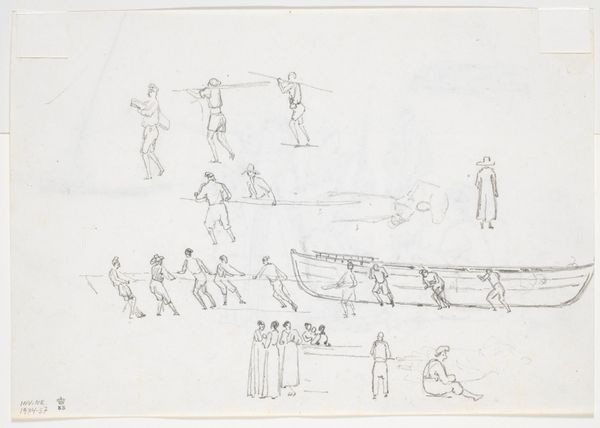
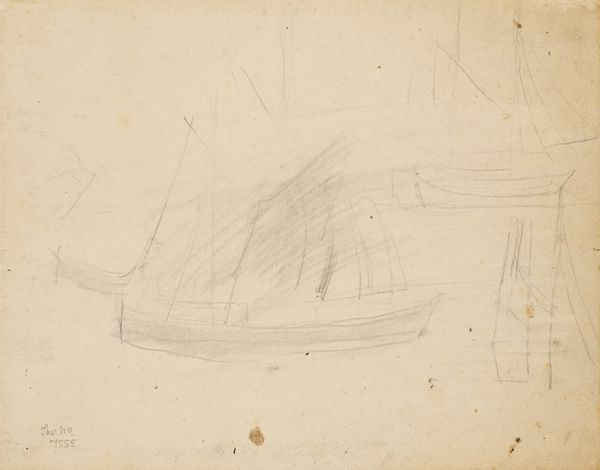
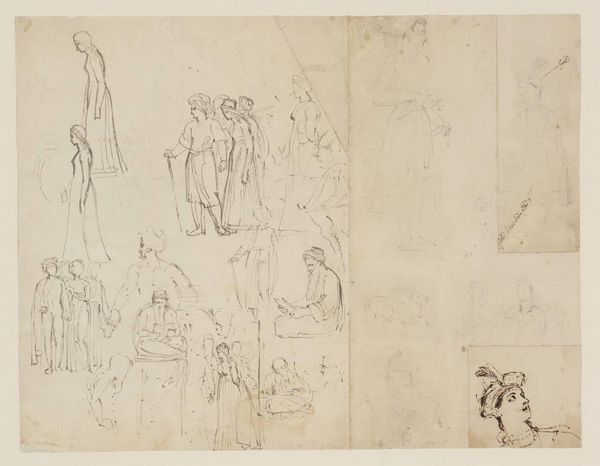
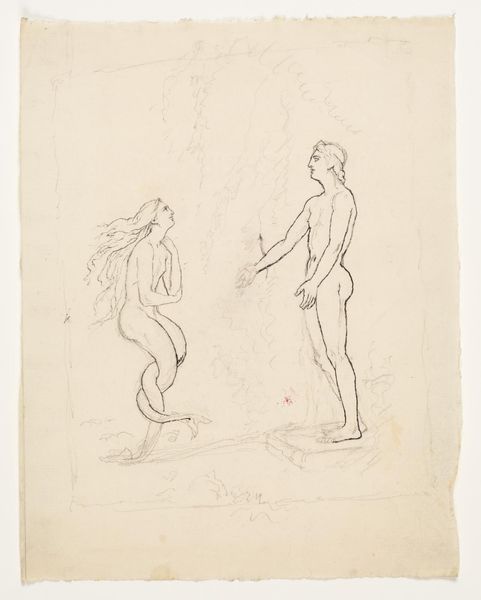
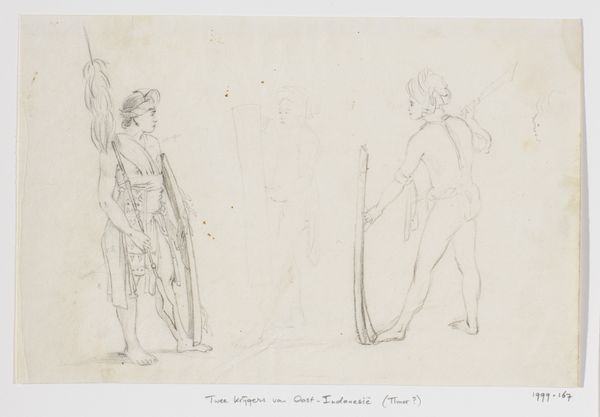
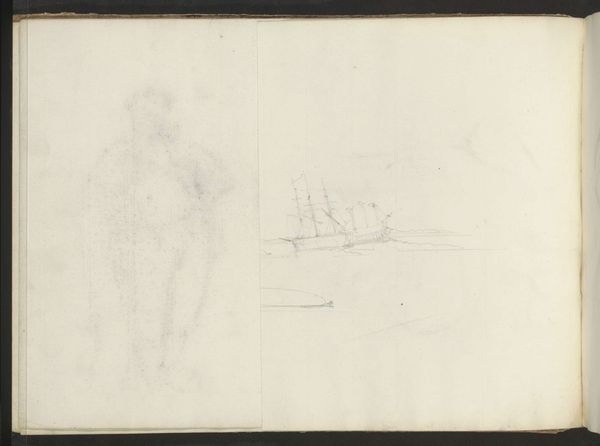
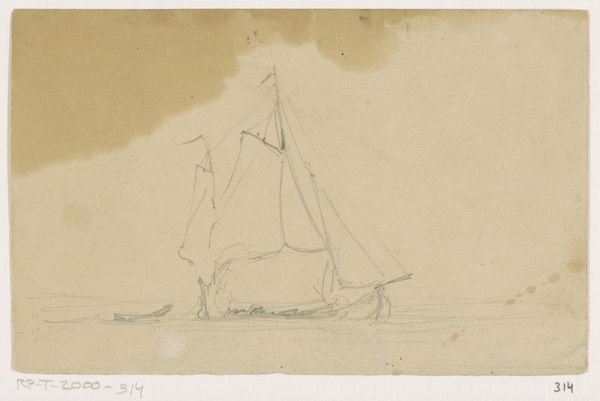
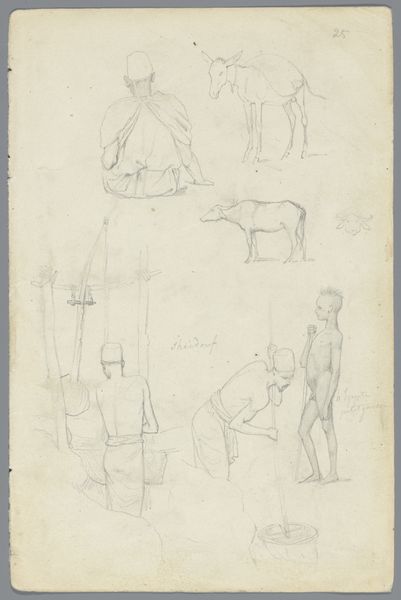
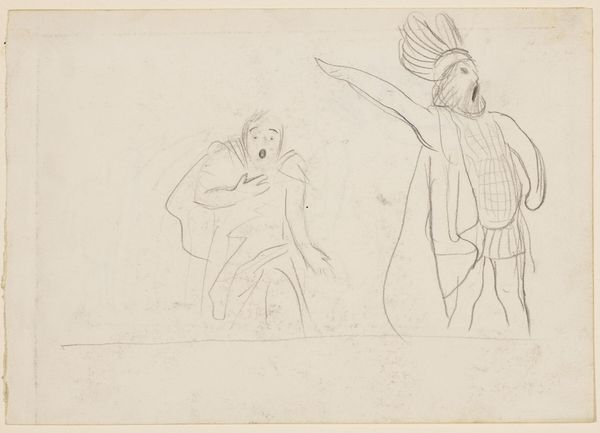
Schetsen van twee mannen, een vaartuig en twee ossen, Zuidoost-Molukken 1824
0:00
0:00

adrianusjohannesbik
Rijksmuseum
drawing, pencil
#
drawing
#
pencil sketch
#
figuration
#
pencil
Dimensions: height 185 mm, width 226 mm
Copyright: Rijks Museum: Open Domain
Editor: This is “Sketches of two men, a vessel and two oxen, South-East Moluccas" by Adrianus Johannes Bik, created around 1824 using pencil. It's a rather unassuming sketch at first glance. How do you interpret this work? Curator: The seemingly simple sketches belie a complex historical context. These aren’t just lines on paper; they’re documents of encounters, imbued with the power dynamics of colonialism. Consider Bik, a European artist, capturing the likeness of people and landscapes of Southeast Moluccas. What narrative is being constructed through his gaze? Editor: So, you are thinking about how Bik's perspective might have shaped what he chose to depict and how he depicted it? Curator: Precisely. How are these Moluccan people positioned in relation to the 'vaartuig,' the vessel? Are they subjects, commodities, or simply objects of ethnographic curiosity? It prompts us to consider how European artists often framed non-Western cultures through a lens of perceived exoticism and otherness, legitimizing colonial power structures. The oxen also deserve a second look – what might they signify in relation to labour and land ownership? Editor: It makes me think about who has the power to represent whom, and what gets lost in translation. The people might not have wanted to be sketched. Curator: Exactly. This raises essential questions about representation and agency. It requires a critical approach, inviting us to unpack the layers of colonial ideology embedded within this seemingly straightforward sketch. What responsibility do we, as viewers, have when engaging with such images? Editor: I'm starting to see how a simple drawing can open up broader discussions about history, power, and representation. Thank you. Curator: And it reminds us that archives of the colonial period can also reveal resistance, resilience, and the enduring presence of the people who called these lands home long before colonizers arrived. There are always multiple stories to be unearthed, aren't there?
Comments
No comments
Be the first to comment and join the conversation on the ultimate creative platform.
 Collect
 React
React Comment
More like this