photography, sculpture
#
landscape
#
photography
#
sculpture
#
19th century
#
building
Dimensions: height 206 mm, width 276 mm
Copyright: Rijks Museum: Open Domain
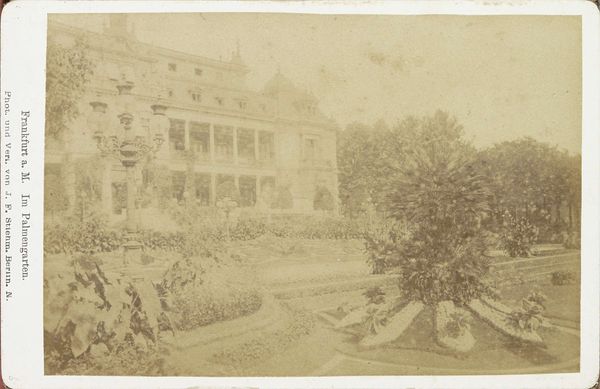
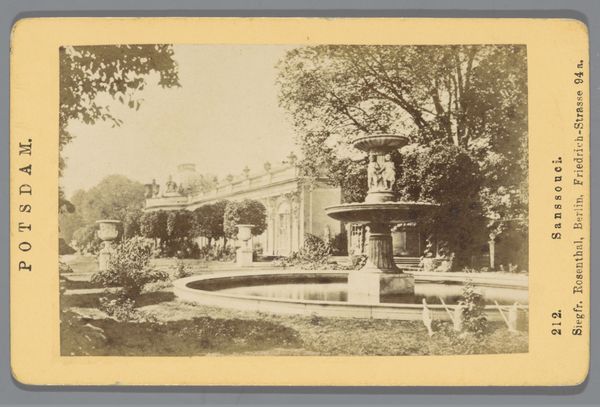
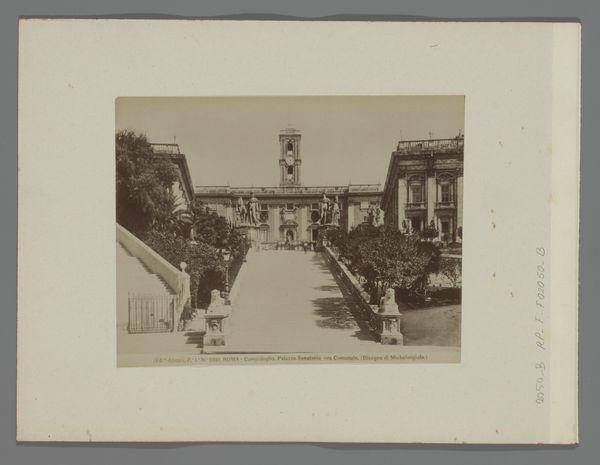
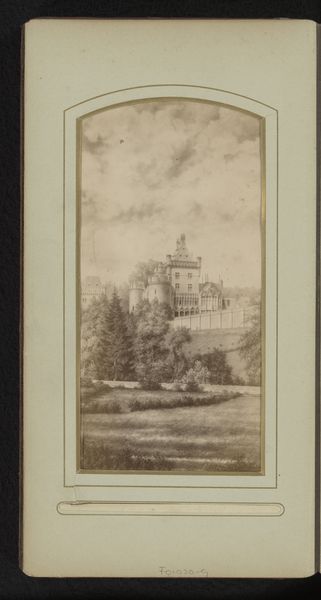
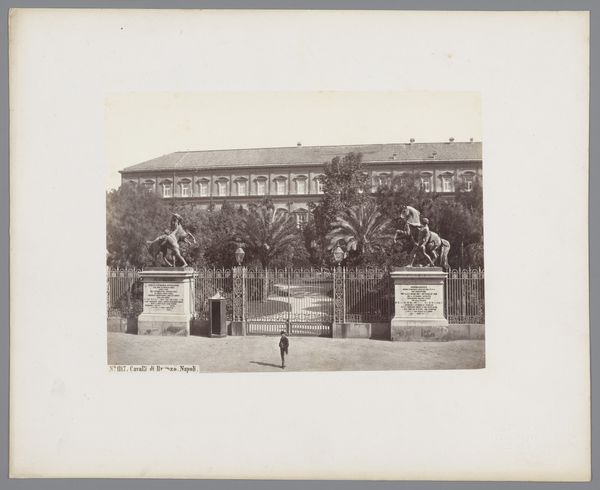
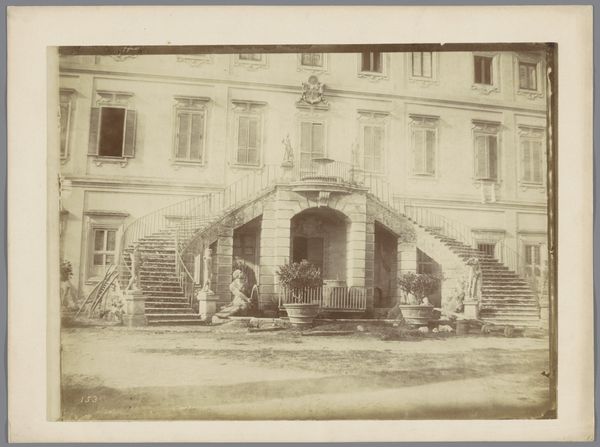
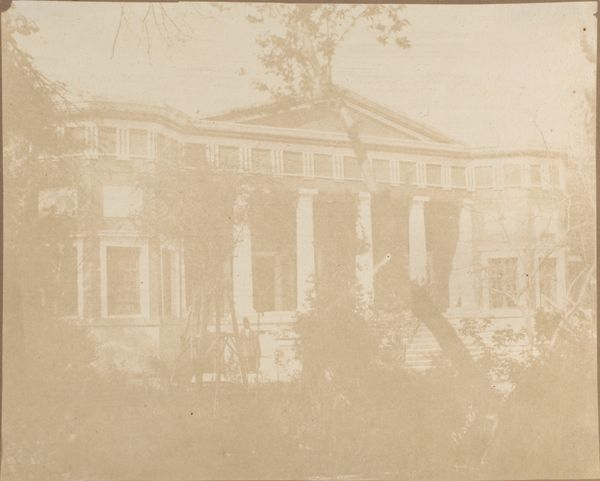
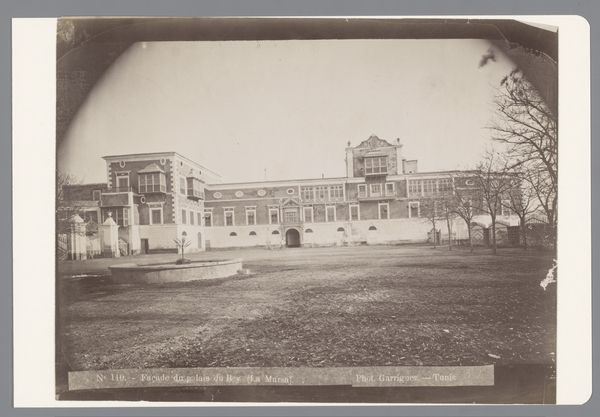
Gustave Eugène Chauffourier made this albumen print of a villa, likely in Italy. The villa is the focus, of course, but the garden is equally suggestive. Statues evoking classical antiquity flank the walkway. The image promotes the villa as a locus of pleasure and cultivated leisure, a key part of the visual rhetoric of wealth in the 19th century. The image subtly reinforces social hierarchies. The wealthy owner is, by implication, a patron of the arts, a connoisseur of beauty, and a person of refined taste. Consider the absence of anyone working; no laborers appear to maintain this estate. Photographs like these served as a potent tool for the construction and reinforcement of social norms, promoting a vision of bourgeois life that was both aspirational and exclusive. To understand this image fully, we could consult historical surveys of garden design, aristocratic culture, and the history of photography itself. The interpretation of art is always contingent on its social and institutional context.
Comments
No comments
Be the first to comment and join the conversation on the ultimate creative platform.
 Collect
 React
React Comment
More like this