1815 - 1819
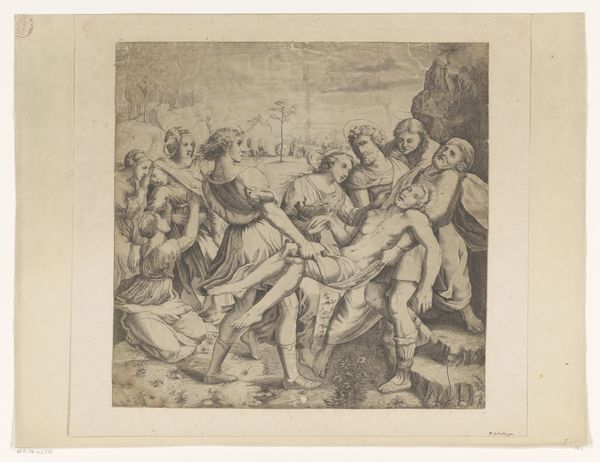
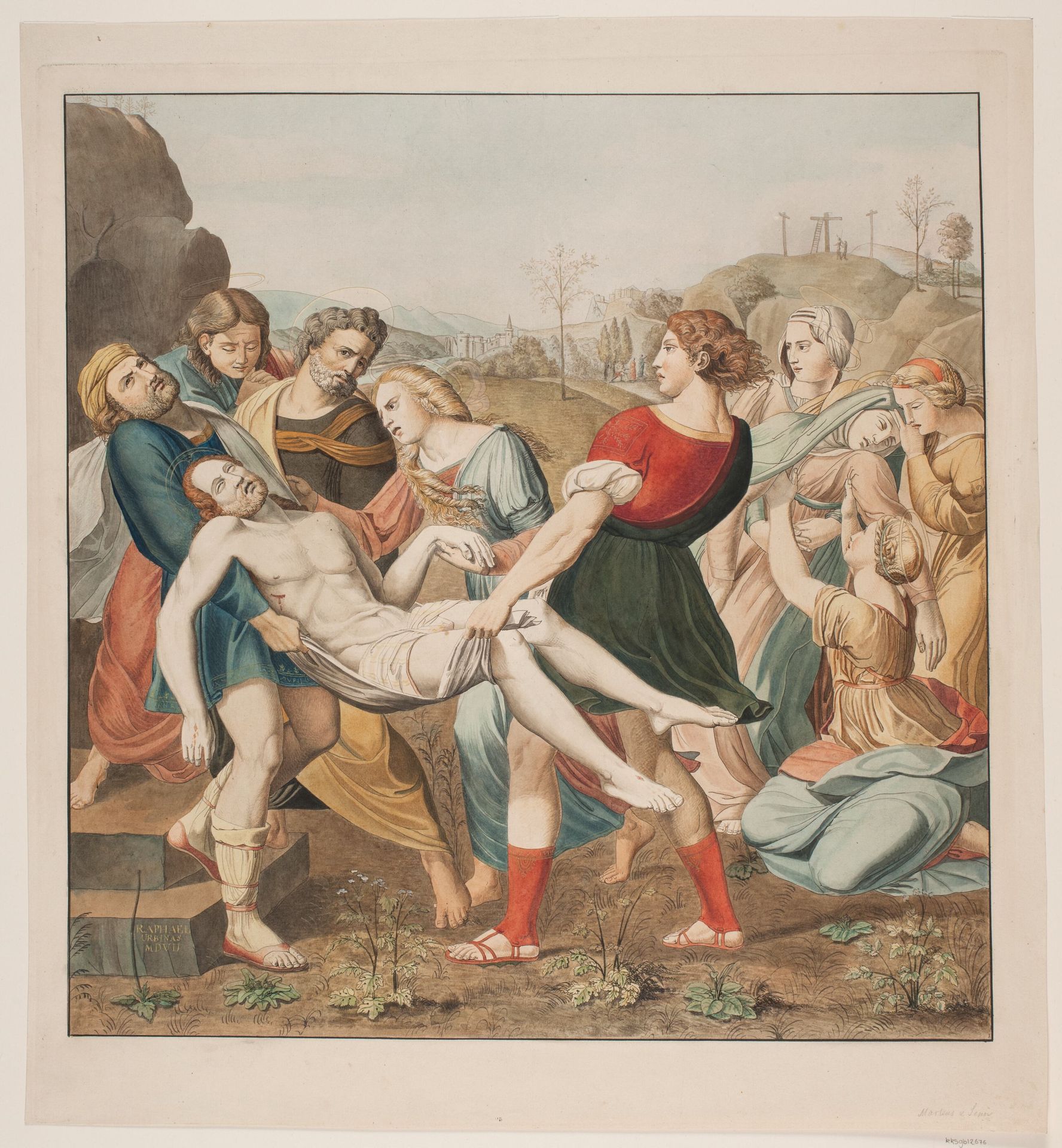
Rafael: Kristi gravlæggelse


Listen to curator's interpretation
Curatorial notes
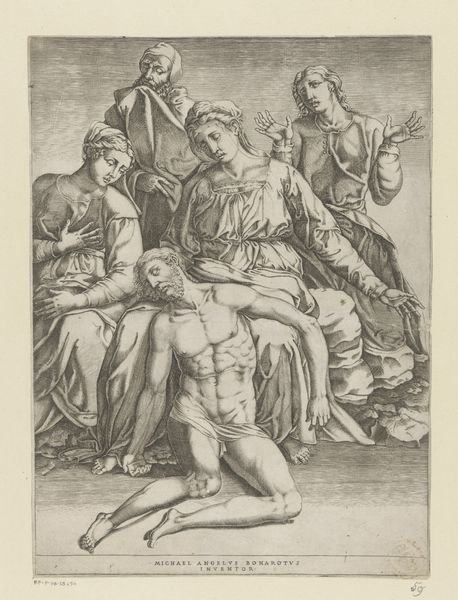
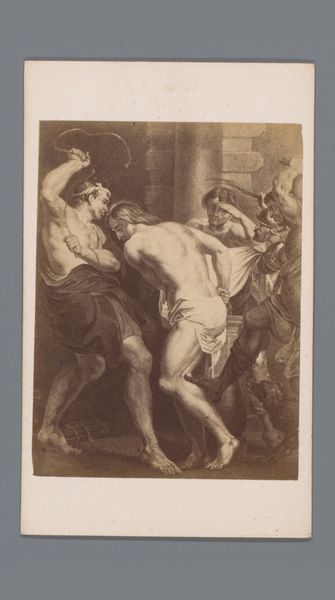
Editor: This etching, "Rafael: Kristi gravl\u00e6ggelse," created between 1815 and 1819, depicts the deposition of Christ. The expressions are quite moving, really…almost operatic in their grief. I'm curious, looking at the figures arranged here, how do you read the scene's symbolism? Curator: Well, first, consider the recurring motif of descent. Both literally, in the lowering of Christ's body, and figuratively, in the emotional plummet of those mourning. Descent symbolizes not just death, but also vulnerability and, perhaps, a necessary stage before renewal. What about the starkness? The print medium, etching, emphasizes the linearity and clarity of form. Editor: I noticed that. There's almost a deliberate coldness, despite the subject matter. Curator: Precisely. This coolness prompts us to reflect, doesn’t it? The etching’s precision immortalizes a pivotal moment, but does it invite personal reflection, or does it keep the viewer at a distance? The choice of such precise rendering perhaps signifies a need to bear witness, a collective memory of a transformative event. The figures themselves - have you considered their arrangement, the subtle directional forces created through gesture and gaze? Editor: Yes, they seem to guide my eye right to Christ's body as the central focal point, a source and an echo of all their mourning. I hadn't really considered it in that light. Curator: Think, too, of the cultural memory embedded within such depictions. Generations have encountered this scene, bringing their own contexts and emotional landscapes to its viewing. Each encounter, each generation reshapes the artwork's symbolic potency. Editor: That’s a lot to think about, and provides a richer understanding of a seemingly simple image. Thank you! Curator: Indeed. Visual symbols are rarely fixed; instead, they participate in an ongoing dialogue across time.