

945 BC
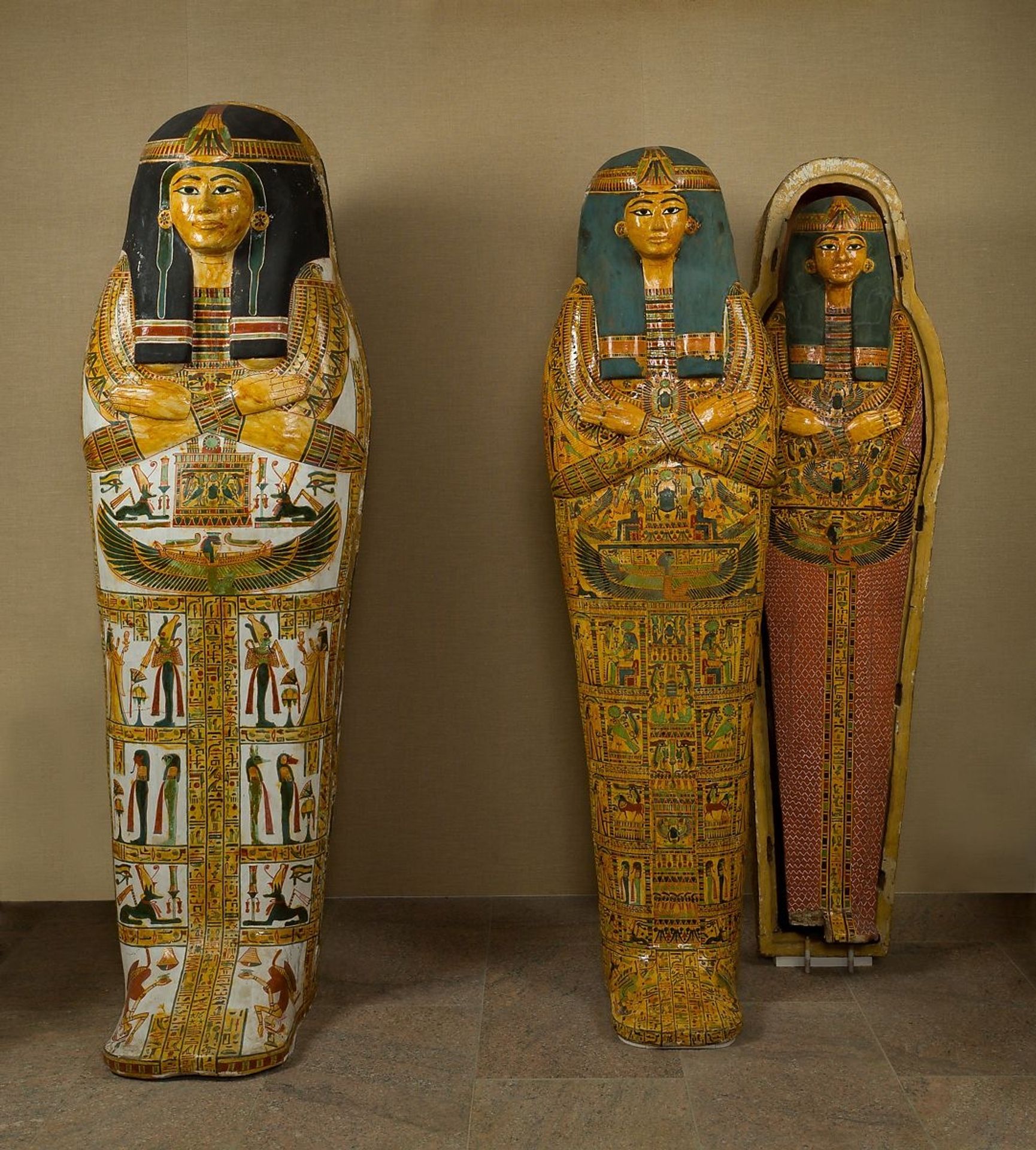
Coffin Set of the Singer of Amun Re, Henettawy

Ancient Egypt
@ancientegyptThe Metropolitan Museum of Art
Metropolitan Museum of Art (Met), New York City, NY, USListen to curator's interpretation
Curatorial notes
Editor: Here we have the Coffin Set of the Singer of Amun Re, Henettawy, dating back to 945 BC. Crafted from wood, these nesting coffins present such an interesting array of images and symbols! What draws your eye in this piece? Curator: It’s fascinating how these coffins act as both a physical container and a symbolic map of the afterlife. Look closely – each image, each color choice, speaks to ancient Egyptian beliefs about death and rebirth. Notice the prominence of winged figures, often representing deities that would guide Henettawy on her journey. Editor: Right, the winged figures. They seem to be all over the first two coffins. Is there a specific story these images are telling? Curator: Exactly. Consider the cultural memory embedded within these images. Egyptians believed that the deceased had to navigate a complex underworld filled with trials. The decorations on the coffin would have served as spells, prayers, and guides to help Henettawy successfully pass through these challenges. Look at the registers, the organized rows of images. Each depicts a stage in the journey or an offering to a specific god. It is cultural continuity expressed in paint. Editor: It’s almost like a visual instruction manual for navigating the afterlife. And the innermost coffin seems simpler. Curator: Indeed. Perhaps indicating the final stage of transformation. How does it feel to you when considering that Henettawy, as the Singer of Amun Re, lived and breathed within a society where such preparation for afterlife was fundamental? Editor: It really puts their entire life into perspective! Like their earthly existence was in service of their eternal one. I never really considered it that way before. Curator: That’s the power of art – to collapse time and allow us to connect with belief systems so different from our own, while understanding what binds all of us. It provokes the human journey into the intangible.