drawing, ink, pen
portrait
drawing
allegory
baroque
ink
pen
history-painting
italy
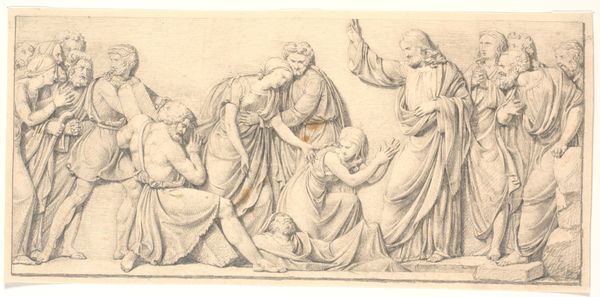
Dimensions: 4 5/16 x 9 1/4 in. (10.95 x 23.5 cm) (sheet)15 3/4 x 19 3/4 in. (40.01 x 50.17 cm) (outer frame)
Copyright: Public Domain
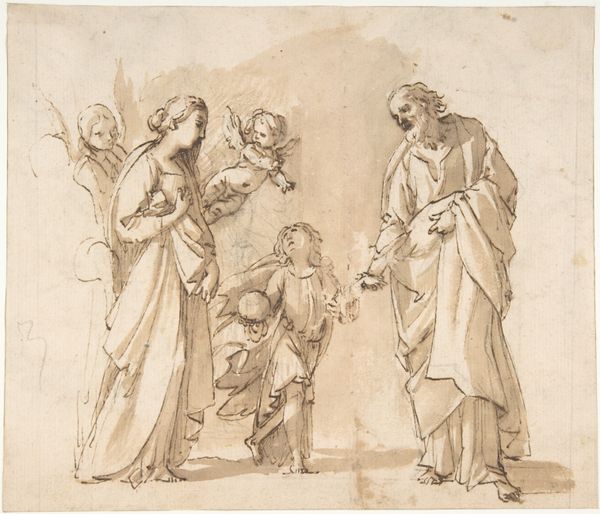
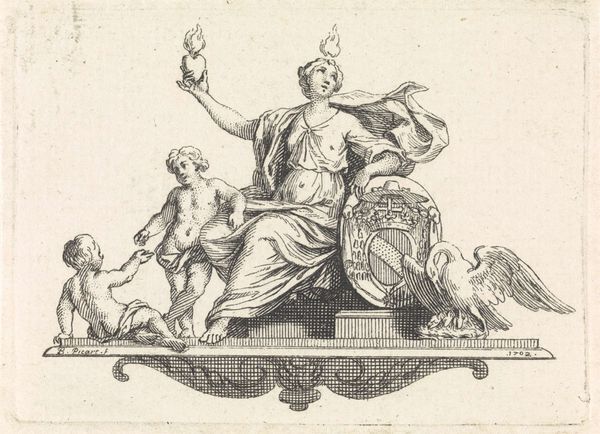
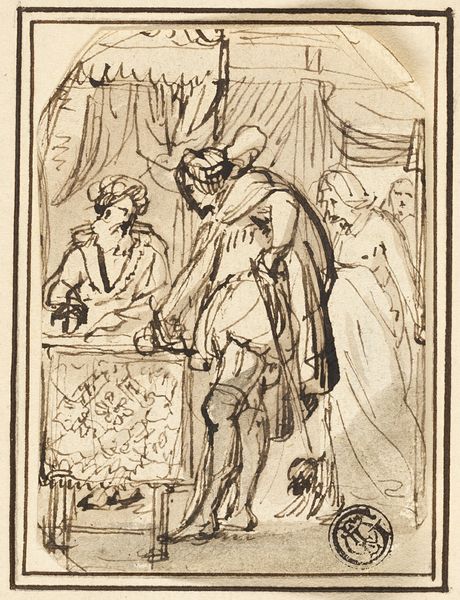
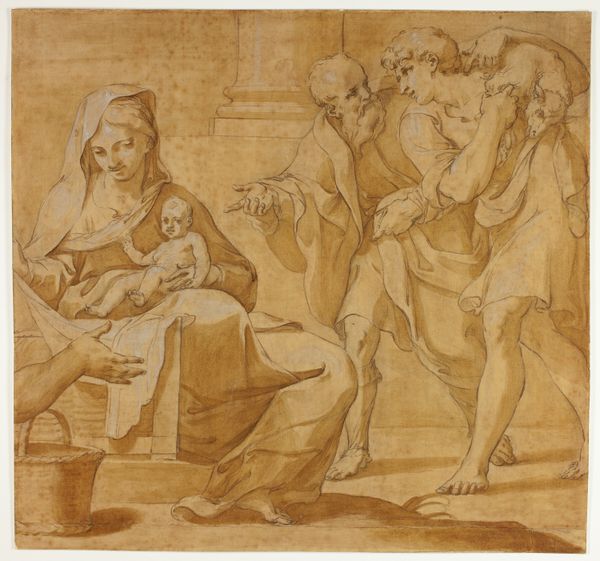
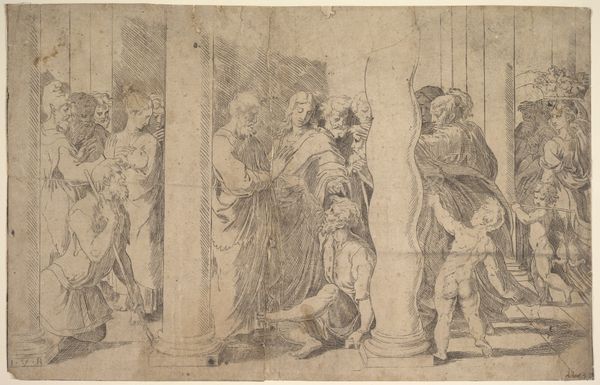
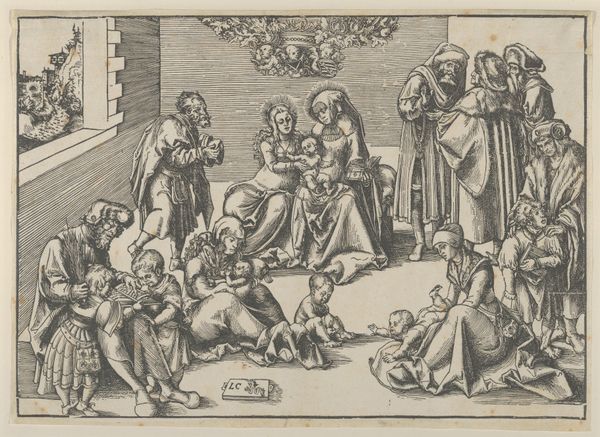
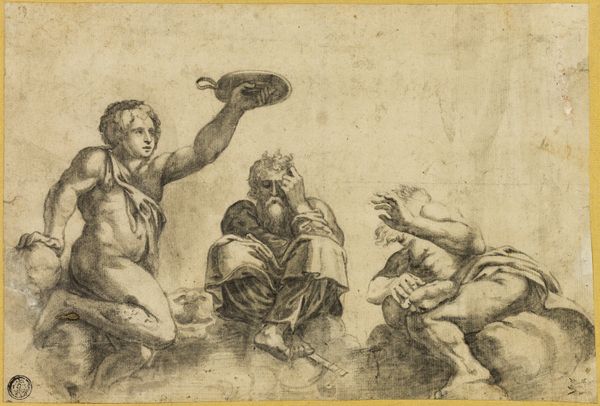
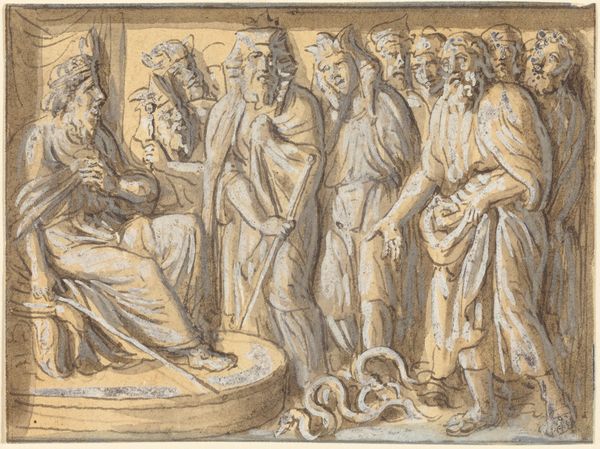
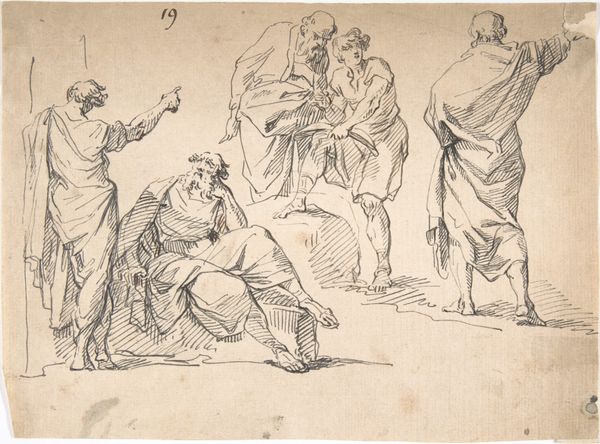
Curator: The piece we’re looking at is "The Imitative and Descriptive Arts," an Italian pen and ink drawing originating around the 17th century, attributed to Marco Boschini. It resides here at the Minneapolis Institute of Art. Editor: Wow. It's like a Renaissance music video waiting to happen! So much drama in these brown lines. Immediately, I sense a bit of satire – all those robed figures seem caught in a performance, like theatre frozen in time. Curator: Boschini certainly engaged with complex layers of symbolism. He offers an allegorical scene reflecting ideas about representation. There are numerous historical paintings embedded in his work, highlighting debates about how art reflects, imitates, or idealizes the world. Note, especially, the dynamic groupings, separated by a seemingly empty space. Editor: The empty space screams of rivalry, doesn’t it? Look at that monkey in the foreground, mimicking the conductor’s gesture! A tiny maestro of mockery. Is this Boschini winking at the viewer, acknowledging the absurdity inherent in artistic pursuits? The monochrome palette and line work really make you focus on form and the expressions captured. Curator: Absolutely, and there’s a gendered reading too. The central figures, flanked by their groups, seem to present opposing artistic ideals. One group appears to champion poetry and the visual arts while the other leans towards music. Analyzing these configurations through a feminist lens reveals potential tensions about male-dominated artistic spaces, albeit done allegorically. Editor: Hmmm... Perhaps those tensions hint at more universal struggles – ambition, legacy, the eternal question of "what is art?" That's what great works do: keep the conversation churning centuries later. I'm also intrigued by the drawing style: gestural and free, capturing not just forms, but a palpable sense of movement. It's more a record of process and observation than something hyper-real, isn't it? Curator: Precisely! It avoids offering a singular viewpoint, becoming a rich space for discussions. Boschini's drawing style is inherently Baroque. It invites continuous reinterpretations related to societal and intellectual trends of his time but remains potent for us now. Editor: Yeah, and thinking about it… it’s less a statement and more an open question, even a dare: "Interpret this!" Which I love. It makes art alive. Thanks for untangling some of that for me! Curator: The pleasure's all mine. Hopefully it provides some perspectives and a framework for new critical viewpoints, sparking thought well after our conversation has ended.
Comments
No comments
Be the first to comment and join the conversation on the ultimate creative platform.
 React
React Comment