

c. 1634
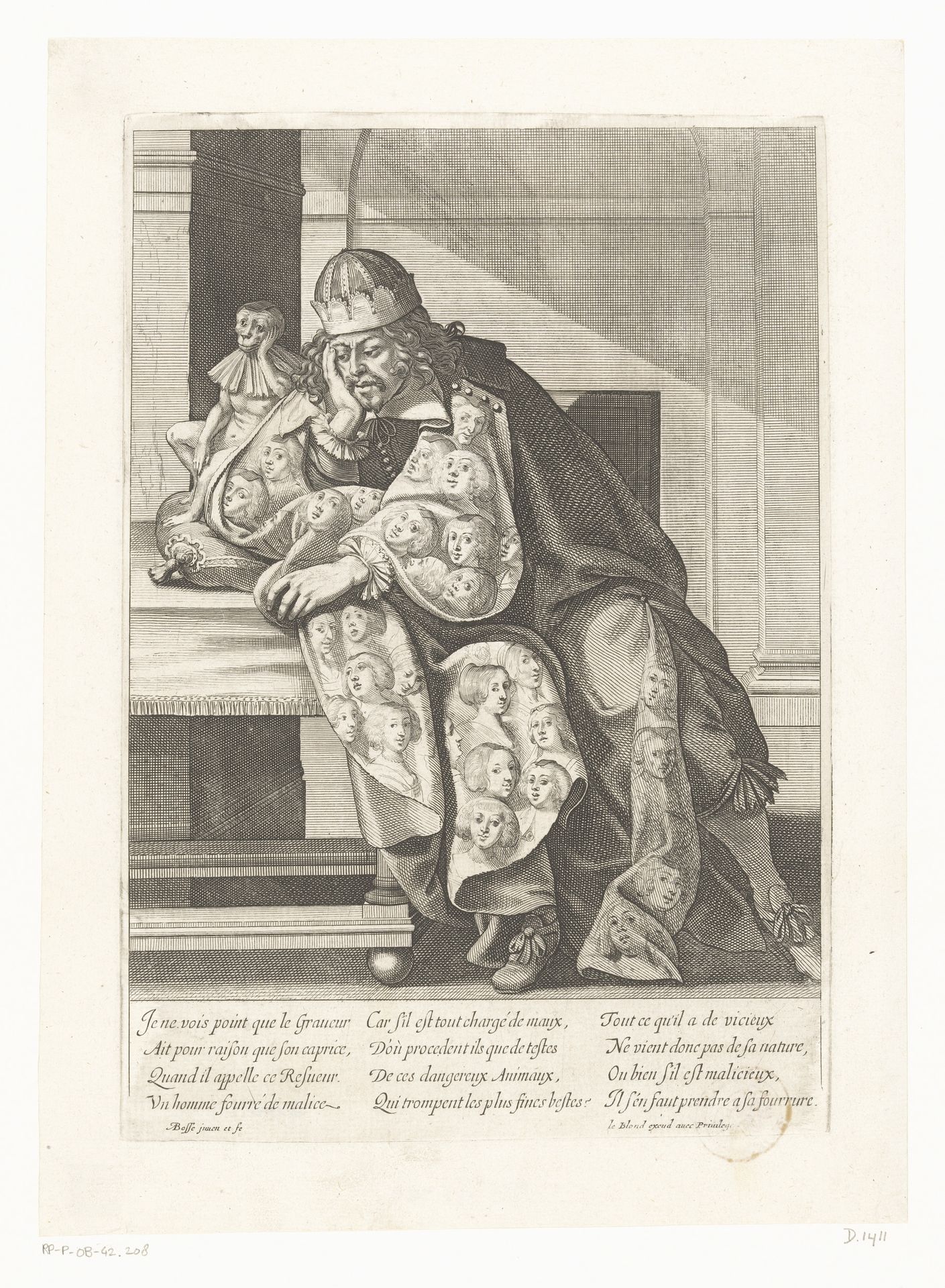
Man met een mantel waarop vrouwenhoofden, leunt op een tafel waarop een aap

Abraham Bosse
1602 - 1676Location
RijksmuseumListen to curator's interpretation
Curatorial notes
Curator: Here we have Abraham Bosse's etching "Man met een mantel waarop vrouwenhoofden, leunt op een tafel waarop een aap" created around 1634, housed here at the Rijksmuseum. Editor: It's striking how the cloak immediately commands attention. The multitude of tiny faces feels both fascinating and a little unsettling. It’s a study in texture, that's for sure. Curator: Indeed. These aren't mere decorative patterns; they are symbolic. The cloak of feminine faces represents, perhaps, the burdens and allurements associated with women. This man, possibly a figure of authority, is draped in their influence, almost as if he’s carrying the weight of societal expectations regarding women. Editor: From a design standpoint, it's brilliant how Bosse balances the detailed facial features with the broader composition of the figure. The engraving technique is exceptional, allowing for subtle gradations of tone that lend depth to such a flat image. Curator: The ape on the table further enriches the narrative. Apes were often associated with base instincts, with mimicry, so it could indicate something about the man's moral nature or even the follies of mankind itself. Consider the placement. The figure of authority almost nonchalantly leaning beside this beast... It introduces this air of human failing and imperfection. Editor: It does, although what fascinates me, apart from the overt symbolism, is how the lines guide your eye through the artwork. From the thoughtful pose of the man, draped as he is, down to the details on his feet, before coming to rest finally on that almost smug ape. Curator: Look closer: a grotesque statue figure in the background almost seems to mock his plight. There's almost a crude and visceral humor to it. The text in the foreground seals it for me – this image really pulls at my understanding of male identity in 17th Century Europe. Editor: It’s that combination of formal skill and provocative imagery that makes Bosse's print so enduring. Curator: It challenges us to question, not only our perspectives, but our perceptions and memories.