c. 1938
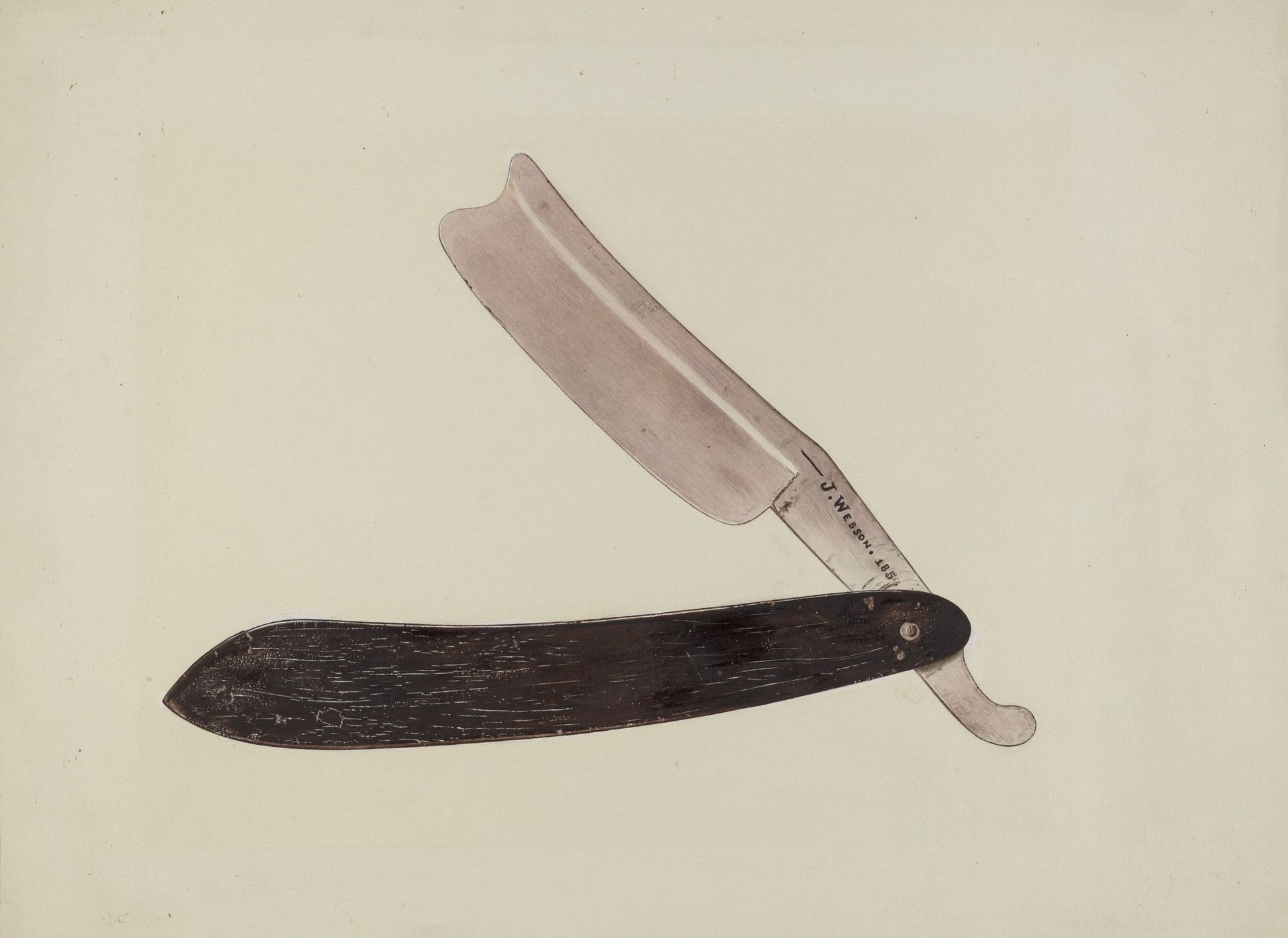
Barber's Sign


Listen to curator's interpretation
Curatorial notes
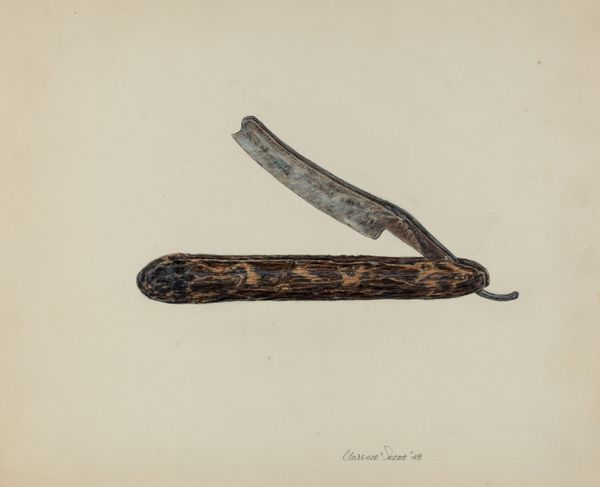
Curator: Wynna Wright’s pencil drawing, "Barber's Sign," created around 1938, is now before us. It feels strangely intimate, don't you think? Like holding a secret. Editor: Intimate, yes, in a somber, understated way. The composition is sparse. Just a single straight razor on a pale ground. The pencil work is delicate, almost fragile. Curator: The subject itself—the straight razor—carries quite a history. Beyond the utilitarian aspect, it suggests rituals, a very masculine, carefully orchestrated choreography around self-presentation. Editor: Absolutely! We’re looking at the ultimate symbol of transformation. In this context, the ritual of shaving transforms a man, but razors across cultures signify purity and sacrifice, think tonsures or even blood oaths. Curator: I like that, the oath made over a pristine face. It certainly evokes this tension between vulnerability and control. There is almost something surgical in its appearance; the meticulous depiction, the sharpness. Does this not suggest to you the emotional complexity beneath this object? Editor: Absolutely. I note the label J.Wesson & Son' engraved upon the tool, likely denoting its maker and origins; I wonder whether a man may become as associated with their choice of razor as a knight becomes with their sword or a cowboy with their six-shooter. It is less a symbol of aggression in this format, more one of a particular type of male, who takes time and great effort to curate themselves. Curator: Maybe. The object seems poised—perhaps that speaks to you more personally, an echo of something suppressed, brought out? I can just about feel the cold touch of the steel... Editor: It feels like an heirloom. Something passed down. A tangible piece of memory, carrying with it whispers of generations, fathers teaching sons. In its muted palette and precision, it speaks of unspoken emotions—a kind of melancholic reflection. Curator: It's like a still life contemplating time itself, captured through the silent language of objects and passed down traditions, even. I suppose even these can contain such intensity, if you view the world at a certain slant. Editor: Exactly, objects loaded with human narratives, reflecting the cultural anxieties and dreams of an era and indeed a type of man that in turn might also slowly be fading away. I'll never look at shaving in the same way again!