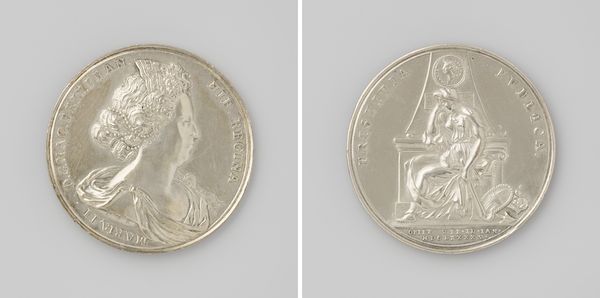
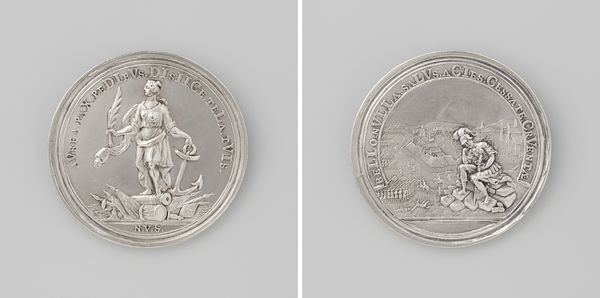
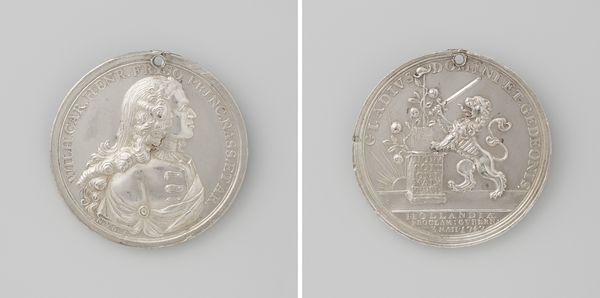
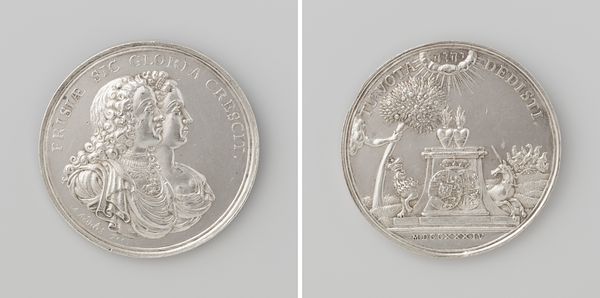
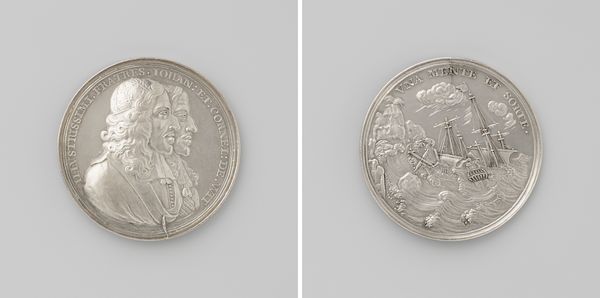
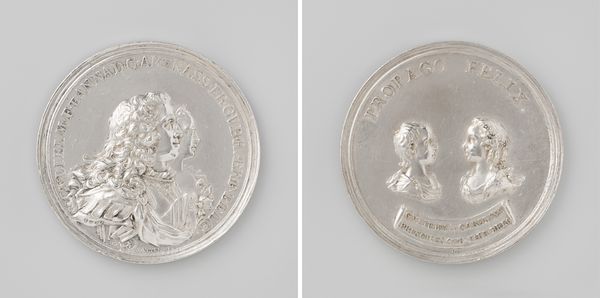
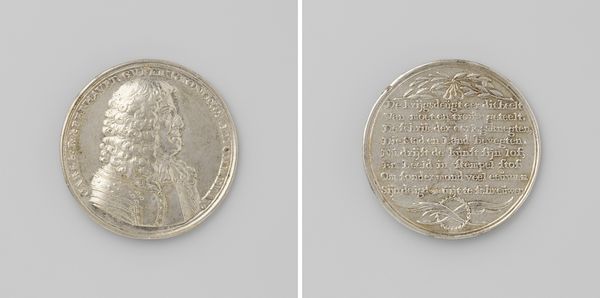
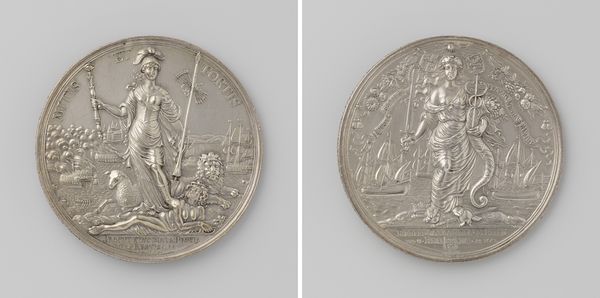
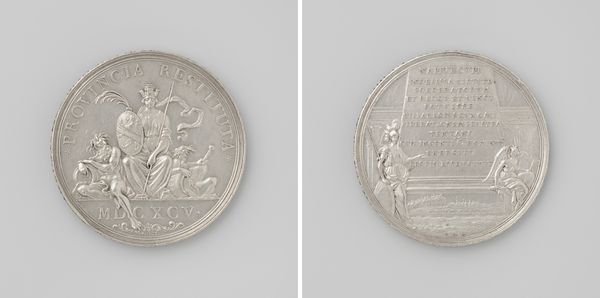
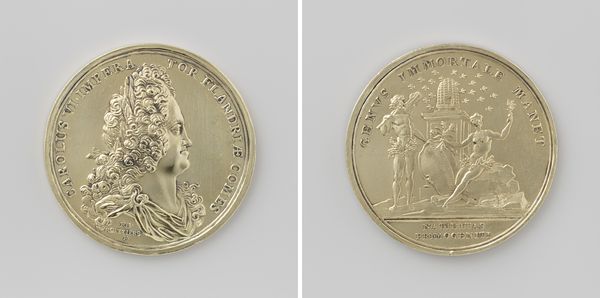
Gustaaf Willem, baron van Imhoff, gouverneur-generaal van Nederlands-Indië vertrekt uit Amsterdam 1742
0:00
0:00

relief, ceramic, sculpture
#
portrait
#
baroque
#
relief
#
ceramic
#
stoneware
#
sculpture
#
ceramic
Dimensions: diameter 8.8 cm, weight 24.10 gr
Copyright: Rijks Museum: Open Domain
Curator: This pair of ceramic reliefs, created by Martin Holtzhey in 1742, commemorates the departure of Gustaaf Willem, Baron van Imhoff, Governor-General of the Dutch East Indies, from Amsterdam. The works embody a particular Dutch baroque style, capturing a moment ripe with colonial implications. What's your initial take? Editor: My first impression is… constrained. The monochromatic palette, the circular format, and the shallow depth of the relief lend a certain sense of restriction, of power carefully managed. Curator: Precisely. These are more than just portraits; they are deliberate statements crafted within a specific political and social climate. Van Imhoff's governorship was about reinforcing Dutch authority and economic interests in the East Indies, and objects like these actively promoted those imperial narratives back in the Netherlands. Editor: It’s interesting how Holtzhey uses the relief format. On one disc, you have Van Imhoff himself, a profile evoking classical coins perhaps signaling stability and order. But the second relief… there's an allegorical scene unfolding. A figure seems to offer some prize at spear point? Curator: Indeed. The inscription "FIDEM BATAVOM PRISCAM VENEREM SAUNI" alludes to a restored trust with the people of Sauni in the East Indies. We must remember that these narratives often mask more complex and violent colonial realities. Editor: Yes, these works provide visual legitimation for what was ultimately a project built on extraction and control. I think a critical lens is vital, pushing back against these heroic narratives. Whose voices were excluded? Whose labor was exploited? Curator: Absolutely, viewing it from the vantage point of today, the power dynamics on display here provoke deep reflection, urging a constant questioning of the underlying politics of imagery. These objects, once intended to affirm Dutch power, can now serve as powerful tools to explore the nuances and consequences of colonialism. Editor: So, through Holtzhey's representation of the historical narratives, and critically assessing these objects, we see a need for discussions about accountability and a move to reimagine this history, right? Curator: Exactly, it's a powerful and ongoing conversation.
Comments
No comments
Be the first to comment and join the conversation on the ultimate creative platform.
 Collect
 React
React Comment
More like this