Possibly 1744 - 1748
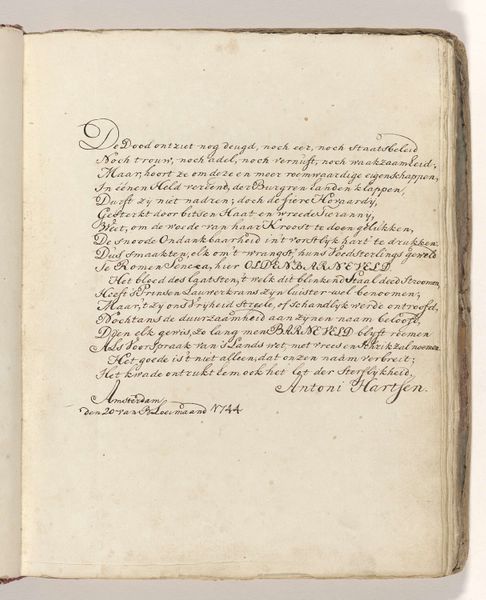
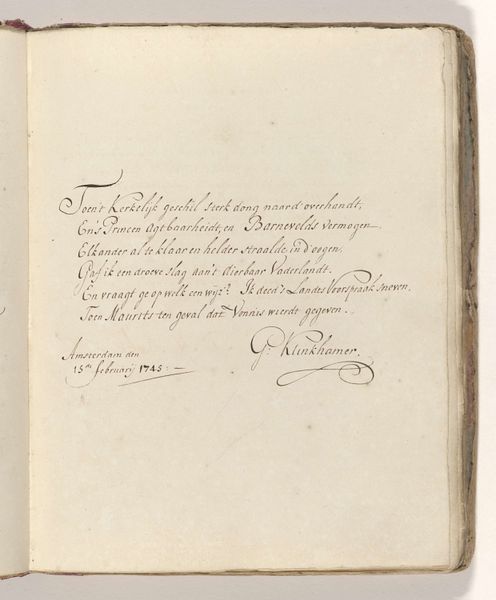
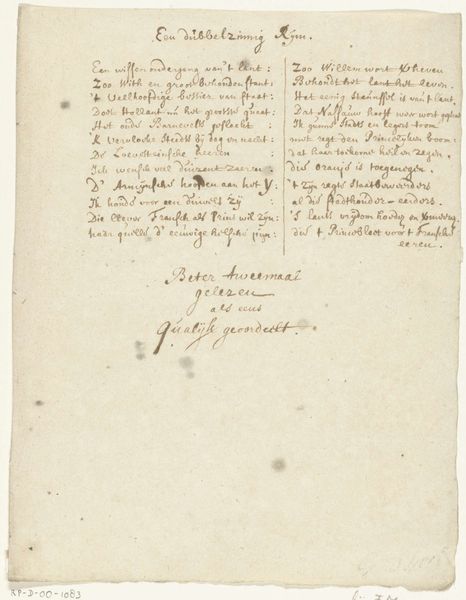
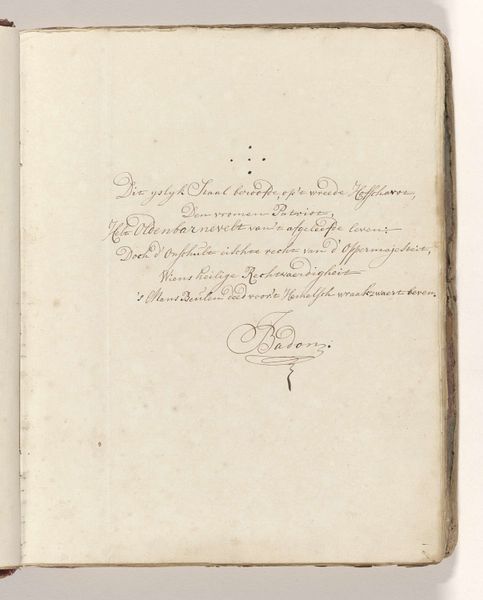
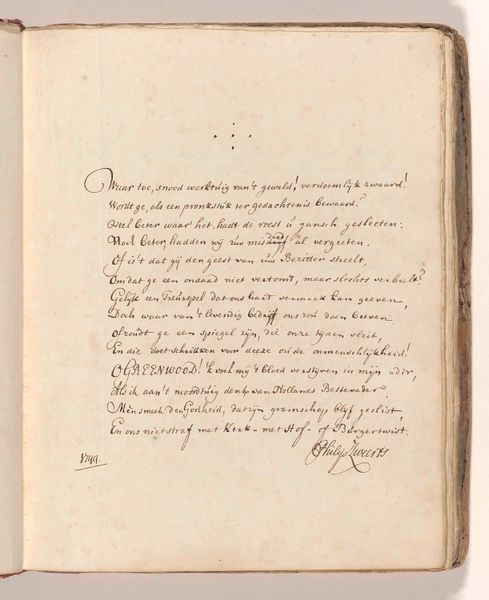
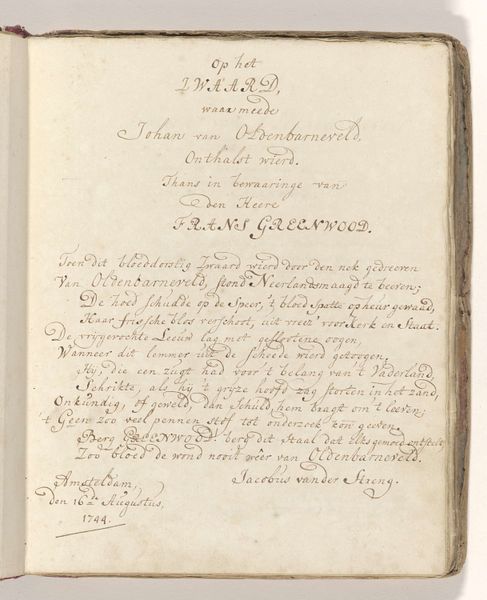
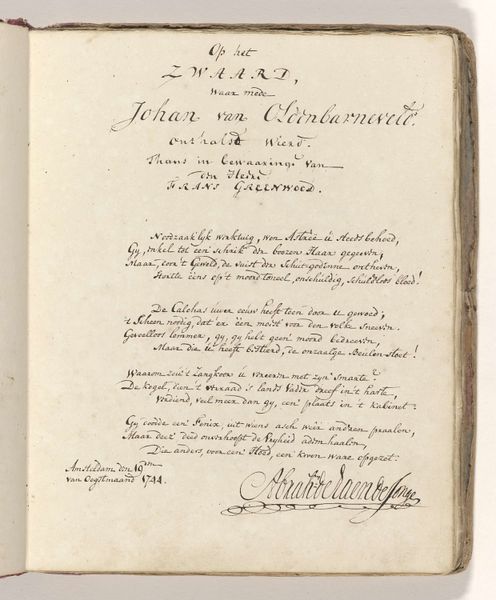
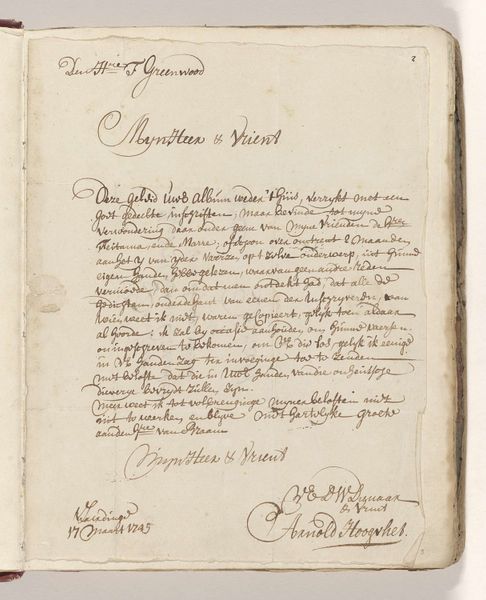
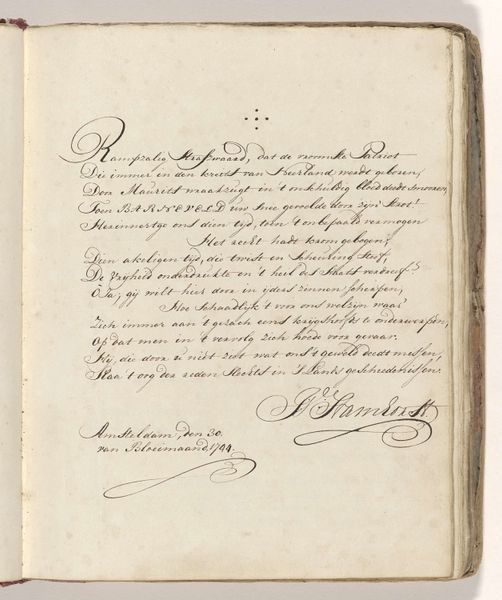
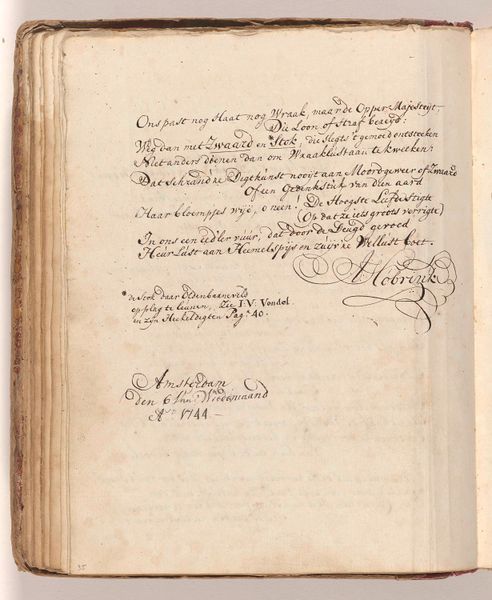
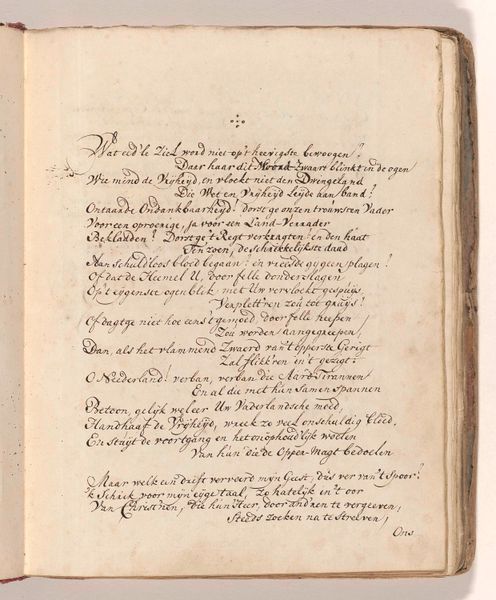
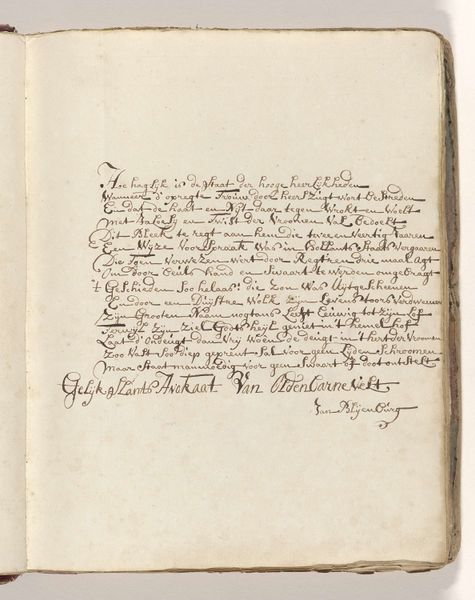
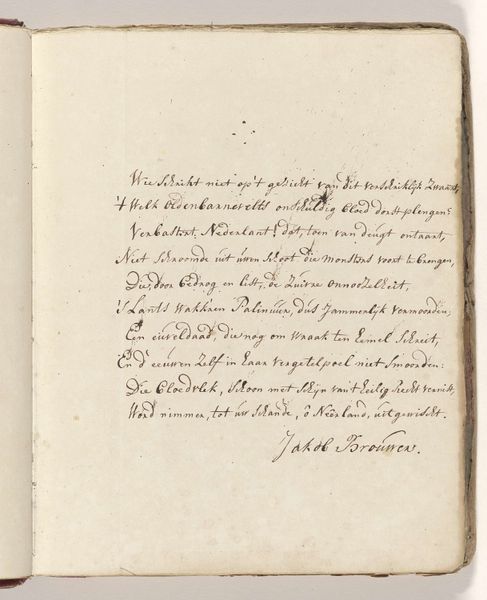
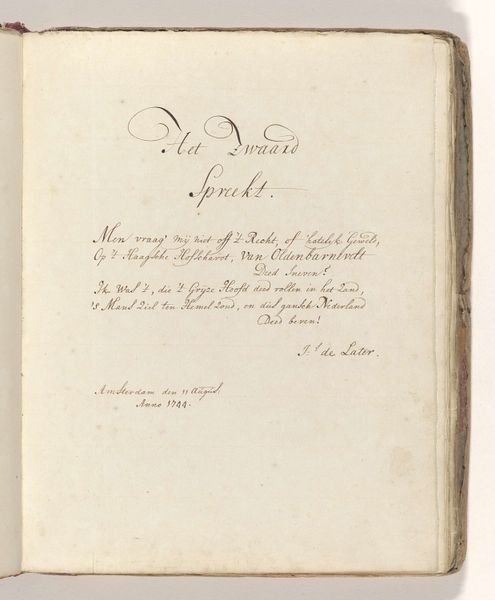
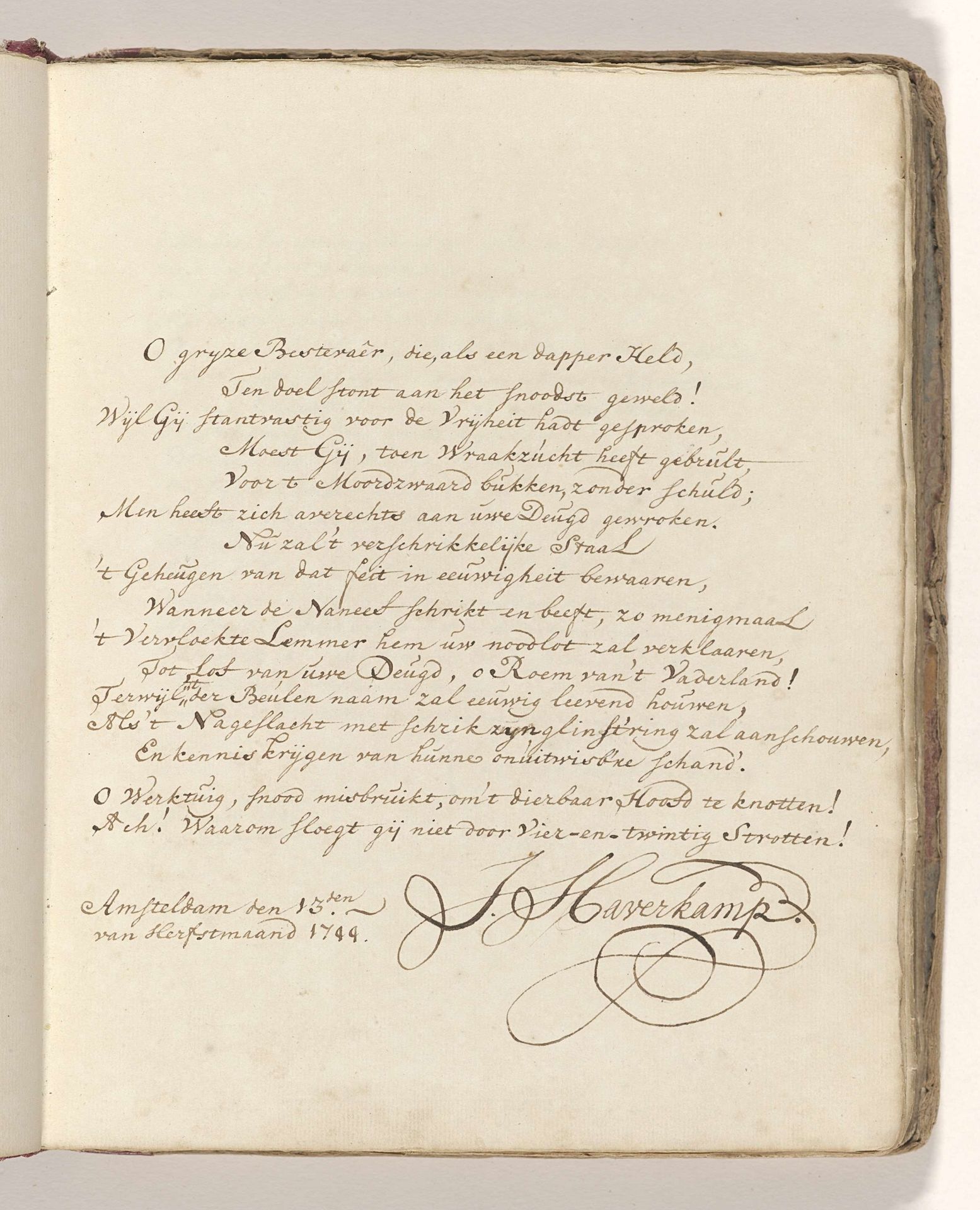
Gedicht op het zwaard waarmee Johan van Oldenbarnevelt in 1619 zou zijn onthoofd

Listen to curator's interpretation
Curatorial notes
Here we see Johannes Haverkamp’s poem written in 1744, a meditation on the sword used in the execution of Johan van Oldenbarnevelt in 1619. This work brings to the fore questions about justice, sacrifice, and collective memory. Oldenbarnevelt, a leading statesman, was executed for treason, a moment that remains a contentious event in Dutch history. Haverkamp’s poem grapples with the emotional weight of this execution, transforming the sword into a symbolic object of both grief and national identity. The poem laments the tragic end of a figure seen as a champion of freedom, questioning the very act of his execution. Consider how Haverkamp uses vivid and sorrowful language to explore the themes of injustice and national loss. The emotional depth of the poem invites us to reflect on how historical events continue to shape collective identity and moral consciousness.