About this artwork
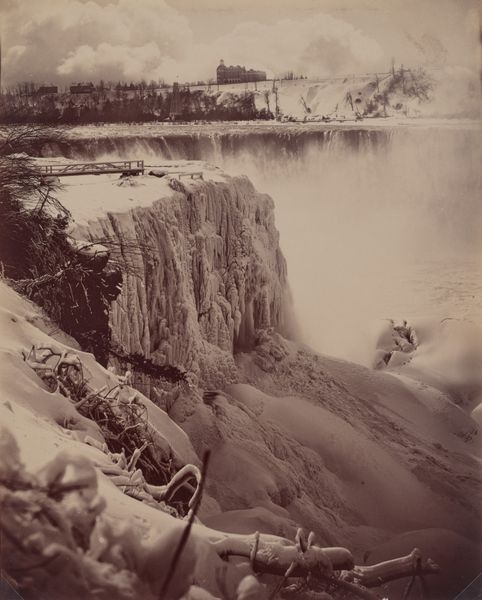
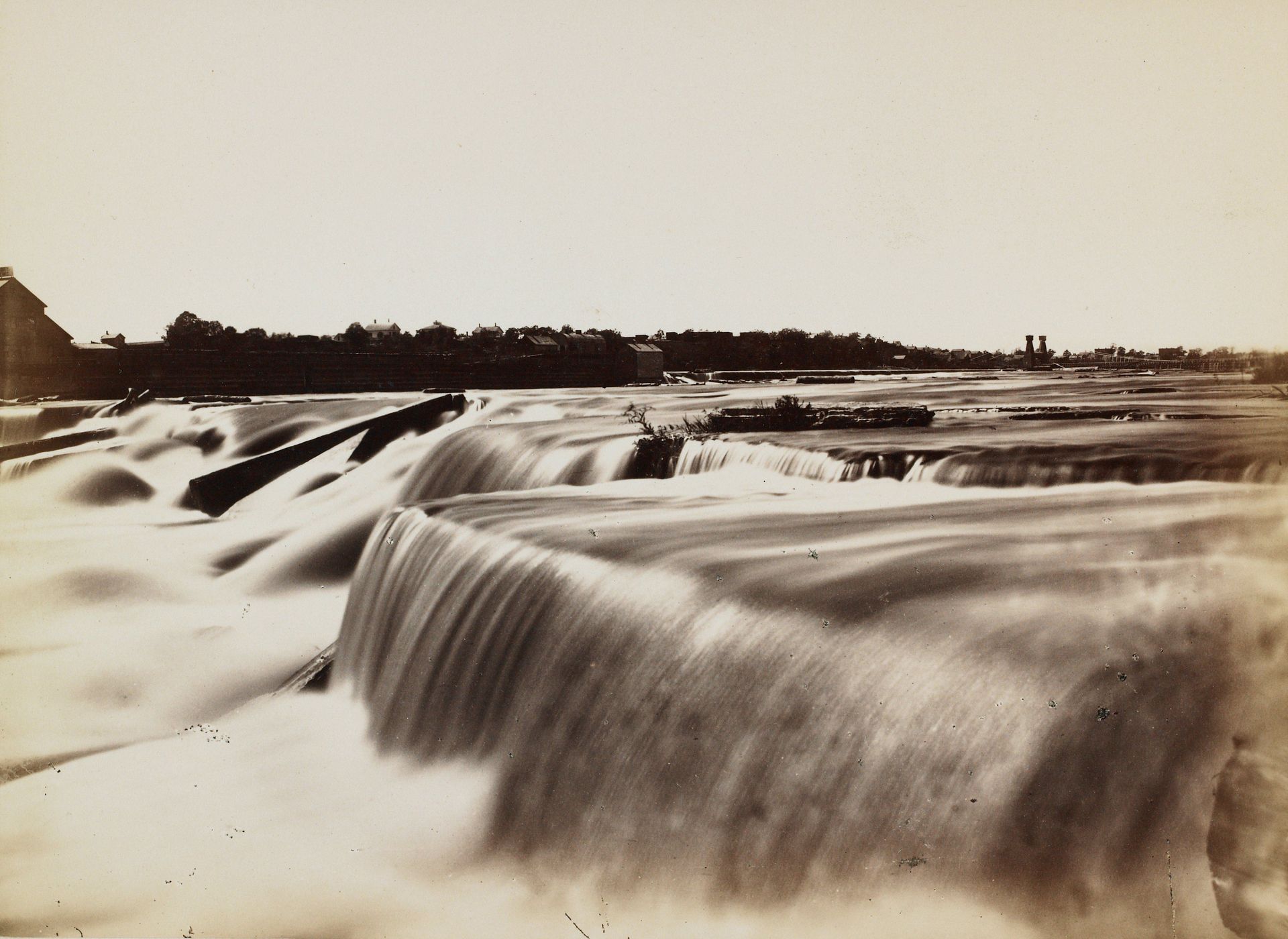
Benjamin Franklin Upton captured St. Anthony Falls with a camera, using a photographic process that renders a scene both immediate and ethereal. The composition is dominated by the cascading water, its descent captured in a soft, almost dreamlike blur. This contrasts with the sharp, dark horizontals of the distant shoreline. The tonal range is limited, but within it, Upton creates a sense of depth and movement. The blurred water gives way to defined edges where the falls meet the river below, creating a visual tension between stasis and flux. Notice how the strong diagonal of a fallen tree trunk cuts across the composition, disrupting the natural flow and adding a stark, almost brutal element to the scene. This photograph is not merely a record of a place, but an exploration of texture, form, and the interplay between natural and man-made elements. It invites us to consider how photography, even in its nascent stages, could challenge our perception of reality.
St. Anthony Falls
1863


Artwork details
- Medium
- etching, photography, gelatin-silver-print
- Dimensions
- 6 1/16 x 8 1/4 in. (15.4 x 20.96 cm) (image)10 x 11 3/4 in. (25.4 x 29.85 cm) (mount)
- Location
- Minneapolis Institute of Art
- Copyright
- Public Domain
Tags
Comments
Share your thoughts
About this artwork
Benjamin Franklin Upton captured St. Anthony Falls with a camera, using a photographic process that renders a scene both immediate and ethereal. The composition is dominated by the cascading water, its descent captured in a soft, almost dreamlike blur. This contrasts with the sharp, dark horizontals of the distant shoreline. The tonal range is limited, but within it, Upton creates a sense of depth and movement. The blurred water gives way to defined edges where the falls meet the river below, creating a visual tension between stasis and flux. Notice how the strong diagonal of a fallen tree trunk cuts across the composition, disrupting the natural flow and adding a stark, almost brutal element to the scene. This photograph is not merely a record of a place, but an exploration of texture, form, and the interplay between natural and man-made elements. It invites us to consider how photography, even in its nascent stages, could challenge our perception of reality.
Comments
Share your thoughts