1831 - 1838
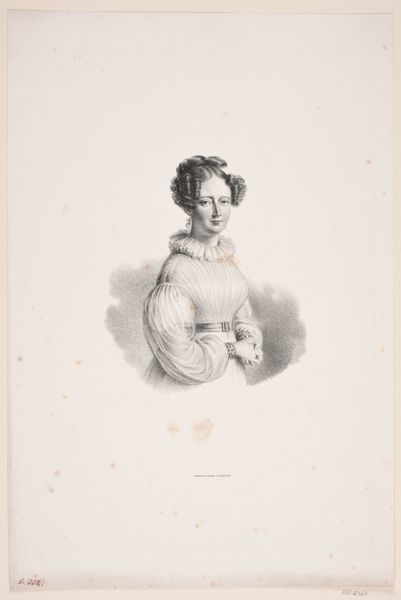
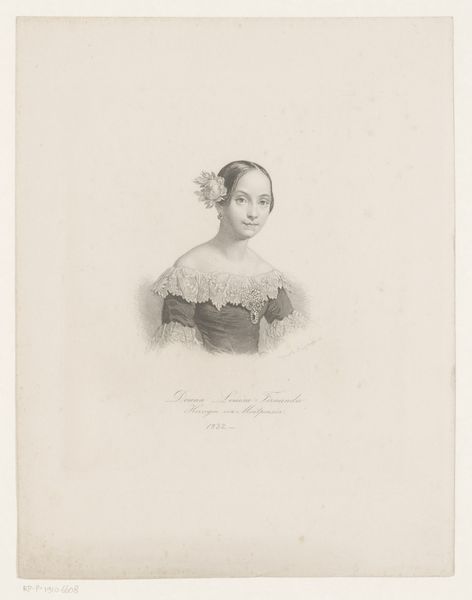
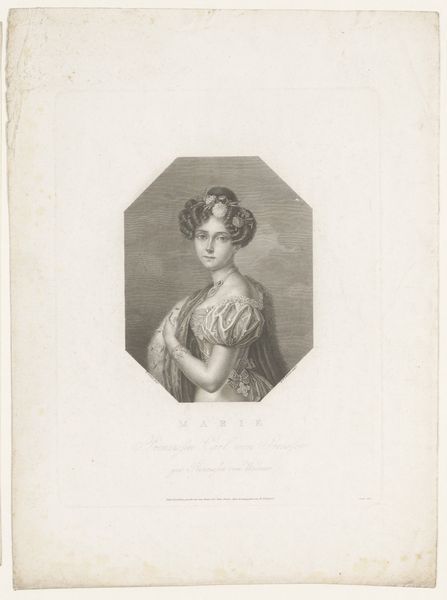
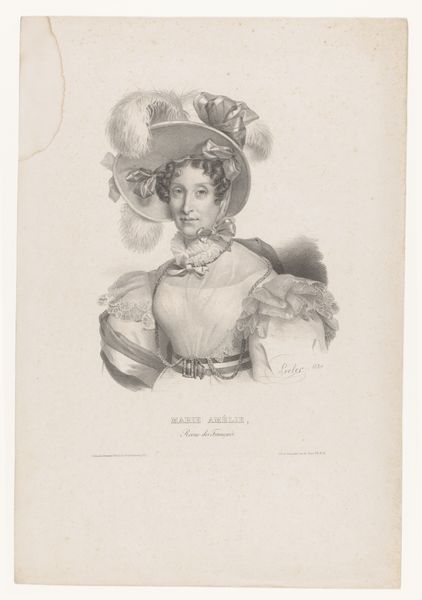
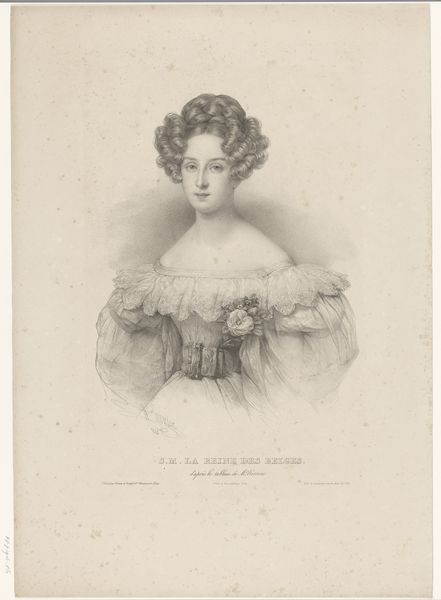
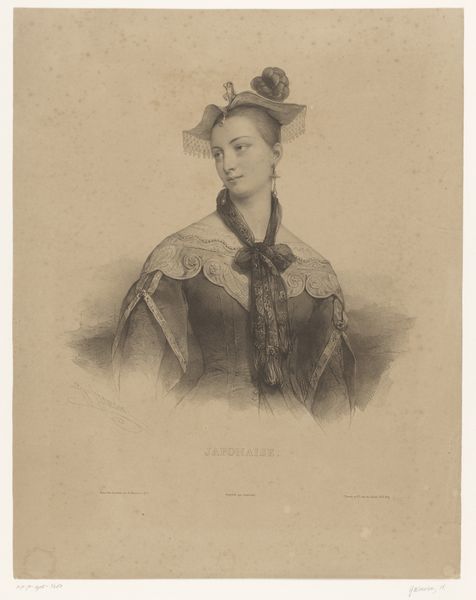
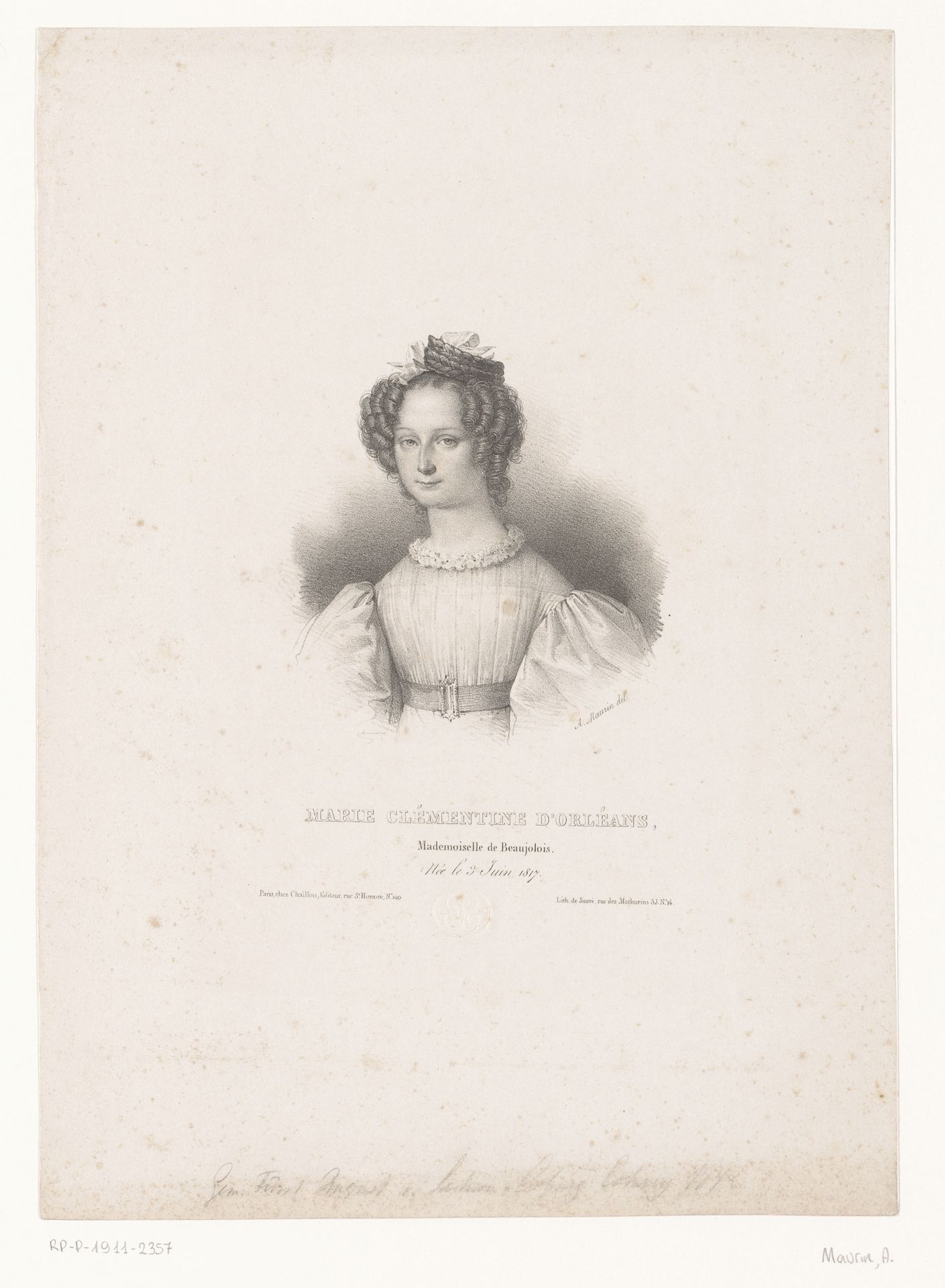
Portret van Clémentine d'Orléans

Antoine Maurin
1793 - 1860Location
RijksmuseumListen to curator's interpretation
Curatorial notes
Editor: Here we have Antoine Maurin's "Portrait of Clémentine d'Orléans," a lithograph from the 1830s. There's a delicacy to it; a sense of restrained elegance conveyed through those subtle pencil lines. How do you interpret this work? Curator: What strikes me immediately is the tension inherent in representing a woman of power –Clémentine was a princess– within the confines of 19th-century expectations of femininity. The soft lithography, the almost demure pose… it all speaks to the constraints placed on women, even those of high social standing. Consider, too, that the artwork is a lithograph; its inherent reproducibility opens avenues for discussing dissemination and access to images of powerful figures during this era. What kind of narratives were these portraits reinforcing, and for whom? Editor: That’s fascinating. So, the very medium pushes us to consider the work as a form of social commentary, and also a statement of gender. I was stuck at merely the visual representation, but with the rise of lithography, portraits could also become tools of social conditioning... Curator: Precisely. This wasn’t simply about capturing a likeness; it was about controlling the narrative around a woman who, by birthright, wielded influence. Who determined how she should be seen and understood? Editor: It reframes the portrait from being about only likeness to being more about power, or the lack thereof. I’ll definitely consider the role of reproducibility and gendered expectations next time I’m looking at similar artwork. Thanks! Curator: Indeed! Understanding these forces gives us insight into not just the art, but also the era that shaped it.