About this artwork
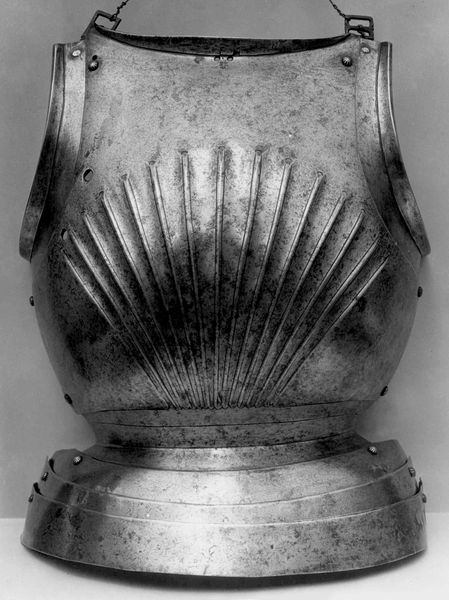
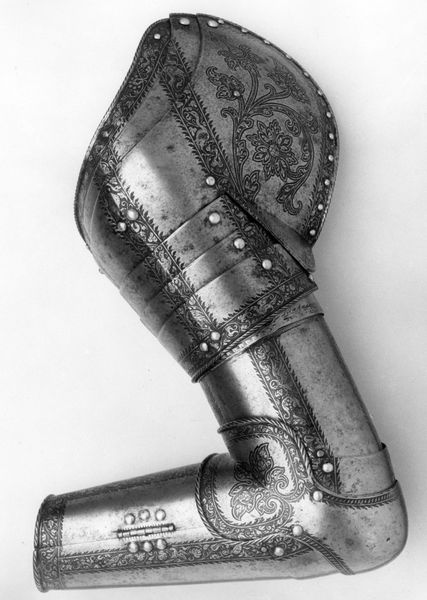
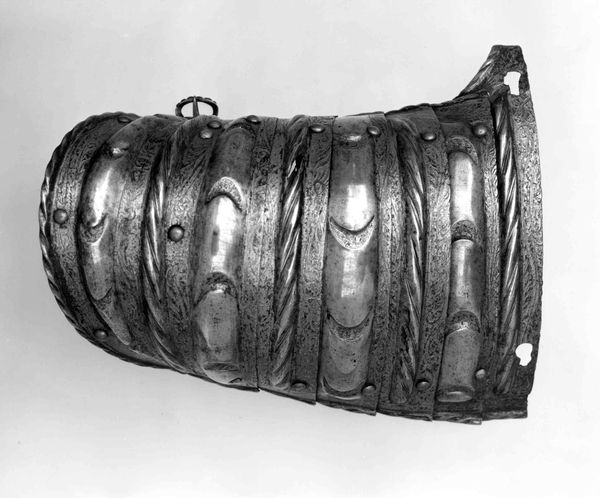
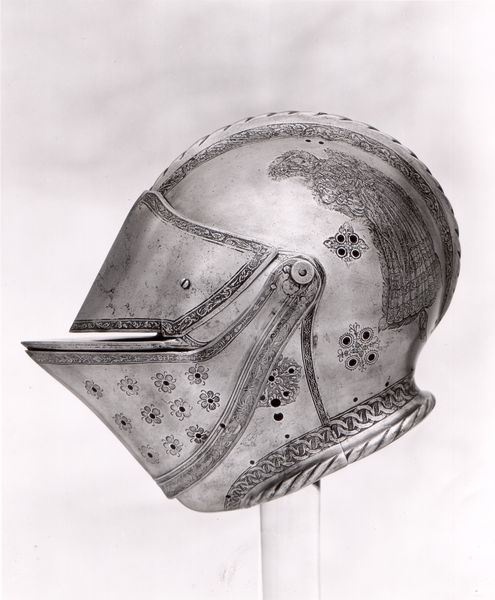
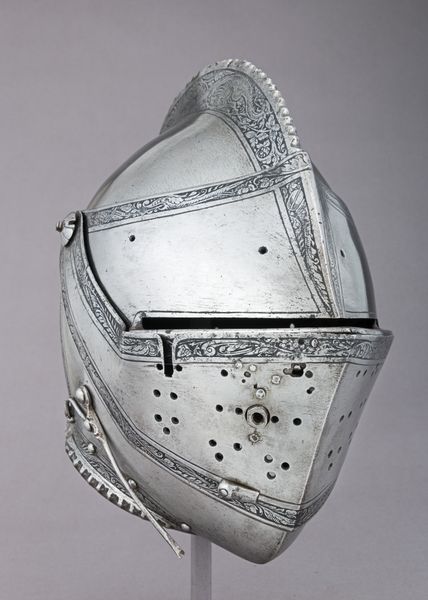
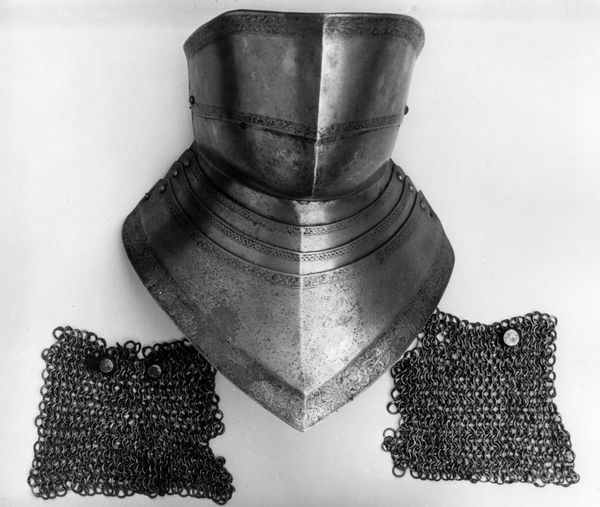
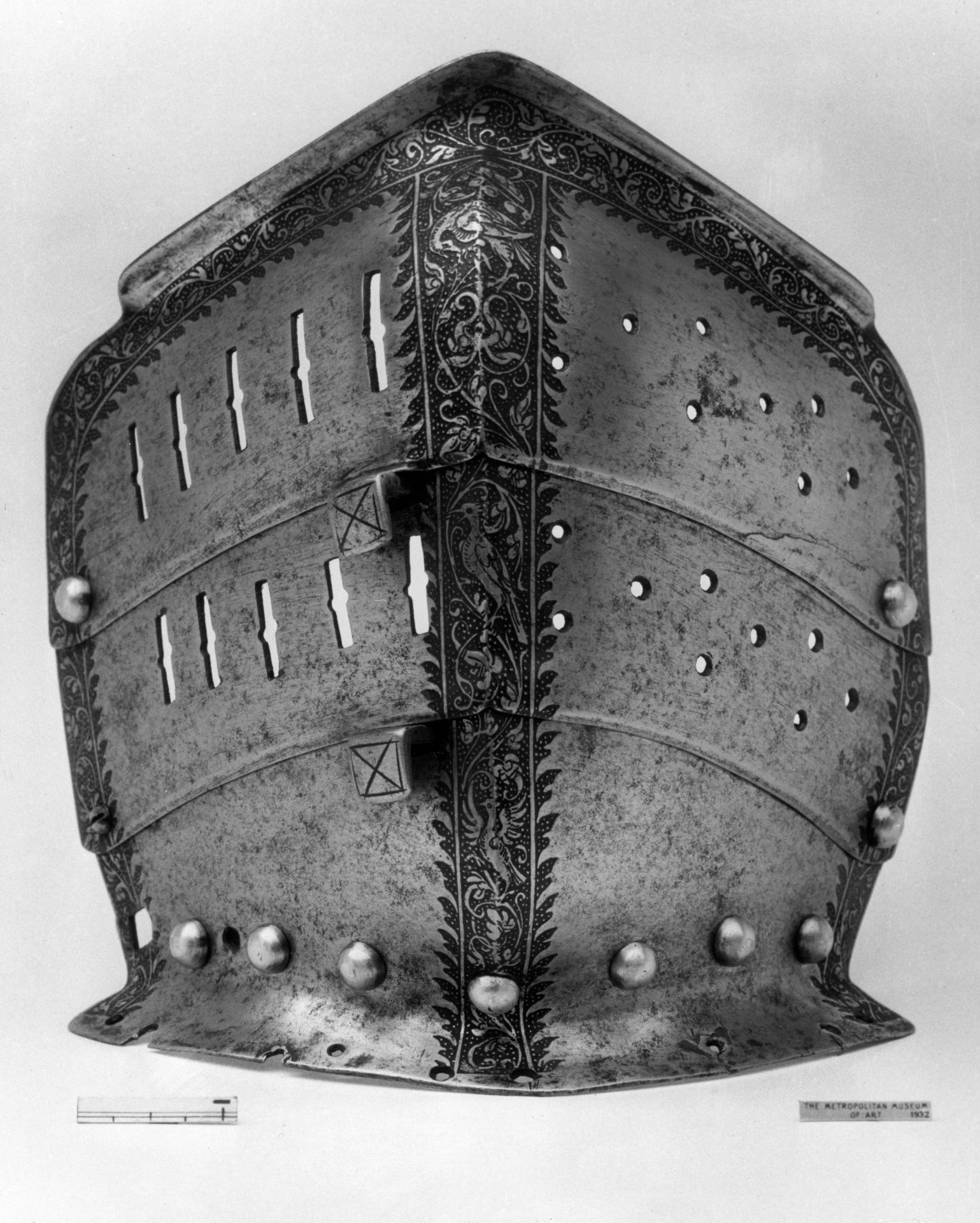
This falling buffe for a helmet was made by Wolfgang Grosschedel in the mid-16th century. It’s primarily constructed of steel, a material known for its strength and resilience. The meticulous process involved shaping the metal, likely through hammering and forging, to create a protective form. Look closely, and you’ll notice the small perforations and slots that allow for ventilation and limited visibility. Notice also the etched designs with intricate floral motifs and stylized figures, demonstrating the armorer’s artistic skill. The creation of such a helmet involved specialized knowledge and a significant amount of labor. Armorers often belonged to guilds, passing down their knowledge through apprenticeships, reflecting a complex interaction between craft, commerce, and social status. Objects like this challenge the traditional distinction between fine art and craft, reminding us of the value in skilled making.
Falling Buffe for a Helmet
1530 - 1585

Wolfgang Grosschedel
1517 - 1562
The Metropolitan Museum of Art
Metropolitan Museum of Art, New York, NYArtwork details
- Medium
- metal, sculpture
- Dimensions
- H. 7 1/2 in. (19.1 cm); W. 6 1/2 in. (16.5 cm); Wt. 1 lb. 1 oz. (481.9 g)
- Location
- Metropolitan Museum of Art, New York, NY
- Copyright
- Public Domain
Tags
Comments
Share your thoughts
About this artwork
This falling buffe for a helmet was made by Wolfgang Grosschedel in the mid-16th century. It’s primarily constructed of steel, a material known for its strength and resilience. The meticulous process involved shaping the metal, likely through hammering and forging, to create a protective form. Look closely, and you’ll notice the small perforations and slots that allow for ventilation and limited visibility. Notice also the etched designs with intricate floral motifs and stylized figures, demonstrating the armorer’s artistic skill. The creation of such a helmet involved specialized knowledge and a significant amount of labor. Armorers often belonged to guilds, passing down their knowledge through apprenticeships, reflecting a complex interaction between craft, commerce, and social status. Objects like this challenge the traditional distinction between fine art and craft, reminding us of the value in skilled making.
Comments
Share your thoughts