c. 1770
Plate

Worcester Royal Porcelain Company
@worcesterroyalporcelaincompany
The Art Institute of Chicago
The Art Institute of ChicagoListen to curator's interpretation
Curatorial notes
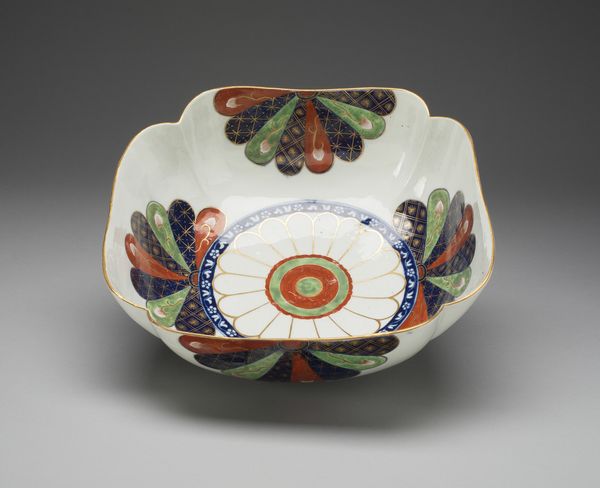
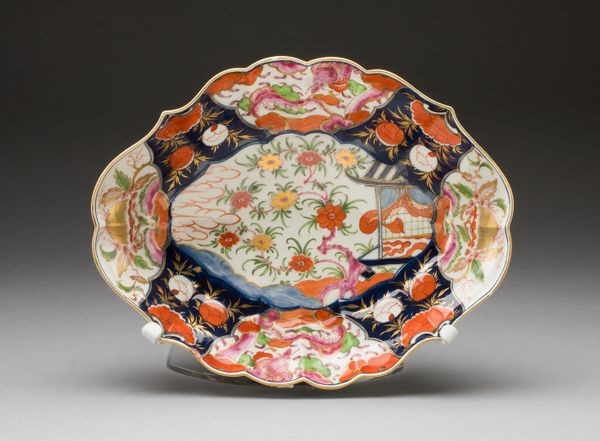
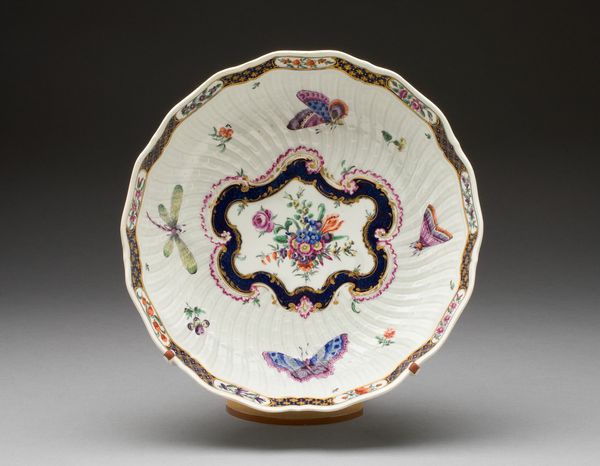
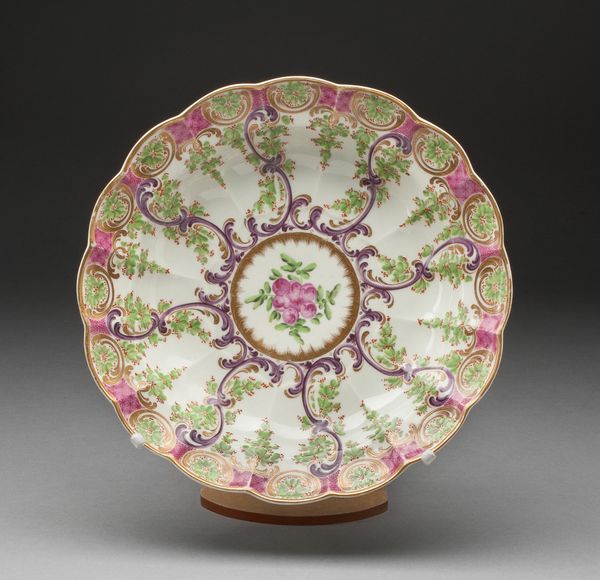
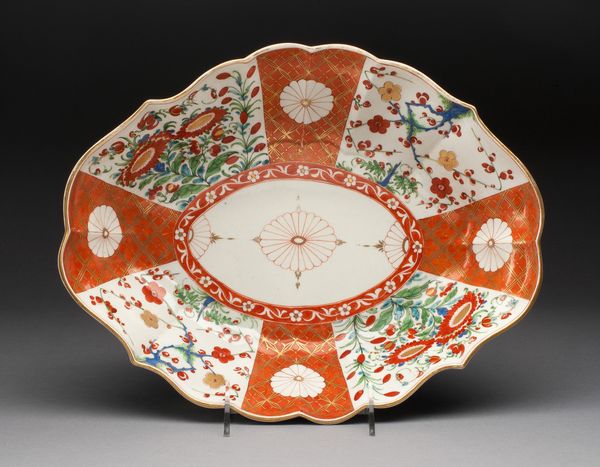
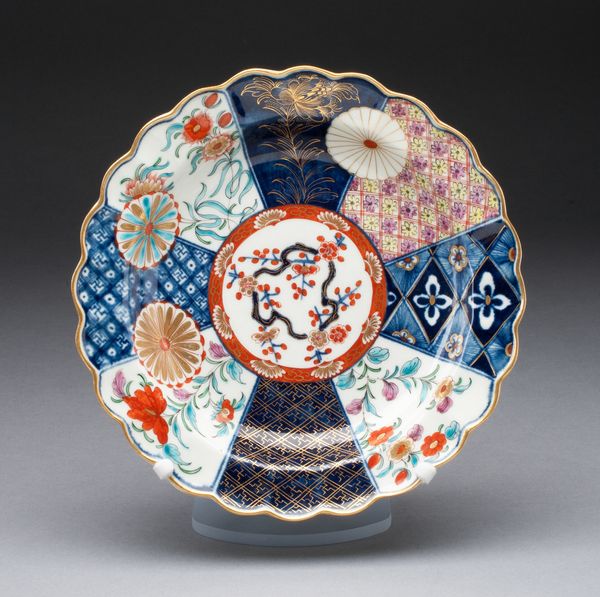
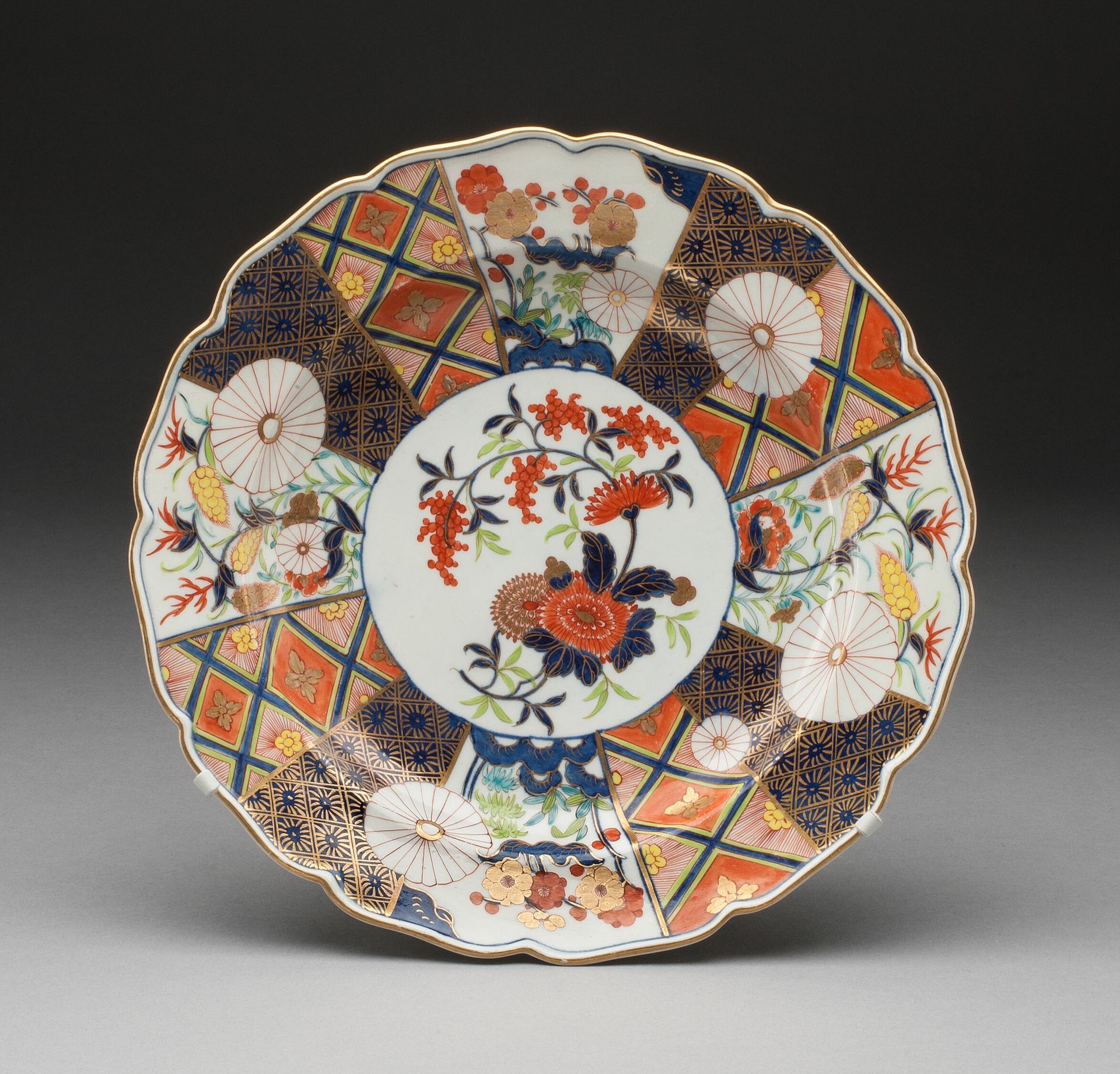
Curator: Let's discuss this beautiful plate crafted around 1770 by the Worcester Royal Porcelain Company, currently residing at The Art Institute of Chicago. It's a delightful piece of porcelain. Editor: It's so visually active! The bold patchwork design immediately strikes me. A series of distinct motifs – geometric patterns and floral arrangements–clash, creating this energetic feeling. Curator: Exactly! Porcelain during this period wasn't merely functional; it was a canvas for displaying wealth, refined taste, and engagement with global artistic trends. The patterns, a mix of Japanese and European aesthetics, signify the global trade influencing British decorative arts. Editor: That intersection is what gets me thinking. Looking at the central floral medallion set against those radial segments and scattered imperial crests feels less like harmony, and more like a forceful arrangement. I wonder about the laborers making this, catering to colonial British society. Curator: An important perspective to keep in mind. But I believe this was meant as a beautiful piece—notice how the floral arrangements themselves borrow heavily from symbolic representation. The Chrysanthemum for instance, a symbol of longevity and joviality. Editor: Sure, but even the selection and stylization of flora holds a narrative about who is centered. European interpretations of Asian art also bring a history of power and domination. It’s never just purely decorative, right? The plate is itself part of a complex network of cultural exchange. Curator: It is! Its decorative exuberance points to a story that's about status and appropriation as much as artistic fusion. By focusing on the symbolism—and the implications of the symbolism in its global, commercial context— we gain a richer understanding of how it spoke to 18th century sensibilities. Editor: I find myself wanting to contextualize the social ramifications of such blatant fusion more. It compels us to reflect on the enduring legacy of colonialism visible in museums today, right? Curator: Yes, indeed! Examining art objects through varying critical frameworks reveals deeper meaning about who we were, are, and aspire to be. Thank you for shedding light on this.