engraving
#
portrait
#
old engraving style
#
11_renaissance
#
engraving
Dimensions: width 117 mm, height 168 mm
Copyright: Rijks Museum: Open Domain
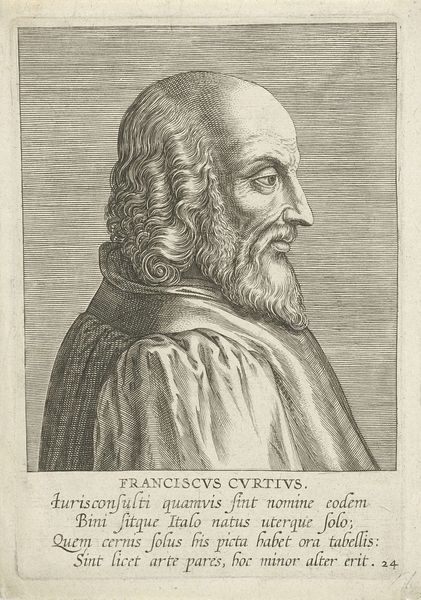
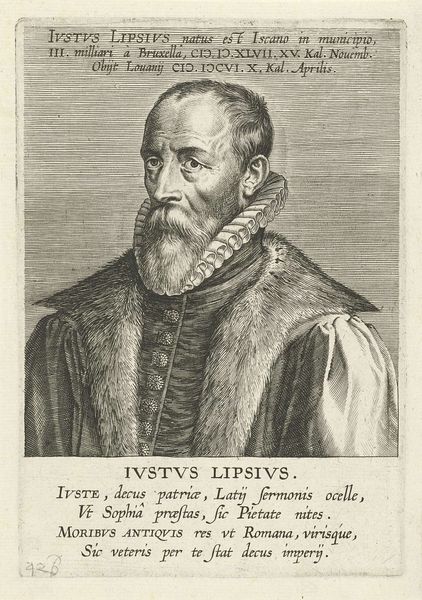
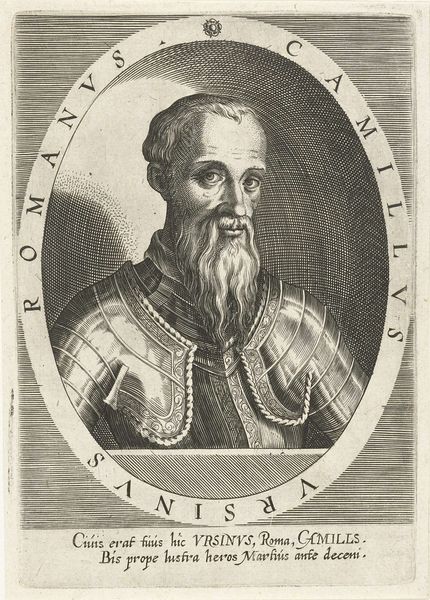
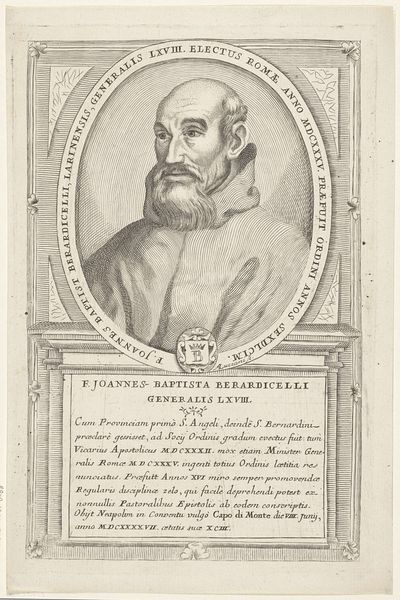
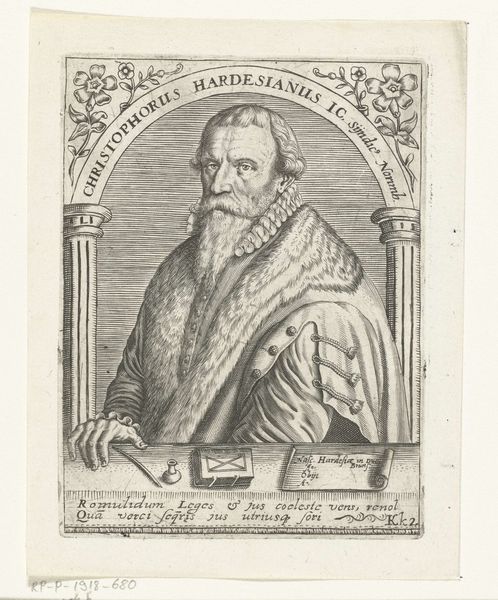
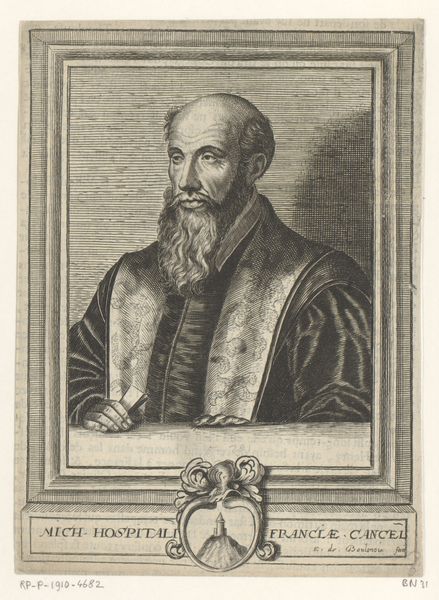
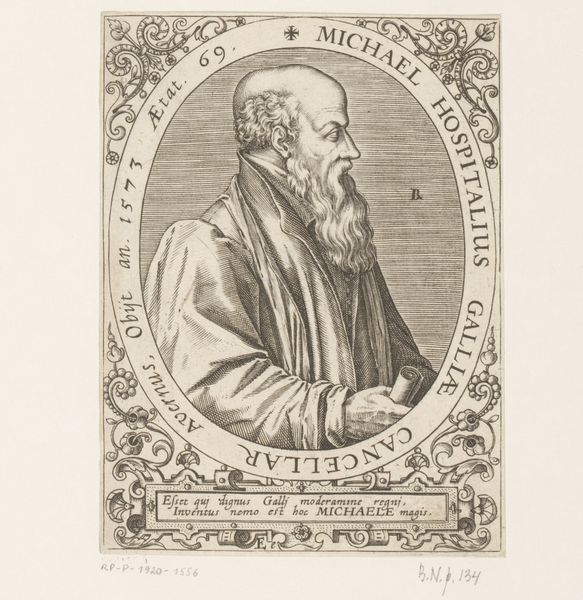
Philips Galle created this engraving of Ludovico Ariosto, the celebrated Italian poet, sometime between 1537 and 1612. Ariosto is depicted in profile, his gaze directed forward, framed by a distinguished beard and fur-lined robes. But look closer. The laurel wreath that should crown the poet's head is conspicuously absent. Instead, we see bare scalp. This absence speaks volumes, connecting us to a broader, more ancient symbol: the poet as visionary, but also as vulnerable mortal. Consider the image of a bare head as a sign of humility and intellectual honesty, recurring across centuries. This motif echoes in depictions of philosophers and thinkers, from ancient Greece to the Renaissance. Each time it resurfaces, it carries the weight of its past, resonating with our collective memory of intellectual pursuit and human frailty. The absence of a crown underscores the tension between earthly existence and the sublime realms of poetry, reminding us that even the most gifted are subject to the relentless passage of time.
Comments
No comments
Be the first to comment and join the conversation on the ultimate creative platform.
 Collect
 React
React Comment
More like this