1713 - 1714
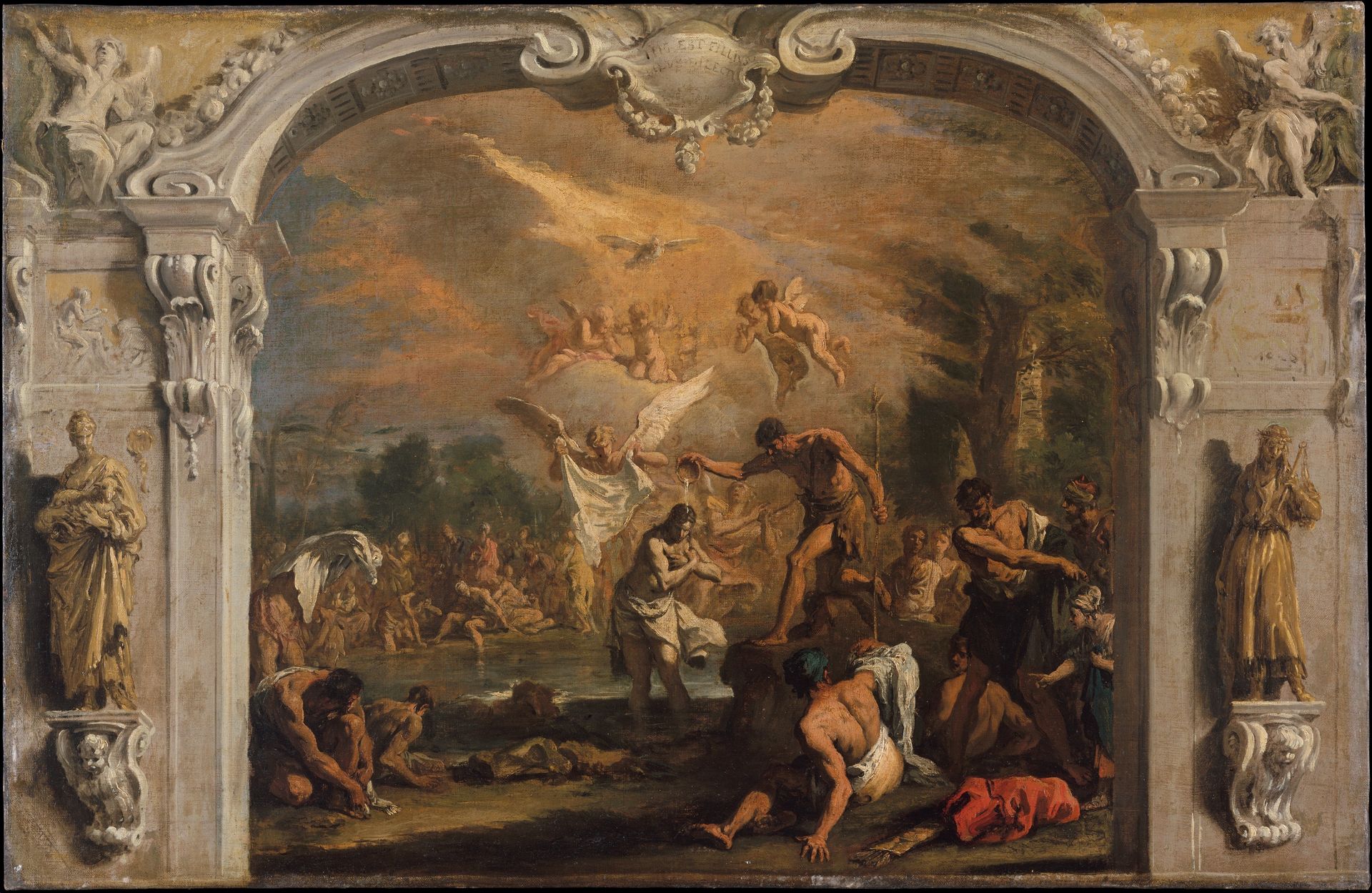
The Baptism of Christ


Listen to curator's interpretation
Curatorial notes
Editor: Here we have Sebastiano Ricci’s "The Baptism of Christ," created with oil paint around 1713-1714. I'm really struck by the asymmetry of the composition; it feels so dynamic and kind of unsettled. What do you see in this piece? Curator: Well, viewing it through a historical lens, the dynamism you observe is very much a characteristic of the Baroque style. Think about how the Catholic Church used art during the Counter-Reformation. Ricci masterfully employs this dramatic composition to enhance the scene's emotional impact. The painting isn’t simply depicting an event; it’s striving to inspire faith and awe in the viewer. Editor: So it was like propaganda, almost? Commissioned to reinforce religious doctrine? Curator: Exactly. The public role of art was significant. Ricci's theatricality is a clear tool for persuading and engaging a wide audience. And it wasn’t just about religion, Baroque art was favored by absolutist regimes too as a way to project power. What do you make of the placement of the angels at the top? Editor: Hmm, the cluster of angels seems to validate the act of baptism from a divine point of view, solidifying that heavenly connection. That brings an extra layer of meaning, tying it all back to the institution of the Church. Curator: Precisely! It brings us back to the politics of imagery. These elements work together to create a potent symbol of faith, deeply interwoven with the social and political climate of the time. I hadn’t considered that particular dimension of how the composition impacts the perception of divine validation. Editor: That's really changed how I see Baroque art now. Thanks! Curator: My pleasure. It’s rewarding to understand how deeply artworks like this were embedded in the power structures of their era.