About this artwork
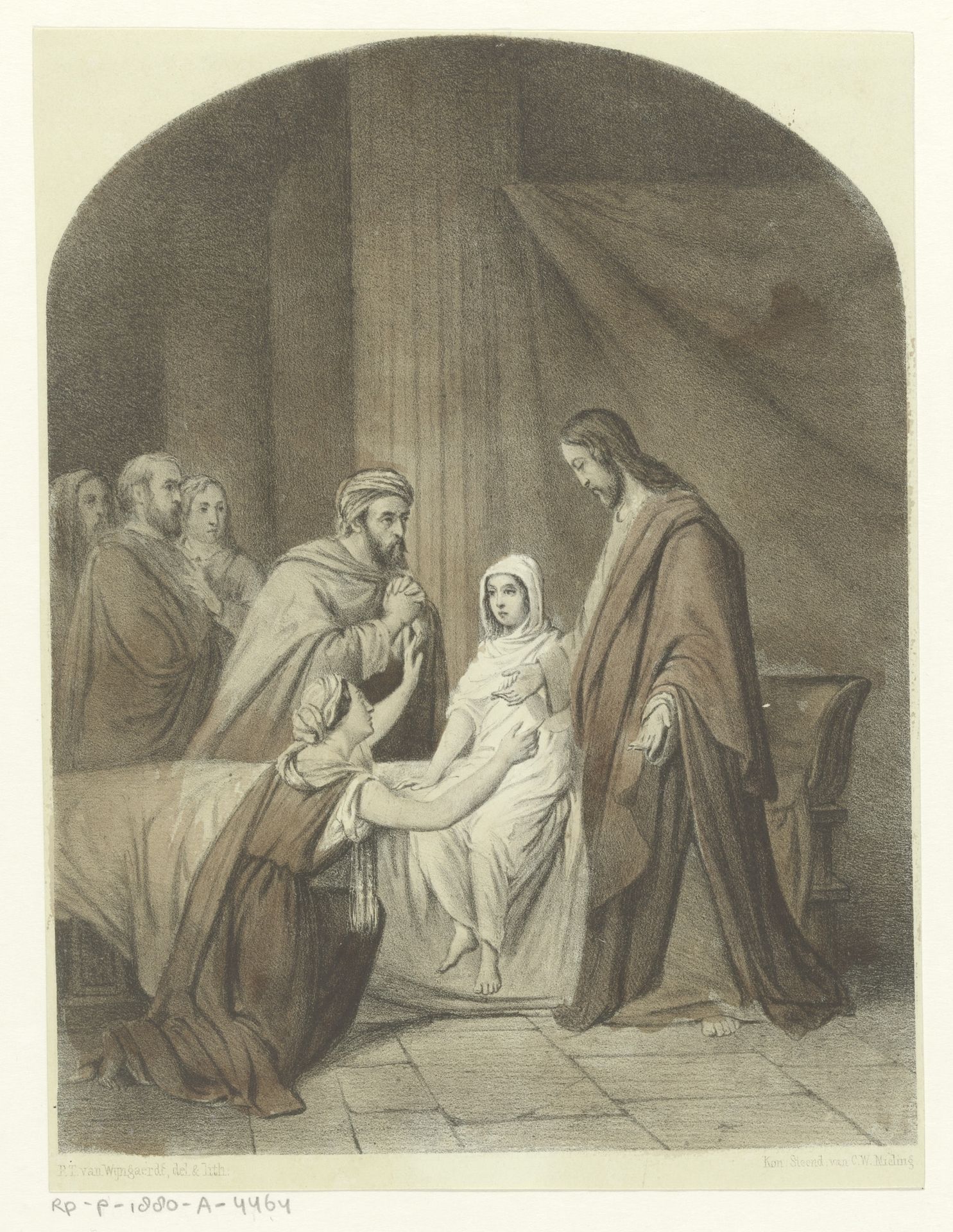
Editor: Here we have Petrus Theodorus van Wijngaerdt’s "Opwekking van de dochter van Jaïrus," an engraving dating from 1847 to 1849. The muted tones create a somber mood, appropriate for the biblical scene. What stands out to you when you look at this piece? Curator: Well, beyond the representational narrative, I’m drawn to the printmaking process itself. Think about the engraver meticulously translating an image onto a metal plate. The labor, the repetitive gestures… it’s a form of production. How does the act of reproduction, through this print, change our understanding of the miracle being depicted? Editor: That’s fascinating, I hadn't considered that. It shifts it away from pure spiritual experience. Curator: Exactly! This wasn’t a painting destined for a wealthy patron's private collection. This image, multiplied and circulated, potentially reached a much wider audience, influencing popular understanding. What can we infer from the artist selecting engraving versus painting in relation to who they wished to access it? Editor: It seems like a deliberate choice to democratize the image. To have it be something available and reproducible to everyone. Curator: Precisely! Now, think about the materials themselves: the metal plate, the paper, the ink. These aren't just neutral components, they represent an economy, a system of distribution and access, which ultimately influences the work’s social life. The piece lives outside of a mere expression. Editor: That gives me a lot to think about. I guess focusing on the production illuminates a whole new side of religious art that is easily overlooked. Curator: Agreed! It demonstrates the importance of understanding the work's materiality to engage more thoroughly with its cultural impact and dissemination of beliefs.
Opwekking van de dochter van Jaïrus
1847 - 1849

Petrus Theodorus van Wijngaerdt
1816 - 1893Location
RijksmuseumArtwork details
- Medium
- print, engraving
- Dimensions
- height 210 mm, width 160 mm
- Location
- Rijksmuseum
- Copyright
- Rijks Museum: Open Domain
Tags
Comments
Share your thoughts
About this artwork
Editor: Here we have Petrus Theodorus van Wijngaerdt’s "Opwekking van de dochter van Jaïrus," an engraving dating from 1847 to 1849. The muted tones create a somber mood, appropriate for the biblical scene. What stands out to you when you look at this piece? Curator: Well, beyond the representational narrative, I’m drawn to the printmaking process itself. Think about the engraver meticulously translating an image onto a metal plate. The labor, the repetitive gestures… it’s a form of production. How does the act of reproduction, through this print, change our understanding of the miracle being depicted? Editor: That’s fascinating, I hadn't considered that. It shifts it away from pure spiritual experience. Curator: Exactly! This wasn’t a painting destined for a wealthy patron's private collection. This image, multiplied and circulated, potentially reached a much wider audience, influencing popular understanding. What can we infer from the artist selecting engraving versus painting in relation to who they wished to access it? Editor: It seems like a deliberate choice to democratize the image. To have it be something available and reproducible to everyone. Curator: Precisely! Now, think about the materials themselves: the metal plate, the paper, the ink. These aren't just neutral components, they represent an economy, a system of distribution and access, which ultimately influences the work’s social life. The piece lives outside of a mere expression. Editor: That gives me a lot to think about. I guess focusing on the production illuminates a whole new side of religious art that is easily overlooked. Curator: Agreed! It demonstrates the importance of understanding the work's materiality to engage more thoroughly with its cultural impact and dissemination of beliefs.
Comments
Share your thoughts