About this artwork
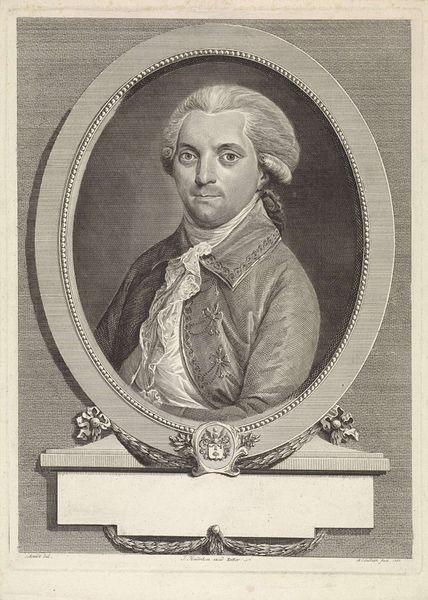
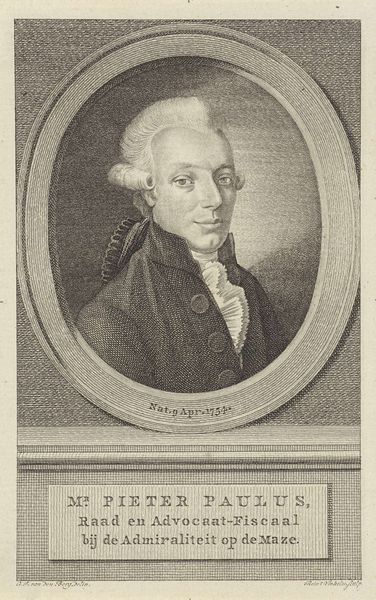
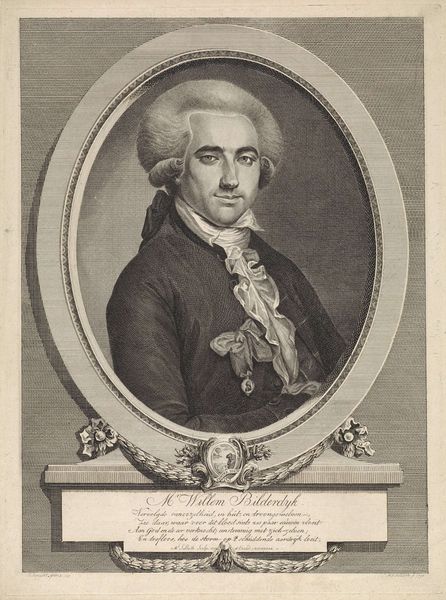
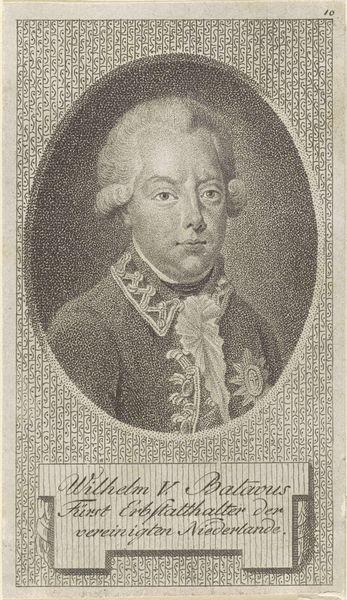
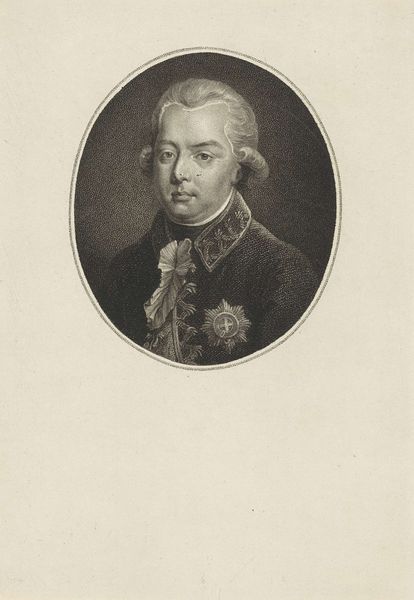
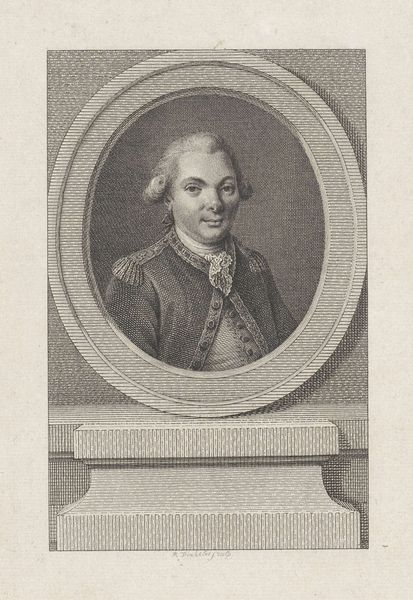
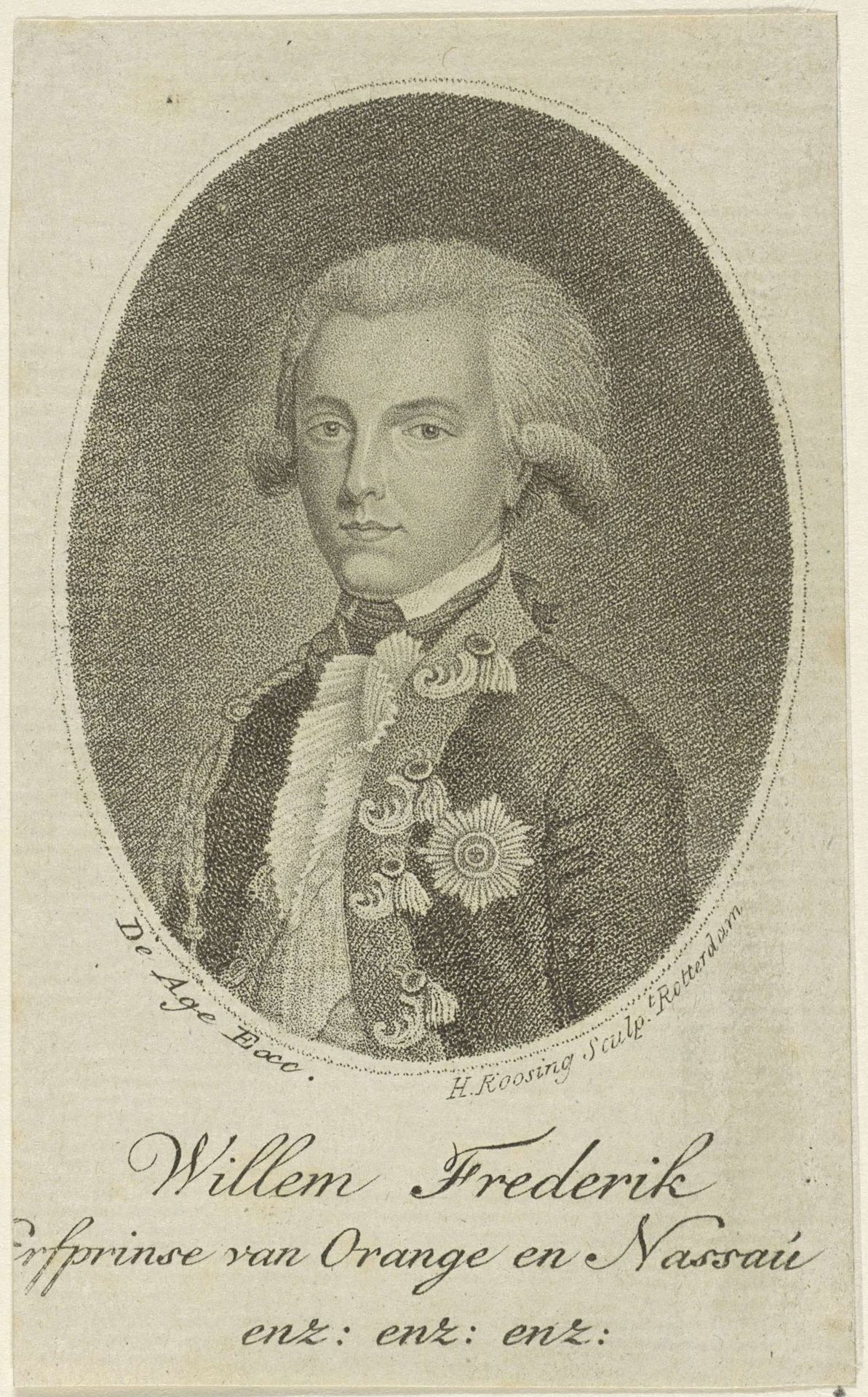
Hendrik Roosing created this portrait of Willem I Frederik, King of the Netherlands. Notice how the oval frame dominates the visual experience, tightly focusing our attention. Roosing’s use of engraving, with its fine lines and delicate shading, creates a sense of formality that mirrors the subject’s status. The composition is carefully structured; the subject is centrally placed, his gaze direct, engaging the viewer in a subtle yet assertive manner. The intricate details of his attire, from the lace collar to the ornate decorations, are rendered with precision, reflecting both the opulence of his position and the engraver's skill. The work invites reflection on the nature of portraiture itself. It captures an individual likeness and communicates power and authority through symbolic representation. This portrait becomes a statement about identity, status, and the role of representation in constructing historical narratives.
Portret van Willem I Frederik, koning der Nederlanden
1790 - 1801

Hendrik Roosing
1763 - 1826Location
RijksmuseumArtwork details
- Medium
- print, paper, engraving
- Dimensions
- height 98 mm, width 61 mm
- Location
- Rijksmuseum
- Copyright
- Rijks Museum: Open Domain
Tags
portrait
neoclacissism
16_19th-century
old engraving style
paper
pencil drawing
engraving
Comments
Be the first to share your thoughts about this work.
About this artwork
Hendrik Roosing created this portrait of Willem I Frederik, King of the Netherlands. Notice how the oval frame dominates the visual experience, tightly focusing our attention. Roosing’s use of engraving, with its fine lines and delicate shading, creates a sense of formality that mirrors the subject’s status. The composition is carefully structured; the subject is centrally placed, his gaze direct, engaging the viewer in a subtle yet assertive manner. The intricate details of his attire, from the lace collar to the ornate decorations, are rendered with precision, reflecting both the opulence of his position and the engraver's skill. The work invites reflection on the nature of portraiture itself. It captures an individual likeness and communicates power and authority through symbolic representation. This portrait becomes a statement about identity, status, and the role of representation in constructing historical narratives.
Comments
Be the first to share your thoughts about this work.