About this artwork
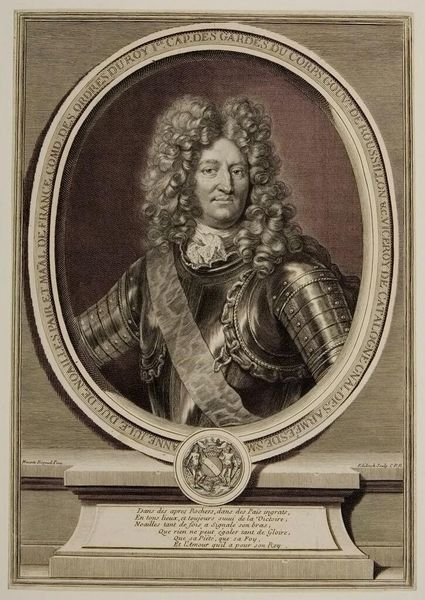
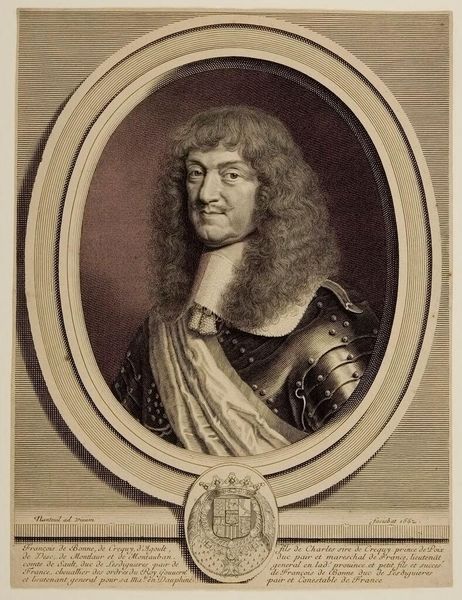
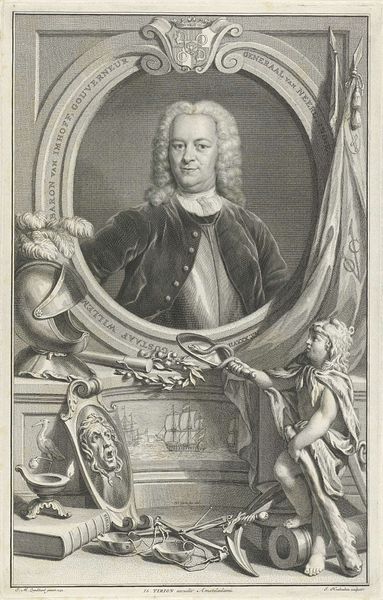
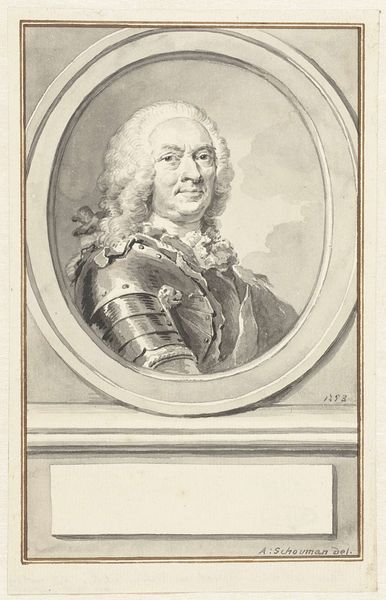
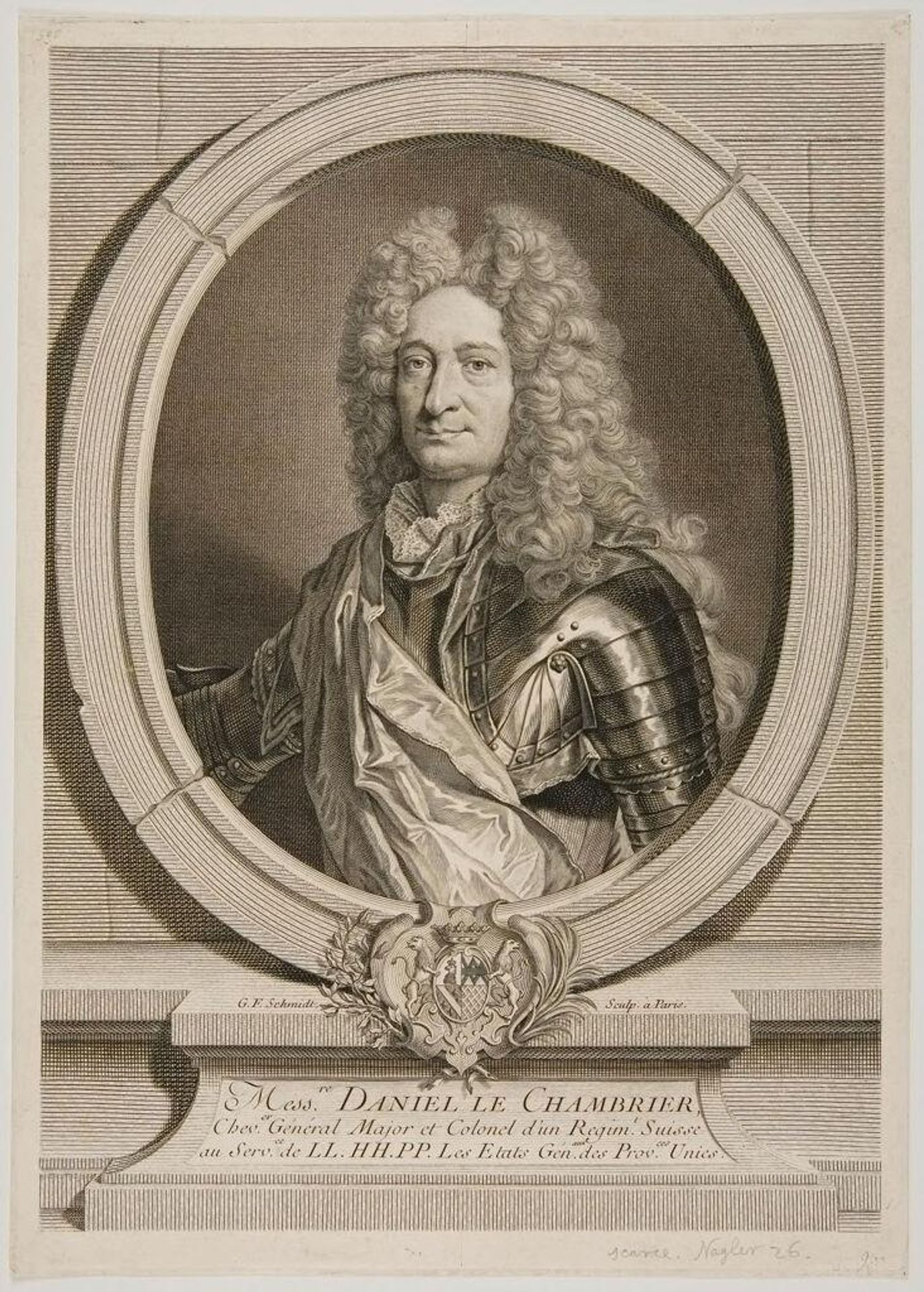
Editor: So, this is a portrait of Daniel Le Chambrier by Georg Friedrich Schmidt. It’s a black and white print. I'm struck by how the armor and elaborate wig seem to signify power, but I wonder, what does this portrait say about the sitter's position in society? Curator: It's interesting to consider how Schmidt's portrait participates in constructing a narrative of power. Chambrier was a Swiss General Major, serving the United Provinces. Think about the visual language of armour. What social messages does that choice in attire send? Editor: It suggests military strength and authority. But does it also point to potential conflicts within his identity, being Swiss but serving another nation? Curator: Precisely! The portrait, while seemingly straightforward, hints at the complexities of identity and service during that era. The role of Swiss mercenaries in the power dynamics of 18th-century Europe, for instance. Editor: I hadn't considered the layers of meaning embedded in what I initially saw as just a formal portrait. Thanks! Curator: Indeed. Art often reflects the social and political landscapes in which it was created, inviting us to delve deeper into historical power structures.
Daniel Le Chambrier
c. 18th century


Artwork details
- Location
- Harvard Art Museums
- Copyright
- CC0 1.0
Comments
Share your thoughts
About this artwork
Editor: So, this is a portrait of Daniel Le Chambrier by Georg Friedrich Schmidt. It’s a black and white print. I'm struck by how the armor and elaborate wig seem to signify power, but I wonder, what does this portrait say about the sitter's position in society? Curator: It's interesting to consider how Schmidt's portrait participates in constructing a narrative of power. Chambrier was a Swiss General Major, serving the United Provinces. Think about the visual language of armour. What social messages does that choice in attire send? Editor: It suggests military strength and authority. But does it also point to potential conflicts within his identity, being Swiss but serving another nation? Curator: Precisely! The portrait, while seemingly straightforward, hints at the complexities of identity and service during that era. The role of Swiss mercenaries in the power dynamics of 18th-century Europe, for instance. Editor: I hadn't considered the layers of meaning embedded in what I initially saw as just a formal portrait. Thanks! Curator: Indeed. Art often reflects the social and political landscapes in which it was created, inviting us to delve deeper into historical power structures.
Comments
Share your thoughts