About this artwork
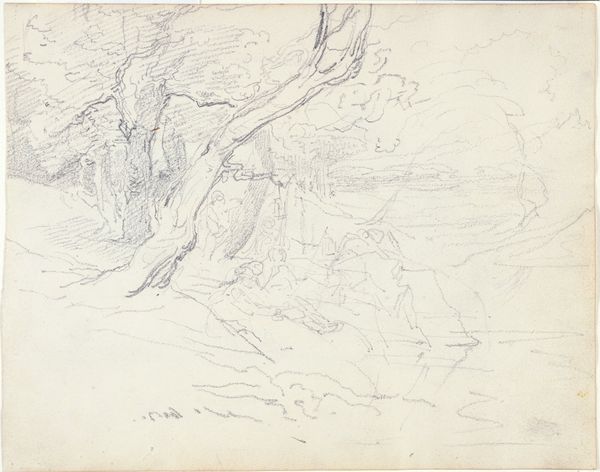
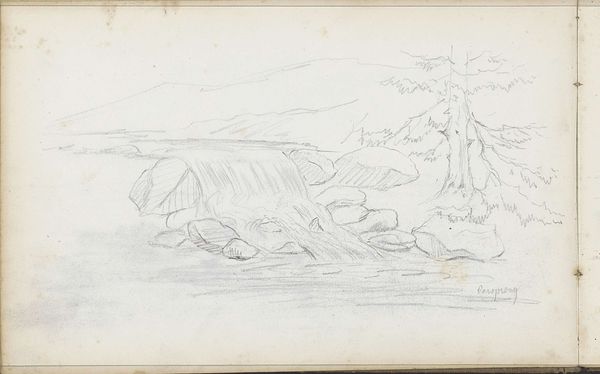
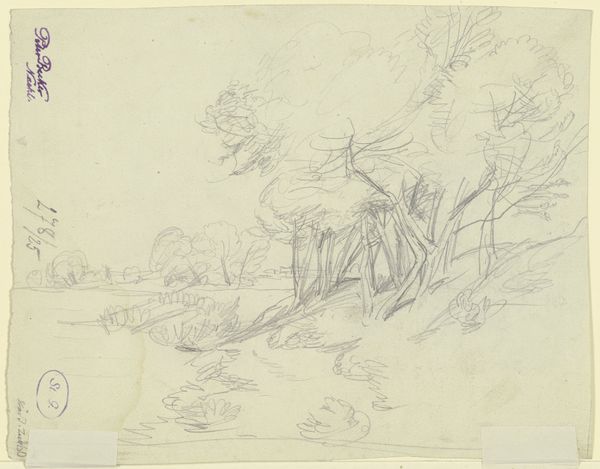
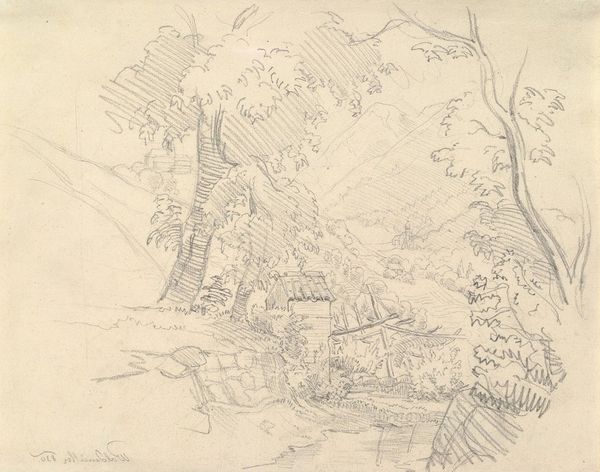
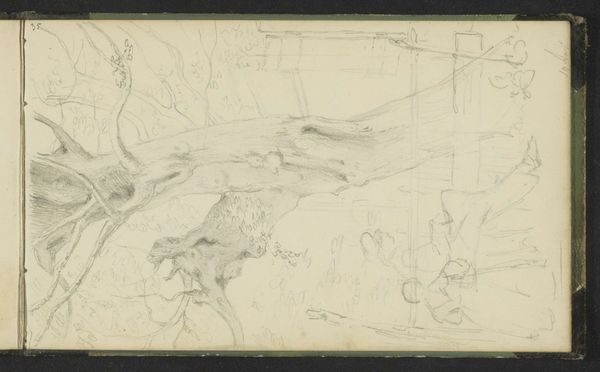
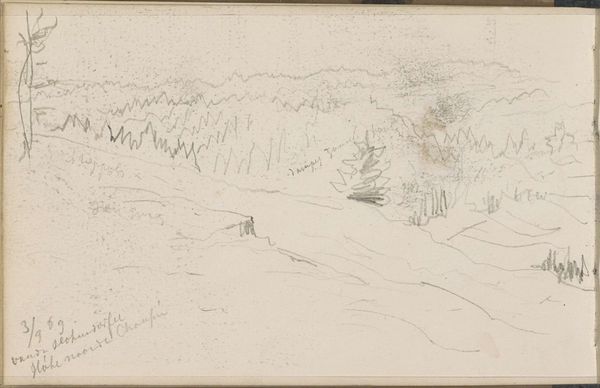
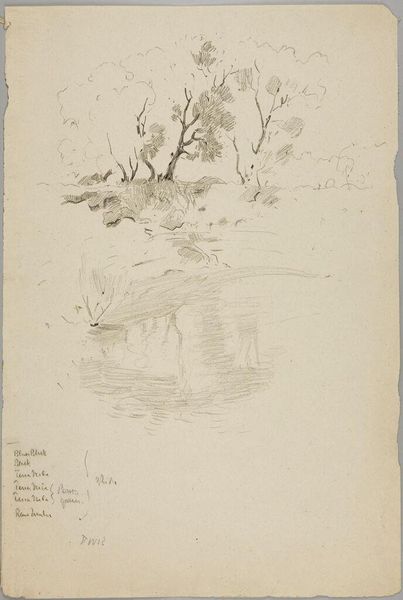
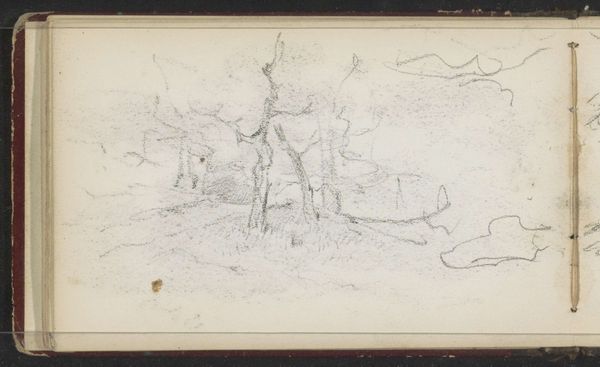
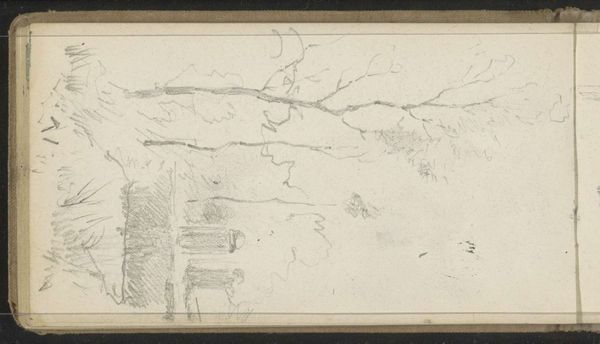
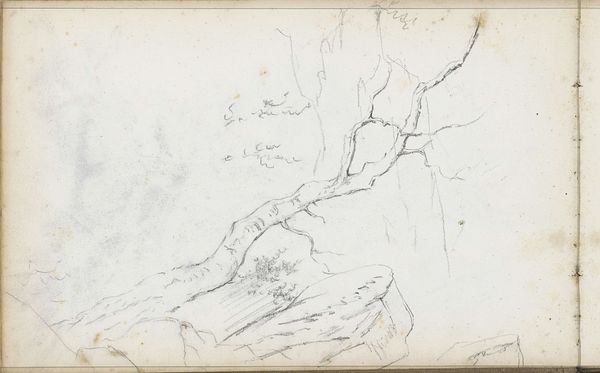
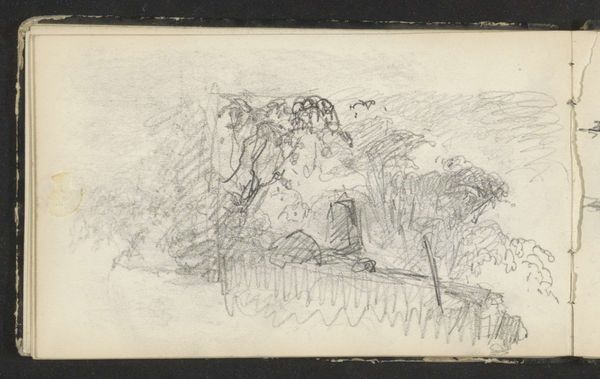
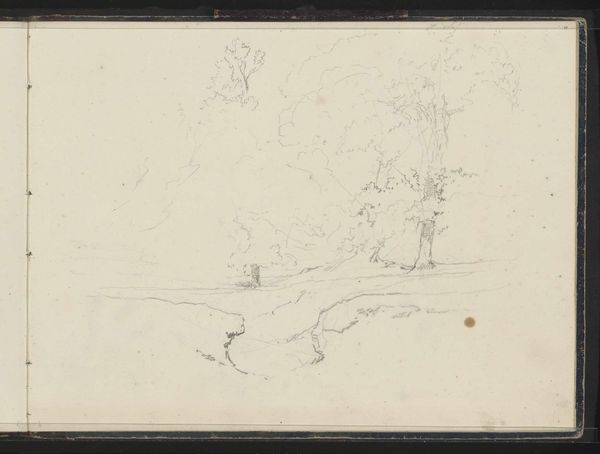
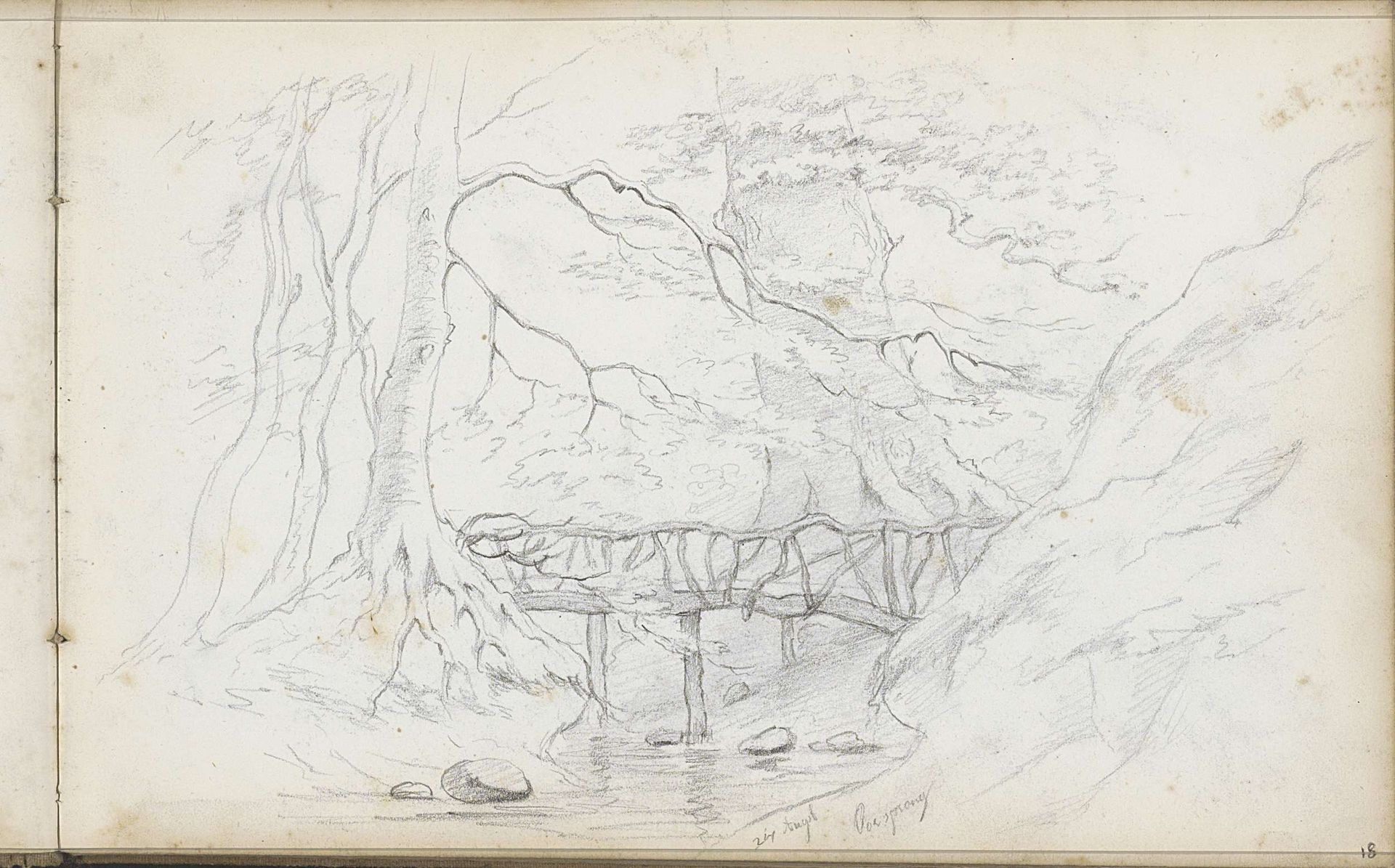
Willem Cornelis Rip created this graphite drawing of a bridge over a brook in Oosterbeek. The initial impression is one of a tranquil scene, yet, the drawing is charged with dynamic potential. Rip's compositional choices are particularly striking. The bridge, although central, is not presented in a straightforward manner. Instead, it's partially obscured by the looming presence of the surrounding foliage. The trees, with their complex network of roots and branches, compete for visual dominance, creating a spatial tension. Notice Rip’s skilled use of line. He varies the line weight to suggest depth and texture. This technique is essential to understanding the structure of the piece, as it creates a sense of three-dimensionality on a two-dimensional surface. The bridge serves as a physical and symbolic link, an invitation into the unknown. Rip uses the formal qualities of the drawing to ask us to contemplate our relationship with the natural world. He destabilizes our expectations, encouraging us to see beyond the surface and discover the complex structures that lie beneath.
Brug over een beek op het landgoed Oorsprong te Oosterbeek 1874 - 1878

Artwork details
- Medium
- drawing, pencil
- Dimensions
- height 184 mm, width 282 mm
- Copyright
- Rijks Museum: Open Domain
Tags
drawing
landscape
pencil
realism
Comments
No comments
About this artwork
Willem Cornelis Rip created this graphite drawing of a bridge over a brook in Oosterbeek. The initial impression is one of a tranquil scene, yet, the drawing is charged with dynamic potential. Rip's compositional choices are particularly striking. The bridge, although central, is not presented in a straightforward manner. Instead, it's partially obscured by the looming presence of the surrounding foliage. The trees, with their complex network of roots and branches, compete for visual dominance, creating a spatial tension. Notice Rip’s skilled use of line. He varies the line weight to suggest depth and texture. This technique is essential to understanding the structure of the piece, as it creates a sense of three-dimensionality on a two-dimensional surface. The bridge serves as a physical and symbolic link, an invitation into the unknown. Rip uses the formal qualities of the drawing to ask us to contemplate our relationship with the natural world. He destabilizes our expectations, encouraging us to see beyond the surface and discover the complex structures that lie beneath.
Comments
No comments