About this artwork
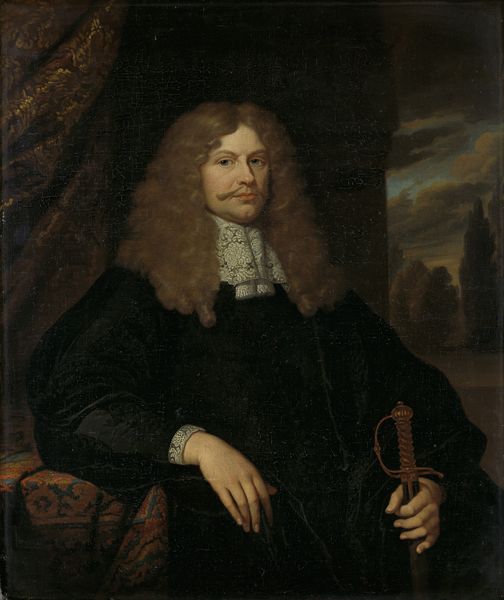
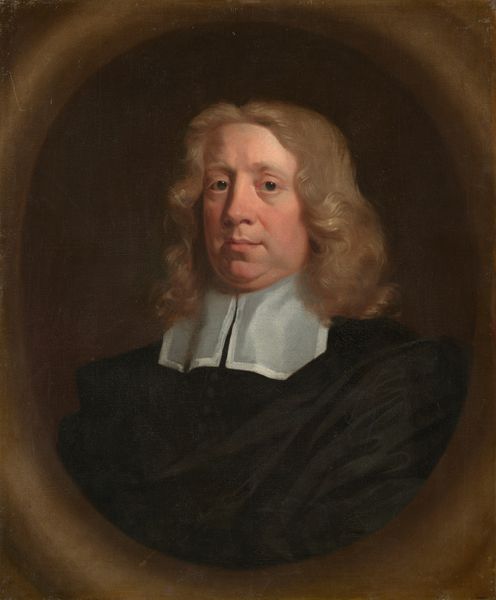
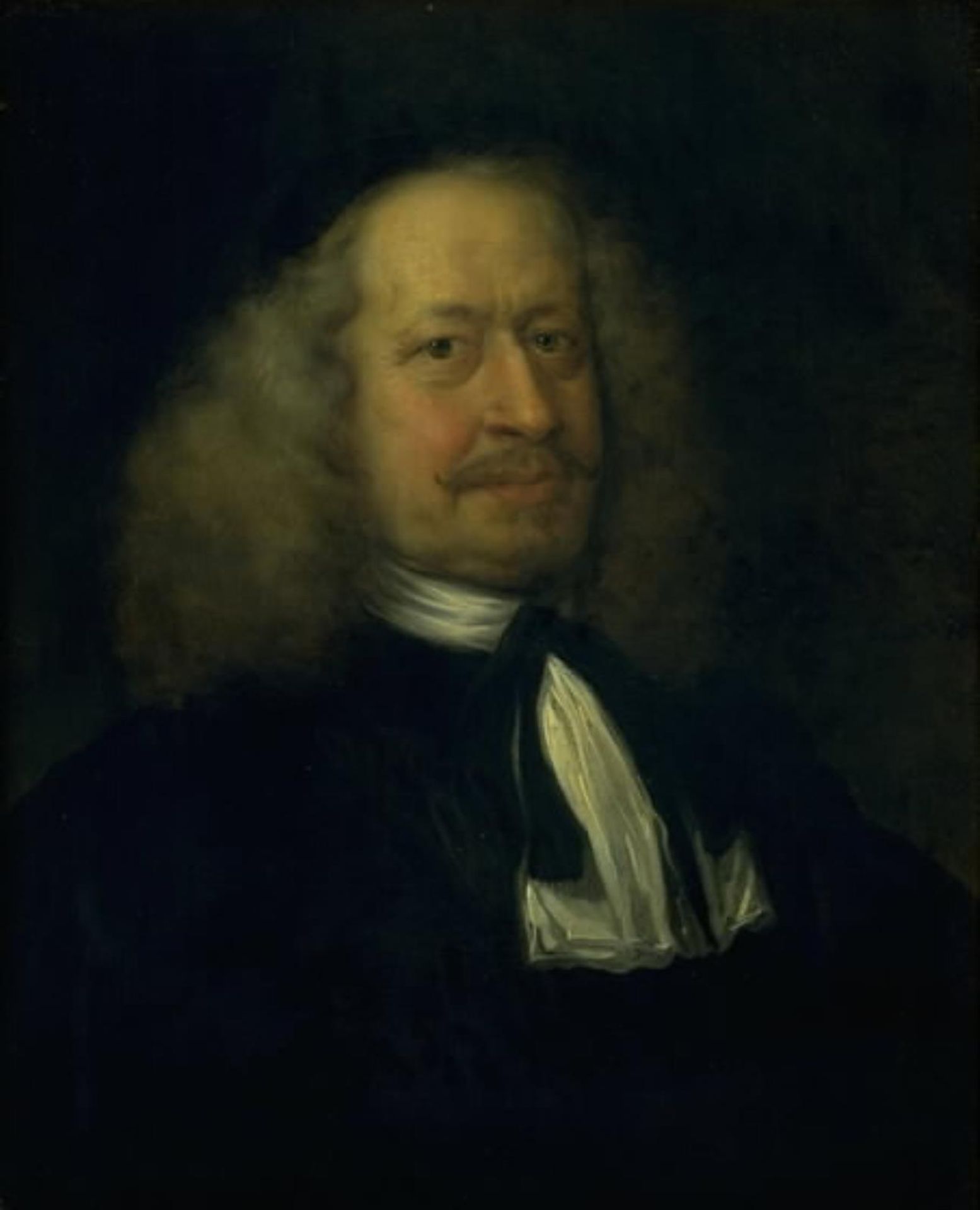
Editor: This is Jürgen Ovens' "Portrait of Adam Olearius, Librarian to the Court at Gottorp," painted in 1669. It’s an oil on canvas, and I’m struck by the sitter’s knowing gaze. It makes me wonder, what story does his portrait try to tell? Curator: Olearius’s knowing gaze, as you say, does beckon a dialogue across time. He's depicted not just as an individual, but as a vessel of knowledge, the librarian. Consider the evolution of the librarian’s image across centuries - what does his slightly off-center wig or minimalist clothing suggest about status and learnedness here? Editor: I suppose I assumed the wig was simply fashionable for the time. Could the apparent plainness in dress indicate a focus on intellectual pursuits rather than material wealth? Curator: Precisely! And in terms of iconographic language, black has often symbolized solemnity and seriousness – think of judicial robes. But look also at his neckwear. What might the artist intend, with the single visible spot of intense bright-white linen, a detail emerging out of near darkness? Editor: Maybe it emphasizes purity or enlightenment? The contrast really draws the eye. Curator: Exactly! Baroque portraiture is brimming with a calculated awareness of visual symbols that speaks beyond the purely representational. This is a public intellectual presented amidst the rising enlightenment. Think about other images of famous men, like philosophers or religious leaders… What remains the same and what shifts based on the specific cultures, epochs, and intended audience of these images? Editor: That's a fascinating perspective; I hadn't considered the historical implications of each element within the portrait. I guess a portrait says as much about an era's values as it does about the individual depicted. Curator: Indeed. By engaging with these symbols, we’re not just looking at a portrait but at a reflection of cultural memory.
Portrait of Adam Olearius, Librarian to the Court at Gottorp
1669


Artwork details
- Medium
- oil-paint, canvas
- Dimensions
- 62.5 cm (height) x 50.5 cm (width) (Netto)
- Location
- SMK - Statens Museum for Kunst
Tags
Comments
Share your thoughts
About this artwork
Editor: This is Jürgen Ovens' "Portrait of Adam Olearius, Librarian to the Court at Gottorp," painted in 1669. It’s an oil on canvas, and I’m struck by the sitter’s knowing gaze. It makes me wonder, what story does his portrait try to tell? Curator: Olearius’s knowing gaze, as you say, does beckon a dialogue across time. He's depicted not just as an individual, but as a vessel of knowledge, the librarian. Consider the evolution of the librarian’s image across centuries - what does his slightly off-center wig or minimalist clothing suggest about status and learnedness here? Editor: I suppose I assumed the wig was simply fashionable for the time. Could the apparent plainness in dress indicate a focus on intellectual pursuits rather than material wealth? Curator: Precisely! And in terms of iconographic language, black has often symbolized solemnity and seriousness – think of judicial robes. But look also at his neckwear. What might the artist intend, with the single visible spot of intense bright-white linen, a detail emerging out of near darkness? Editor: Maybe it emphasizes purity or enlightenment? The contrast really draws the eye. Curator: Exactly! Baroque portraiture is brimming with a calculated awareness of visual symbols that speaks beyond the purely representational. This is a public intellectual presented amidst the rising enlightenment. Think about other images of famous men, like philosophers or religious leaders… What remains the same and what shifts based on the specific cultures, epochs, and intended audience of these images? Editor: That's a fascinating perspective; I hadn't considered the historical implications of each element within the portrait. I guess a portrait says as much about an era's values as it does about the individual depicted. Curator: Indeed. By engaging with these symbols, we’re not just looking at a portrait but at a reflection of cultural memory.
Comments
Share your thoughts