

1844
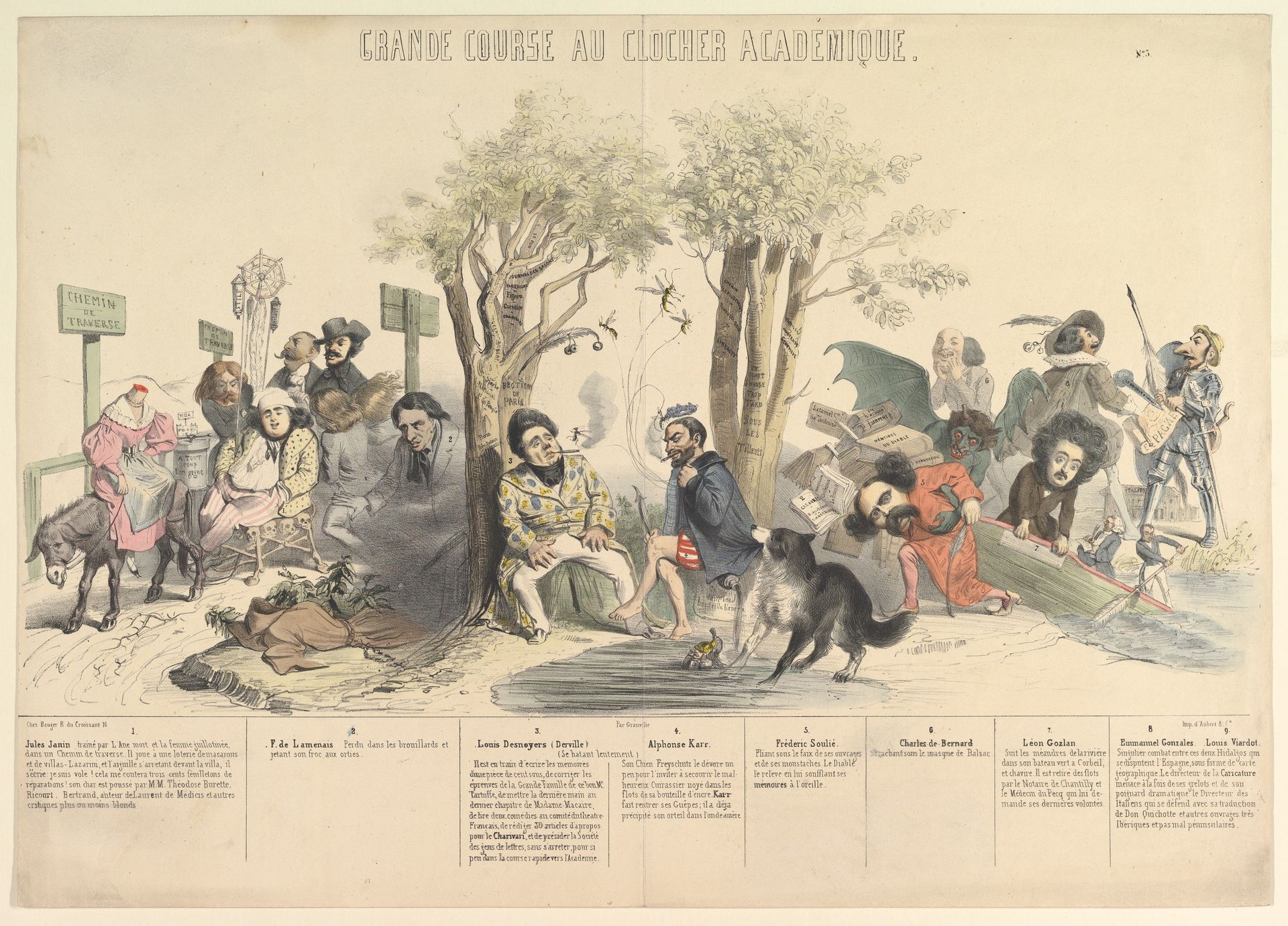
Grand Course au Clocher Académique, No. 5

Listen to curator's interpretation
Curatorial notes
J. J. Grandville’s lithograph, "Grand Course au Clocher Académique, No. 5," presents a satirical race of figures towards the Academic steeple. Note the prominent motif of the donkey, ridden by a figure dressed in academic robes. Since antiquity, the donkey has been a symbol of foolishness, stubbornness, and a lack of refinement. The artist employs the animal to mock academia. We see this symbolism echoed in the works of artists like Pieter Bruegel the Elder, who used animals to critique human behavior. Now consider the swarm of insects hovering around the figures. Insects, often seen as pests, represent irritation and decay. This motif appears throughout art history—from medieval vanitas paintings to the works of Hieronymus Bosch—symbolizing mortality and the fleeting nature of human endeavors. In this cartoon, the donkey and insects engage us on a deep, subconscious level, evoking feelings of scorn for the shortcomings of academia. The images resonate powerfully as collective memory associates them with vice and mortality. The use of these symbols highlights the cyclical progression of imagery, reminding us that motifs can resurface, evolve, and be imbued with new meaning across contexts.