1746
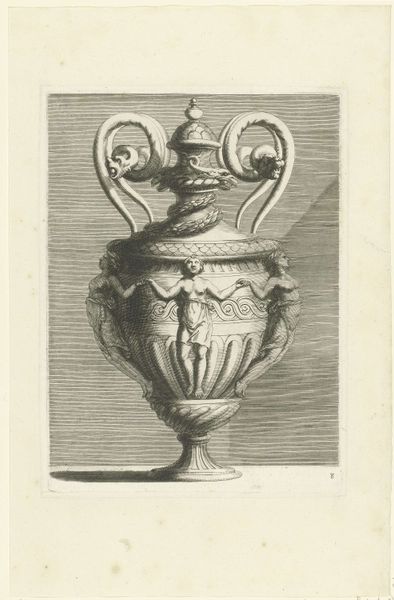
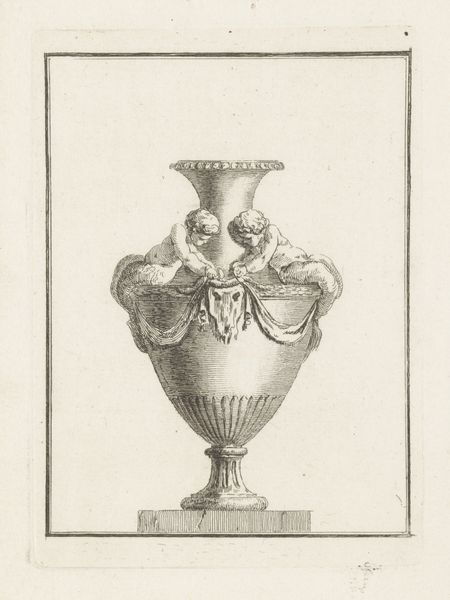
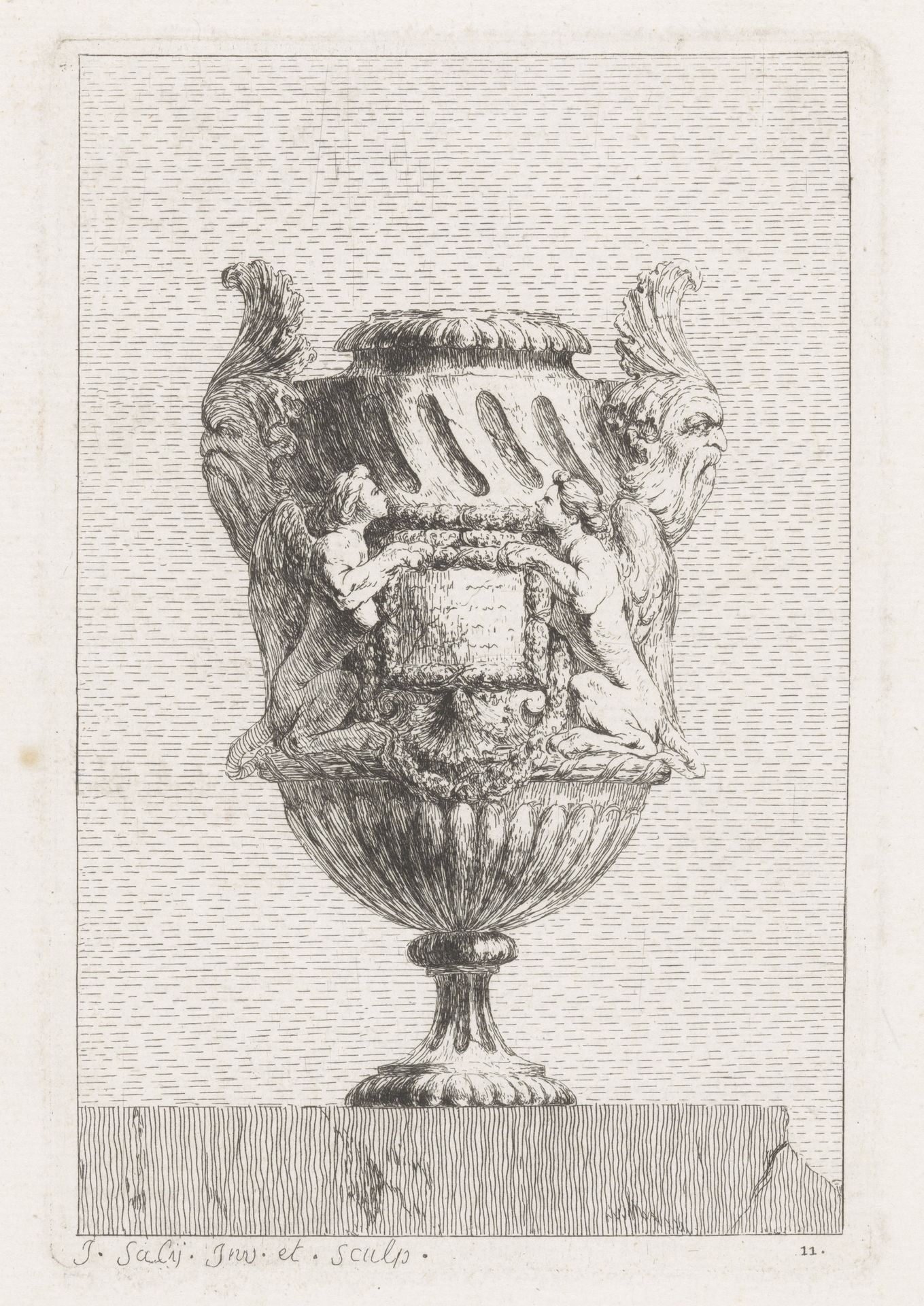
Vaas met sfinxen

Jacques François Joseph Saly
1717 - 1776Location
RijksmuseumListen to curator's interpretation
Curatorial notes
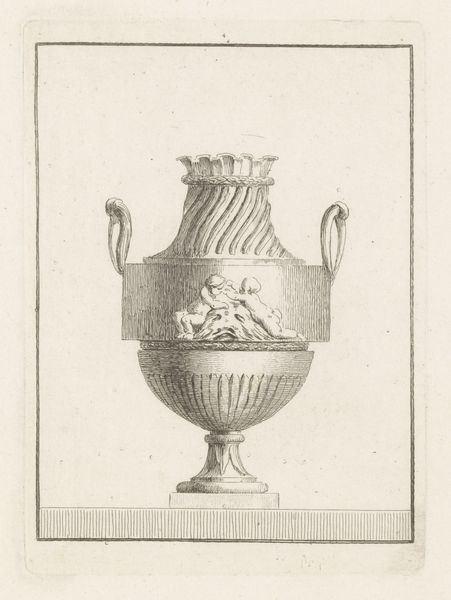
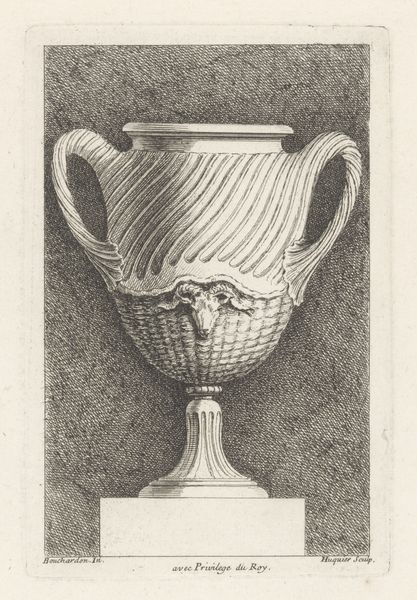
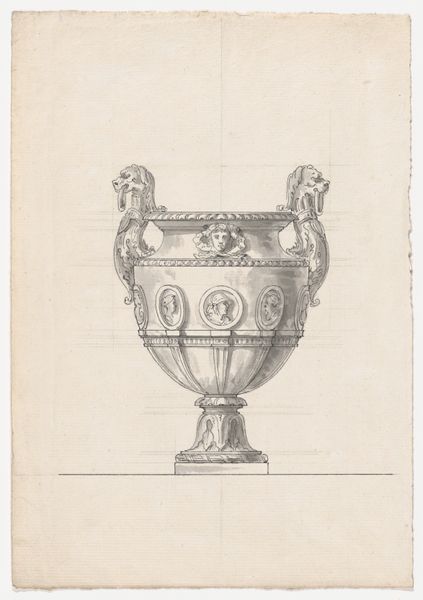
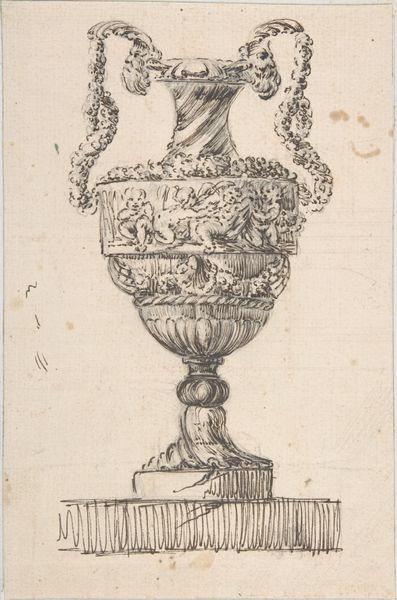
This print, Vase with Sphinxes, was made by Jacques François Joseph Saly, likely in France, during the mid-18th century. Its visual language speaks to the era's obsession with classical forms, updated through a Rococo sensibility. The vase itself is a study in contrasts. We see the severe symmetry of ancient Greek pottery enlivened with playful, sensual figures. Sphinxes, traditional symbols of wisdom and guardianship, are rendered with a light, almost frivolous touch. Putti, or cherubic figures, flank what would have been a space for heraldry. Saly, who served as a court sculptor, was deeply embedded in the institutional art world, and this print reflects the aesthetic values of the French court. His work was influential in shaping public taste and promoting a vision of French power and sophistication. To understand this print fully, one could delve into the archives of the French royal collections, studying the inventories of decorative arts. Only then can we begin to understand the complex interplay of art, power, and social identity in 18th-century France.