About this artwork
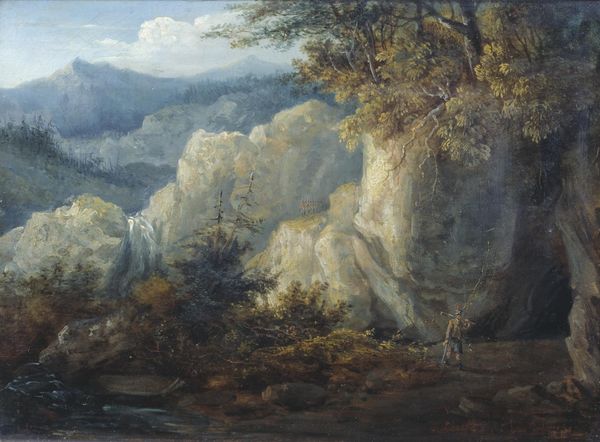
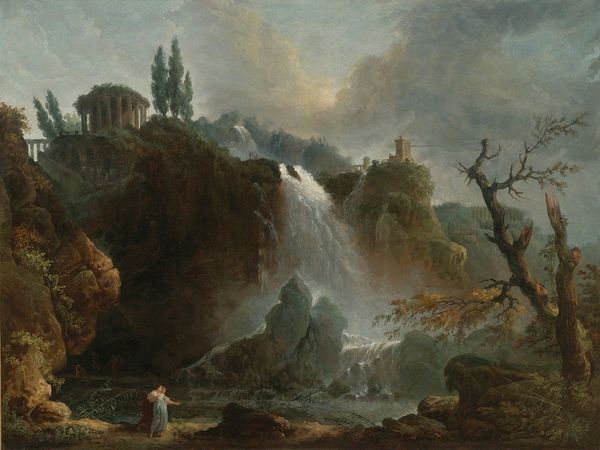
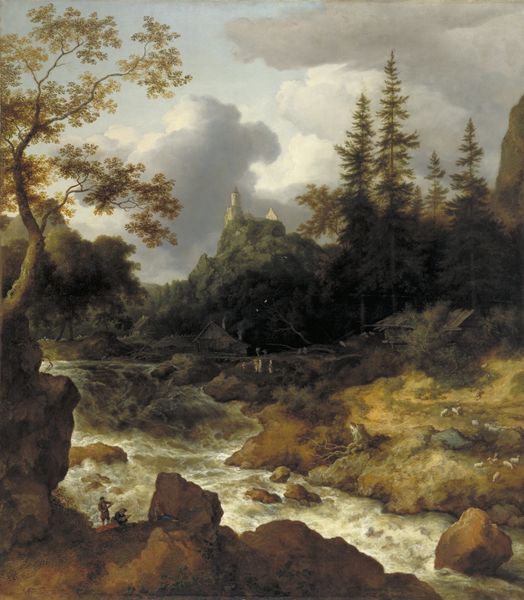
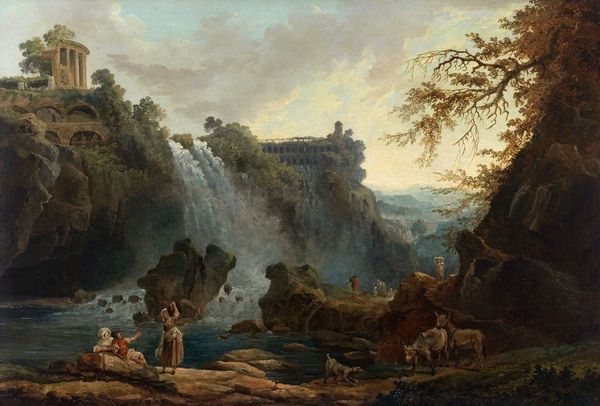
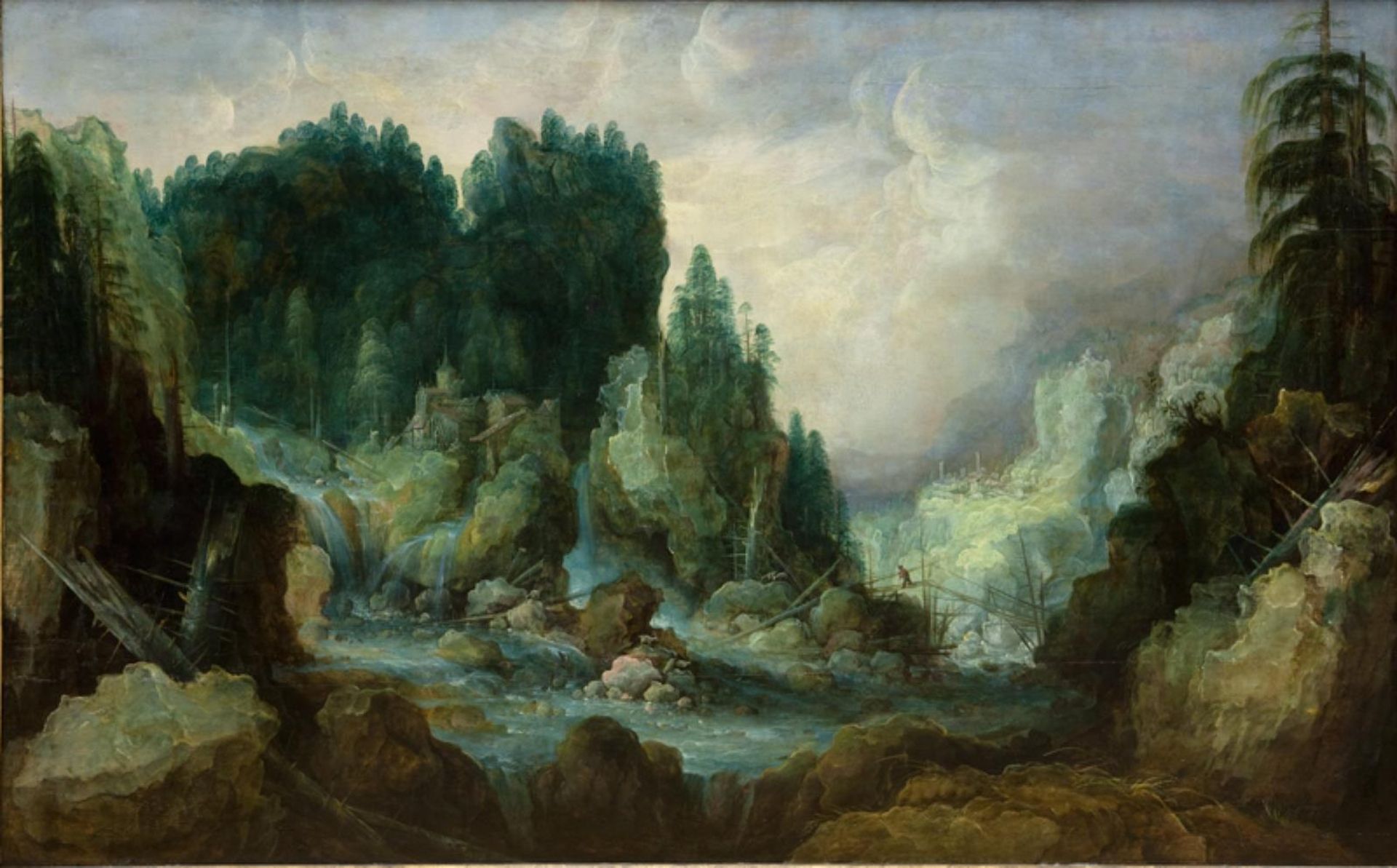
This "Rocky Landscape with a River and a Waterfall" was rendered in oil on canvas by the monogrammist IVDS sometime in the first half of the 17th century. The artist’s technique involves layering thin glazes of paint to create a sense of depth and atmosphere. Look closely, and you’ll see how the brushstrokes capture the textures of rock, foliage, and rushing water. The material quality of the oil paint itself—its viscosity and luminosity—enhances the sense of drama. Consider the socio-economic context: landscape painting gained popularity as a genre during this period, fueled by increased urbanization and a growing appreciation for the natural world among the middle classes. This work reflects a desire for a curated wilderness, neatly packaged for consumption. The artist uses his skill with the brush to create a vision of nature that is both awe-inspiring and reassuringly picturesque. Ultimately, the making of this painting—the grinding of pigments, the stretching of canvas—reflects the labor and consumption inherent in artistic production.
Rocky Landscape with a River and a Waterfall
1612 - 1626


Artwork details
- Medium
- oil-paint
- Dimensions
- 95.5 cm (height) x 153.5 cm (width) (Netto)
- Location
- SMK - Statens Museum for Kunst
Tags
Comments
Share your thoughts
About this artwork
This "Rocky Landscape with a River and a Waterfall" was rendered in oil on canvas by the monogrammist IVDS sometime in the first half of the 17th century. The artist’s technique involves layering thin glazes of paint to create a sense of depth and atmosphere. Look closely, and you’ll see how the brushstrokes capture the textures of rock, foliage, and rushing water. The material quality of the oil paint itself—its viscosity and luminosity—enhances the sense of drama. Consider the socio-economic context: landscape painting gained popularity as a genre during this period, fueled by increased urbanization and a growing appreciation for the natural world among the middle classes. This work reflects a desire for a curated wilderness, neatly packaged for consumption. The artist uses his skill with the brush to create a vision of nature that is both awe-inspiring and reassuringly picturesque. Ultimately, the making of this painting—the grinding of pigments, the stretching of canvas—reflects the labor and consumption inherent in artistic production.
Comments
Share your thoughts