1691
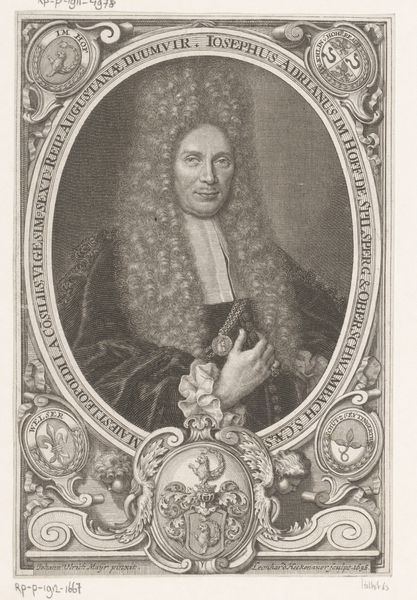
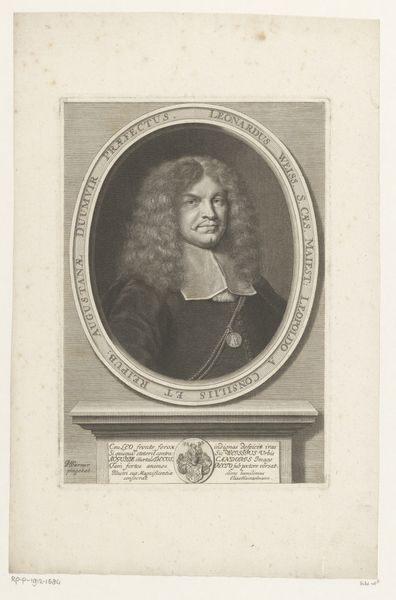
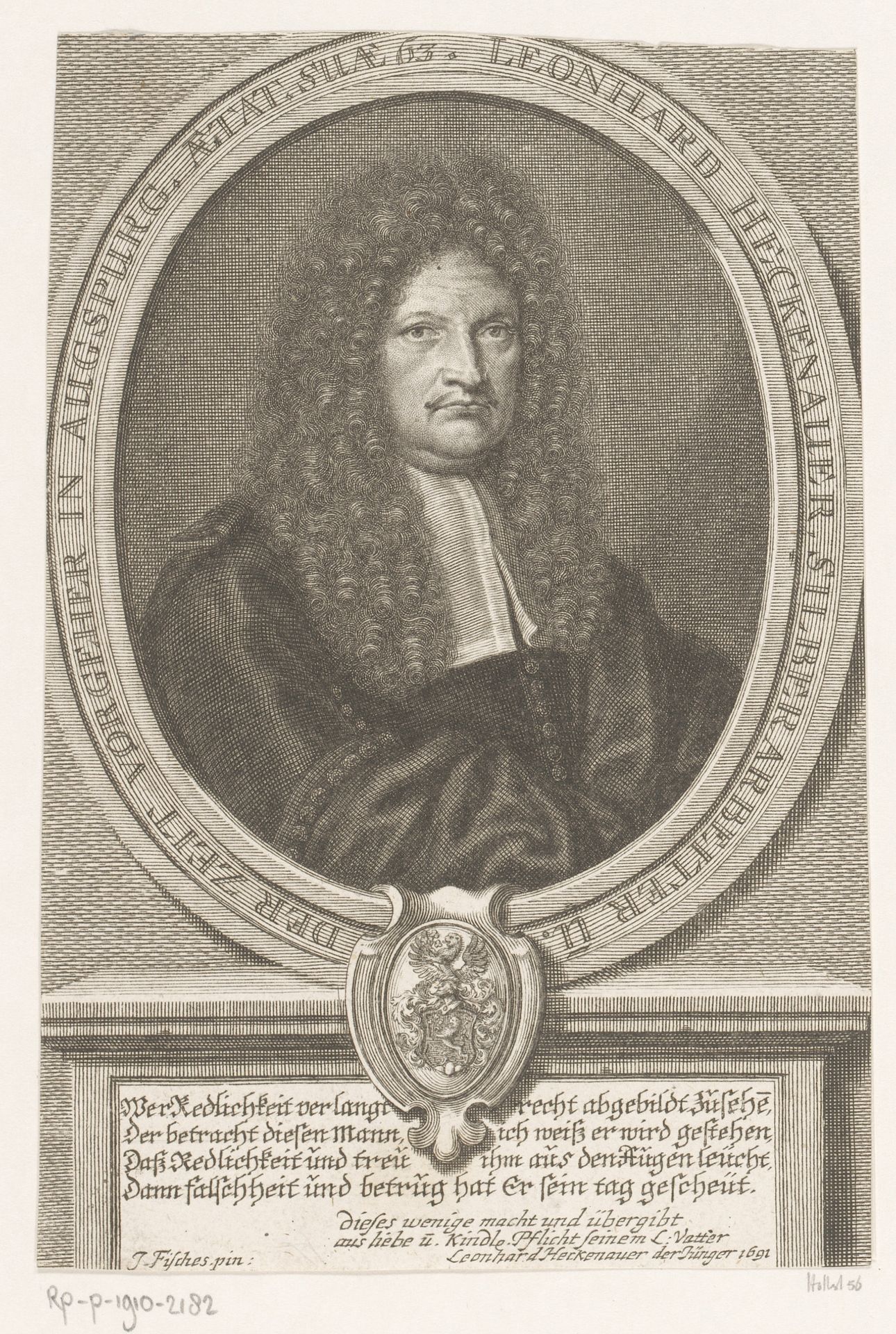
Portret van Leonhard Heckenhauer

Leonhard Heckenauer
1650 - 1704Location
RijksmuseumListen to curator's interpretation
Curatorial notes
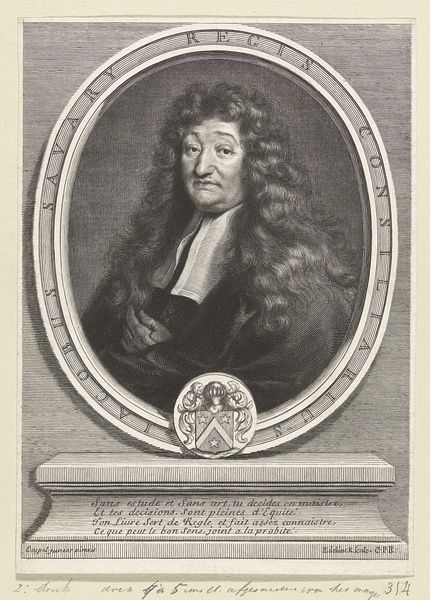
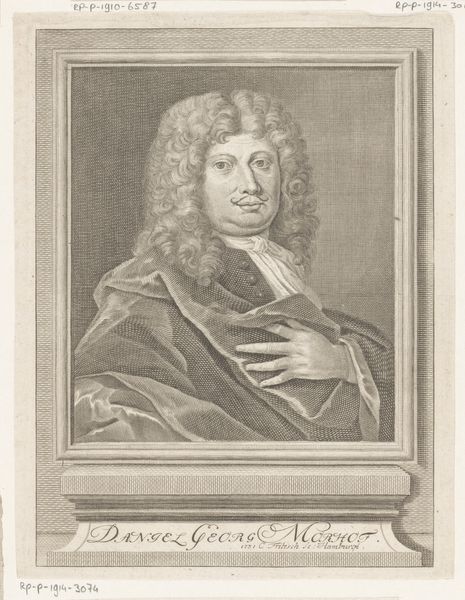
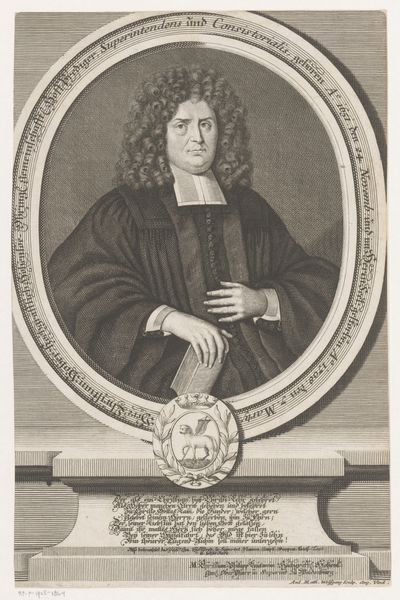
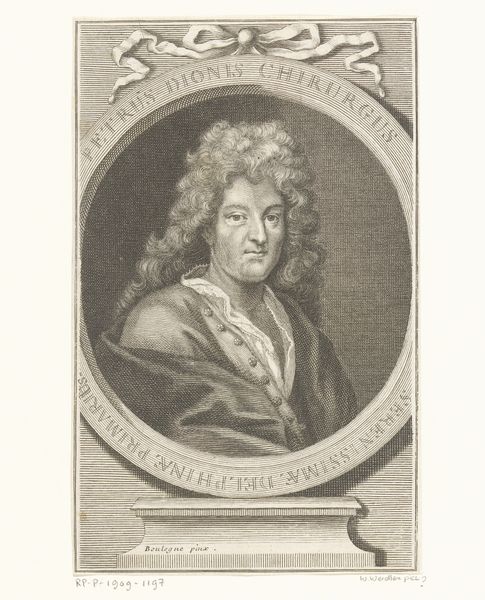
This engraving of Leonhard Heckenhauer was likely made around 1693, and shows the Augsburg silversmith within an oval frame. Portraits like this weren't just about appearances. They actively shaped how individuals were perceived within their social circles. Heckenhauer's elaborate wig and attire, for instance, signalled his status and occupation in the hierarchical society of the Holy Roman Empire. The image creates meaning through visual codes, cultural references, and historical associations. Augsburg, then a Free Imperial City, had a rich tradition of craftsmanship and trade. Guilds like the silversmiths played a crucial role, regulating standards and fostering civic identity. As historians, we delve into archival records – guild documents, inventories, and family papers – to understand the social conditions that shaped artistic production. By examining Heckenhauer's life and work, we can better understand the intricate relationship between individual ambition, social expectation, and the institutions of art in 17th-century Germany.