About this artwork
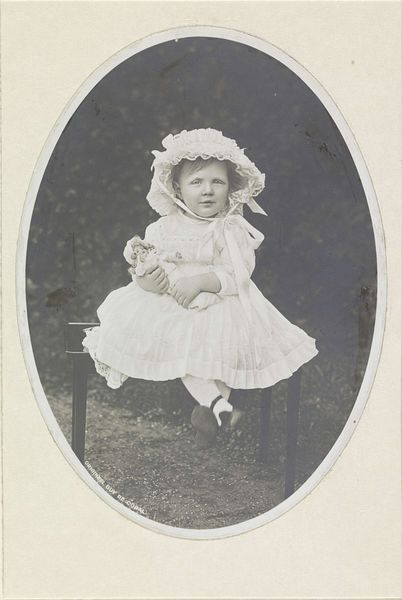
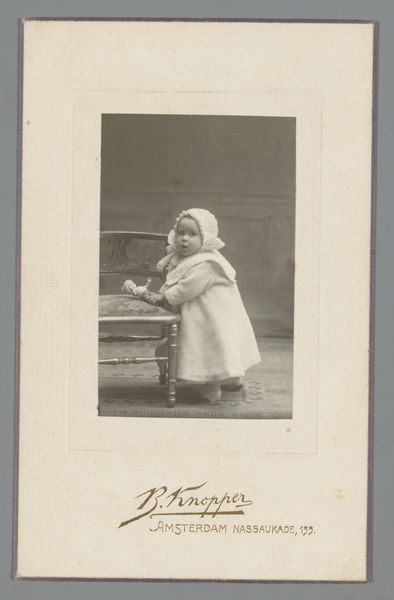
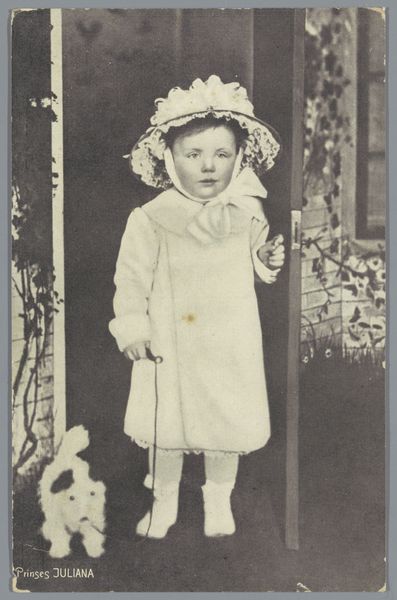
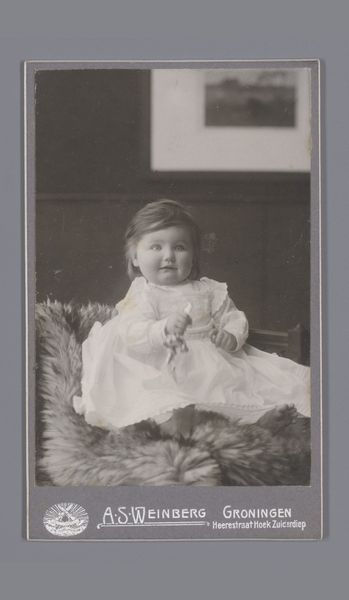
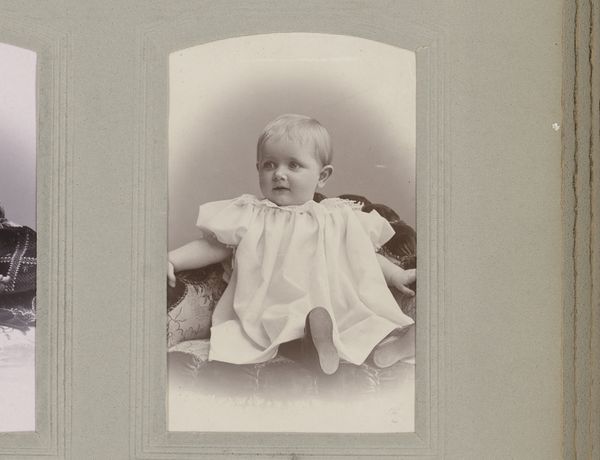
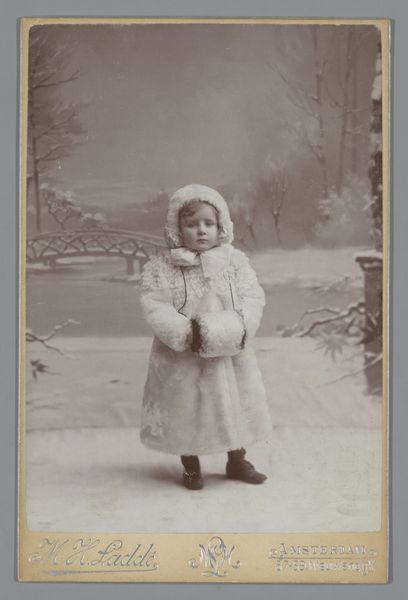
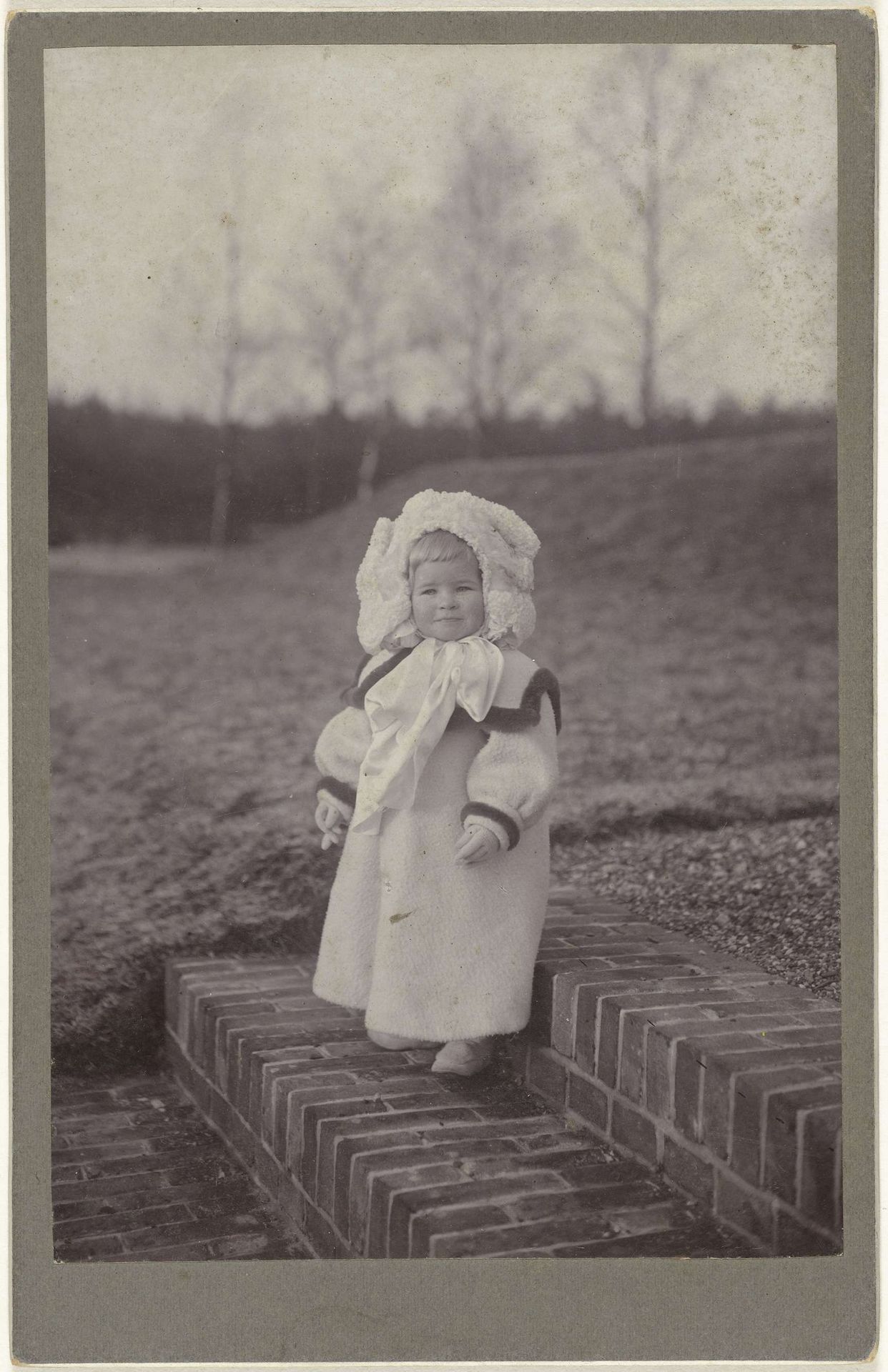
This photograph, taken by Henry Pauw van Wieldrecht, is a portrait of his daughter, Irène. It's a small, intimate image, rendered in soft grayscale tones that feel like a memory fading into the past. I love how the texture of the coat and bonnet contrasts with the stark geometry of the brick steps. The details are so subtle, the folds in the fabric, the gentle curve of her cheek. And then there's the background, a blur of trees and sky that suggests a world beyond the frame. Look at the way the light catches the edge of her bonnet, creating a halo effect. It's these tiny details that make the photograph feel so alive, so present. In its own way, this image resonates with the portraits of Julia Margaret Cameron. Both artists used photography to capture the inner lives of their subjects, embracing a kind of soft focus to create a sense of intimacy and emotion. It shows that art is an ongoing conversation, and an exchange of ideas across time.
Portret van Irène Pauw van Wieldrecht, een dochter van de fotograaf c. 1908 - 1910

Henry Pauw van Wieldrecht
1863 - 1912Location
RijksmuseumArtwork details
- Dimensions
- height 149 mm, width 97 mm, height 167 mm, width 107 mm
- Location
- Rijksmuseum
- Copyright
- Rijks Museum: Open Domain
Comments
No comments
About this artwork
This photograph, taken by Henry Pauw van Wieldrecht, is a portrait of his daughter, Irène. It's a small, intimate image, rendered in soft grayscale tones that feel like a memory fading into the past. I love how the texture of the coat and bonnet contrasts with the stark geometry of the brick steps. The details are so subtle, the folds in the fabric, the gentle curve of her cheek. And then there's the background, a blur of trees and sky that suggests a world beyond the frame. Look at the way the light catches the edge of her bonnet, creating a halo effect. It's these tiny details that make the photograph feel so alive, so present. In its own way, this image resonates with the portraits of Julia Margaret Cameron. Both artists used photography to capture the inner lives of their subjects, embracing a kind of soft focus to create a sense of intimacy and emotion. It shows that art is an ongoing conversation, and an exchange of ideas across time.
Comments
No comments