1629
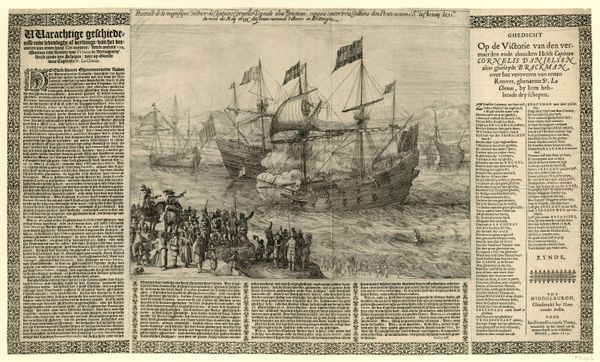
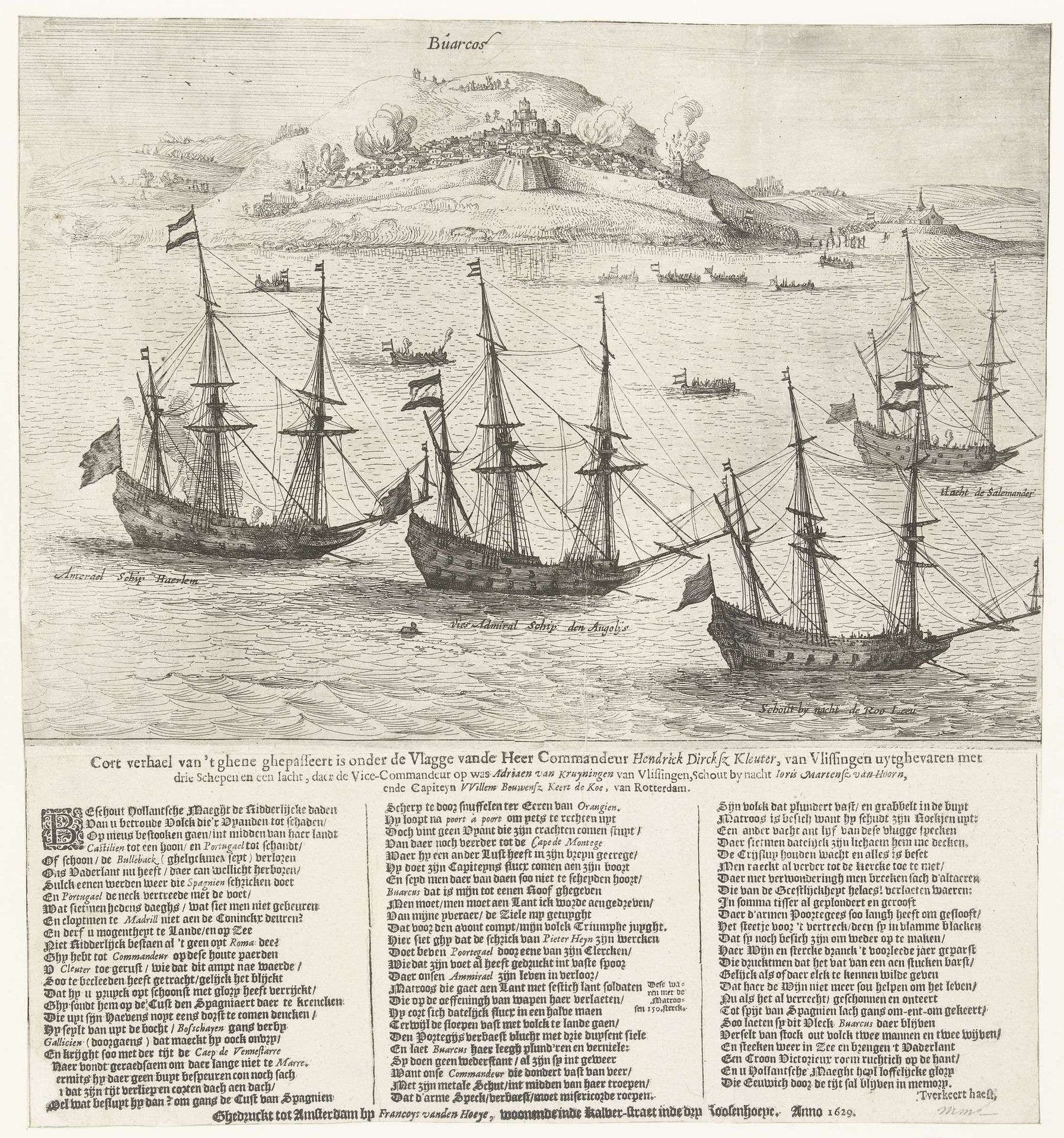
Strooptocht van vier Hollandse schepen op de Portugese kust, 1629

Anonymous
@anonymousLocation
RijksmuseumListen to curator's interpretation
Curatorial notes
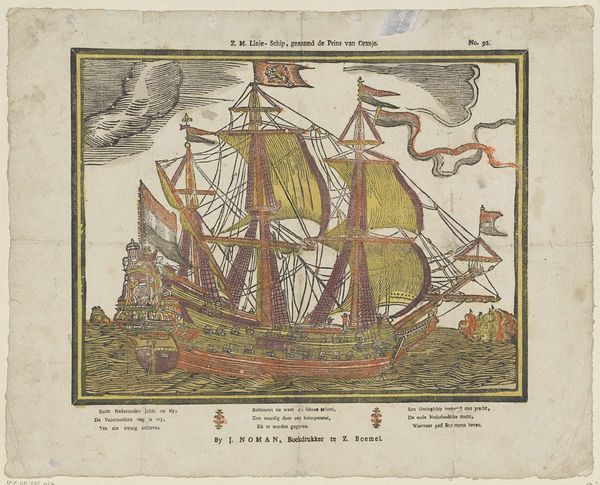
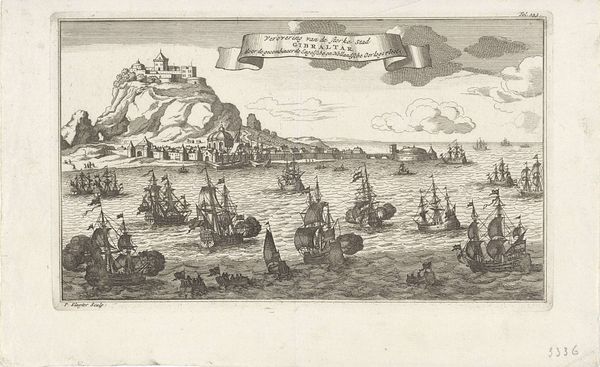
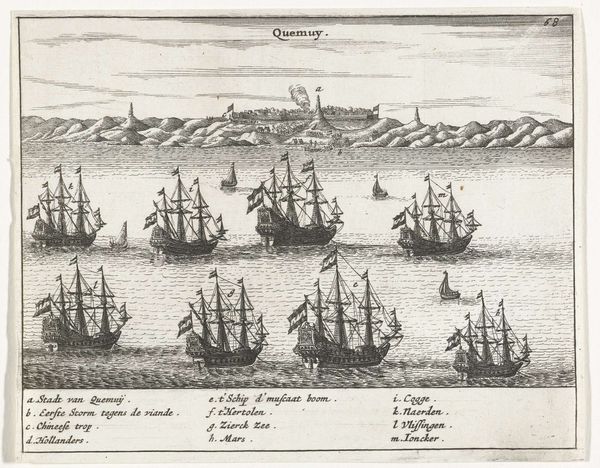
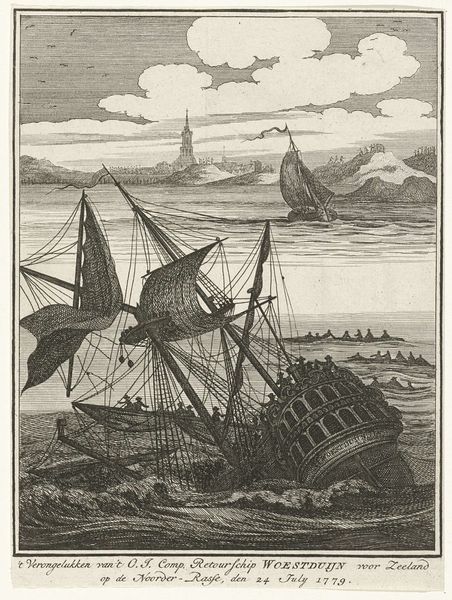
This etching, made in Amsterdam in 1629, depicts four Dutch ships patrolling the Portuguese coast. Dominating the scene are the Dutch ships, their flags proudly displayed, symbolizing Dutch maritime power and defiance against Spanish rule. The flags, with their colors and design, go beyond mere identification; they represent a nation's aspirations and identity. This symbol, reminiscent of ancient Roman standards, evolved through the medieval heraldic tradition, where banners and emblems served as rallying points. Over time, flags transformed into powerful symbols of national sovereignty, embodying the collective pride and unity of a people. The psychological impact of such symbols is profound, stirring deep-seated emotions of belonging and allegiance. This image presents a pivotal moment in Dutch history. It captures the complex interplay of power, identity, and national pride on the open sea.