1875 - 1903
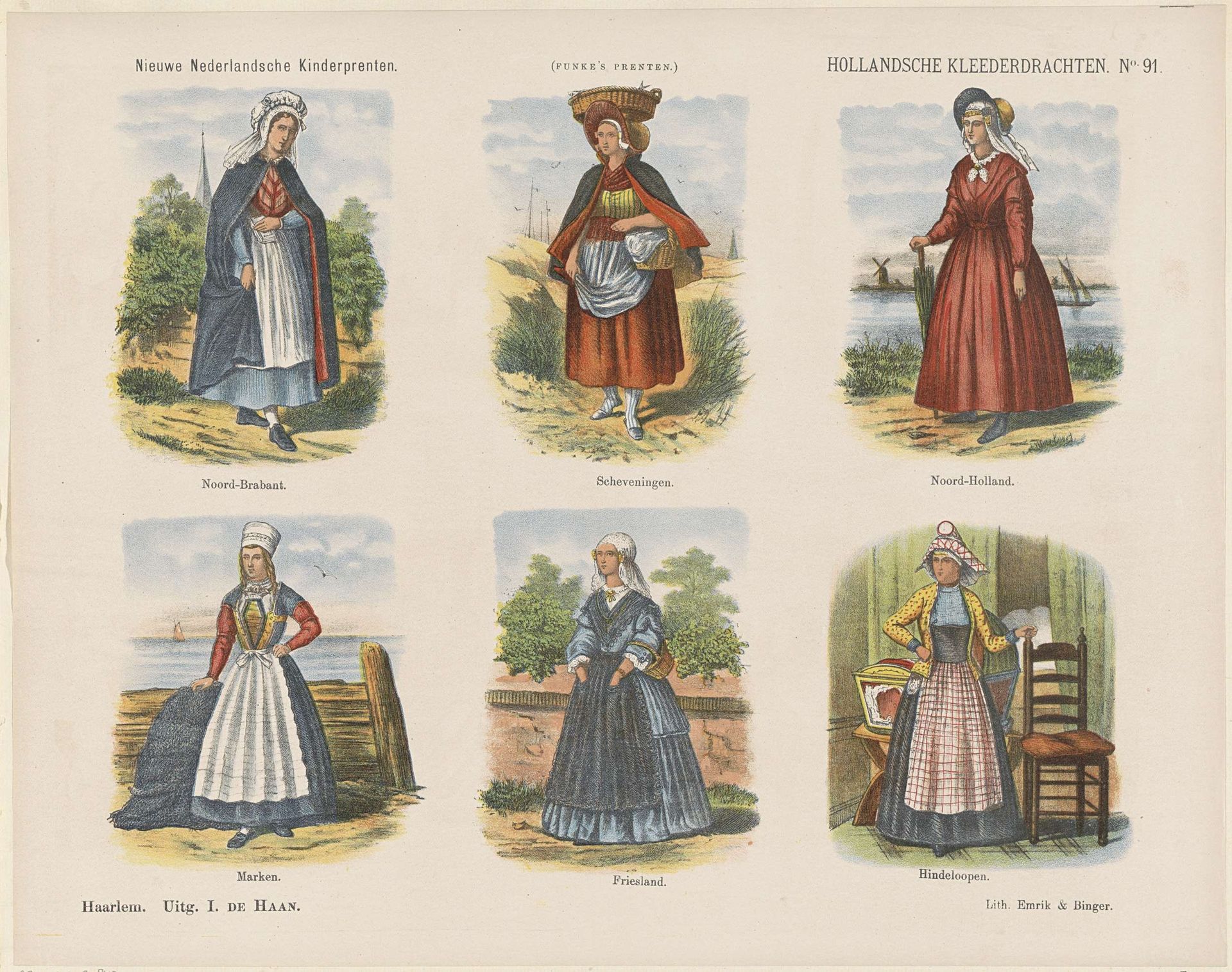
Hollandsche kleederdragten

Listen to curator's interpretation
Curatorial notes
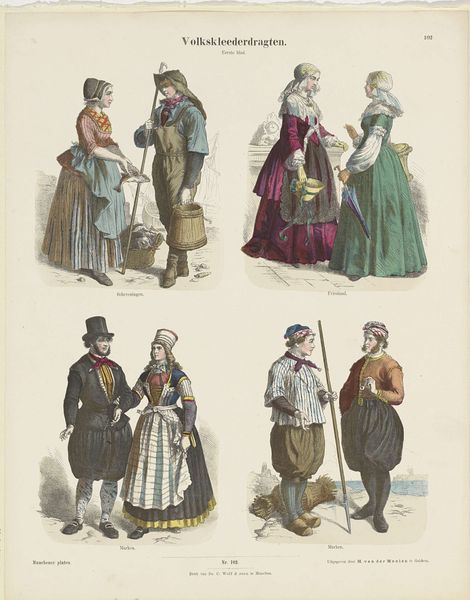
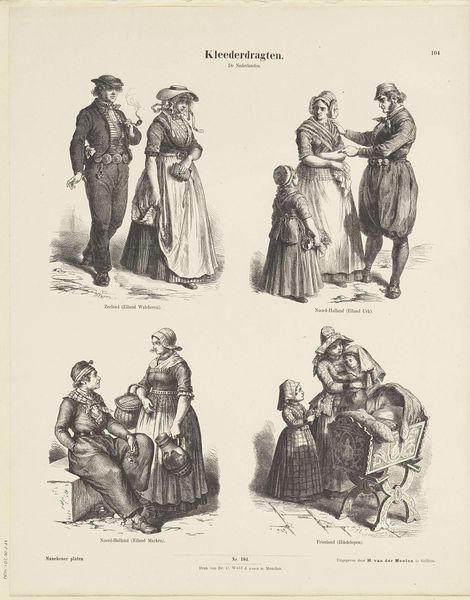
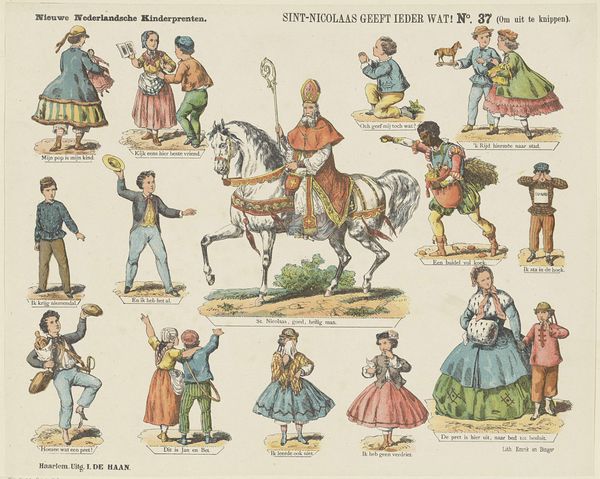
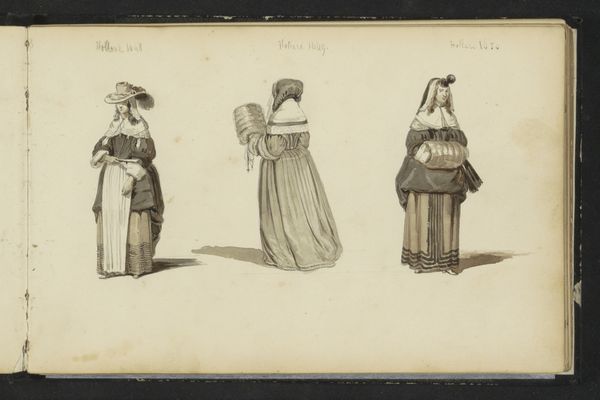
Editor: Here we have “Hollandsche Kleederdragten,” or Dutch Costumes, a lithograph print from between 1875 and 1903 by Jan de Haan. It depicts an array of figures dressed in traditional Dutch attire. It's almost like a catalogue of regional styles! What do you see in this piece that really stands out to you? Curator: I see a fascinating document reflecting the rise of nationalism and regional identity in the Netherlands during the late 19th century. Prints like these played a crucial role in constructing and disseminating a visual language of "Dutch-ness." These images were both documenting and actively shaping perceptions of regional difference. Editor: Shaping perceptions... How so? Curator: Think about the context: mass production of imagery. Suddenly, visual representations of regional customs aren’t limited to the area, but are available on the market, creating a sense of national heritage accessible to a broader public. How do you think the act of turning everyday wear into display impacts our understanding of culture? Editor: It makes me think about authenticity, and who gets to define it. Like, is this truly representative or a romanticized ideal? It's interesting how the image transforms ordinary clothing into a kind of performance of Dutchness. Curator: Exactly. And notice the arrangement. These prints were often consumed by tourists, reinforcing the visual idea of the quaint village which fueled economic activity. Editor: That adds a new layer! It’s not just documentation but promotion. This reminds me to consider the marketplace that visual culture operates in. Thanks for sharing this with me! Curator: My pleasure. Seeing how seemingly simple images participate in larger social and economic systems changes our reading experience.