1865 - 1870
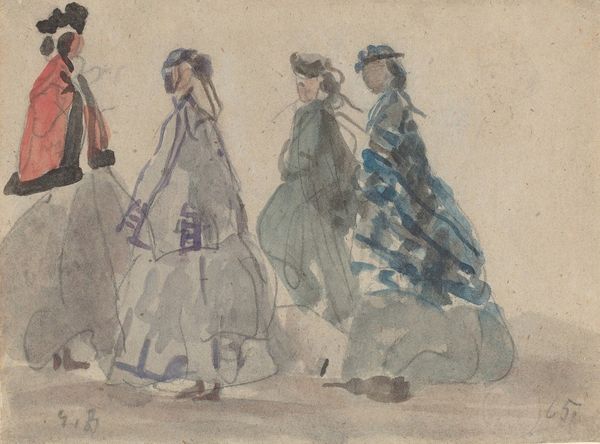
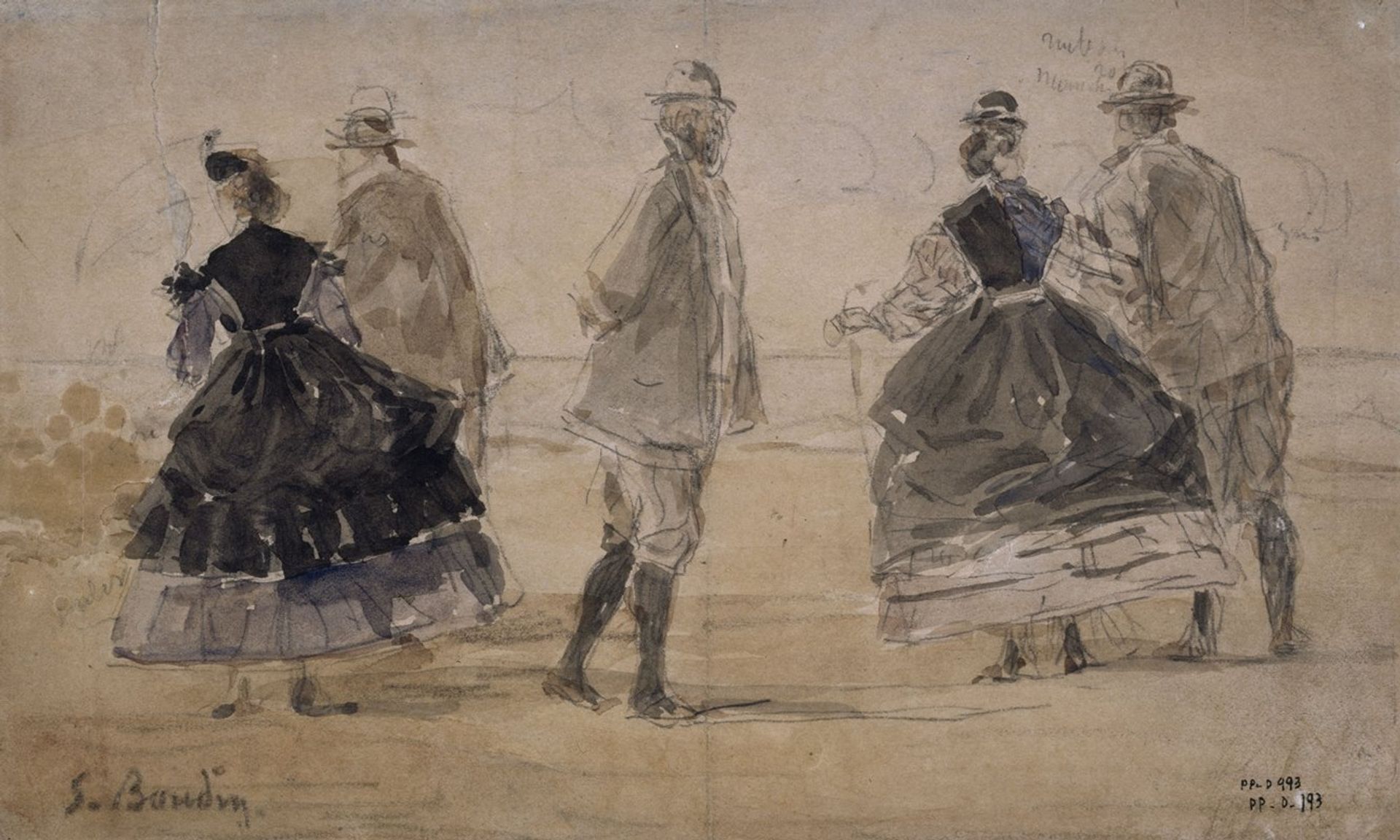
Groupe au bord de la mer

Listen to curator's interpretation
Curatorial notes
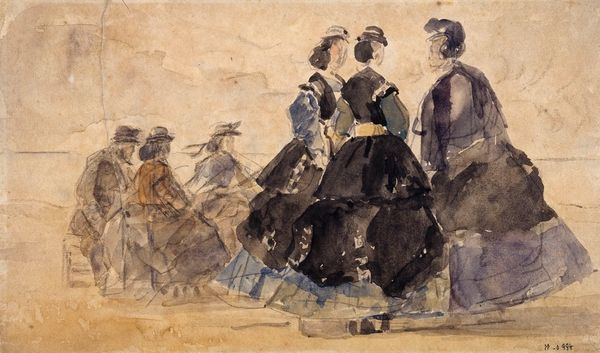
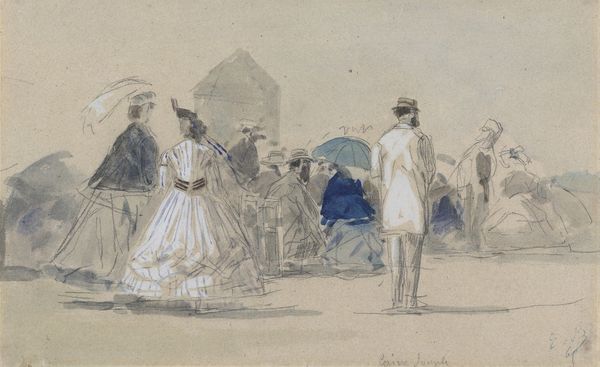
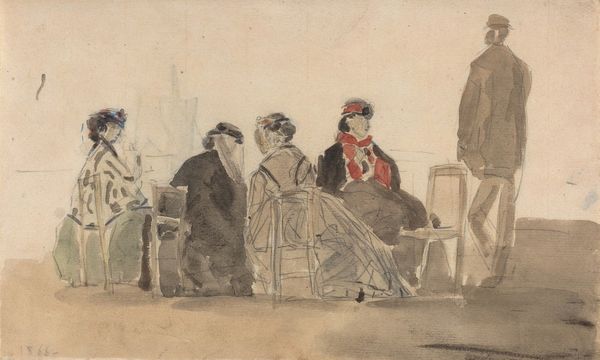
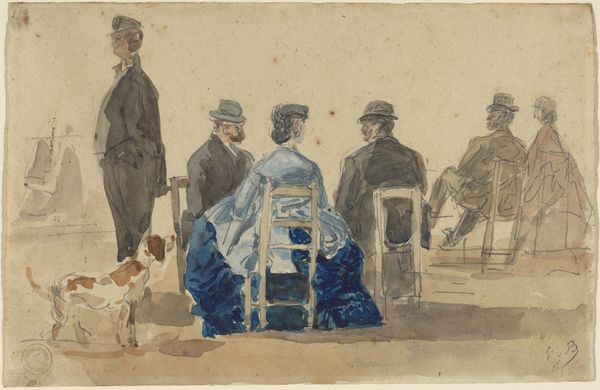
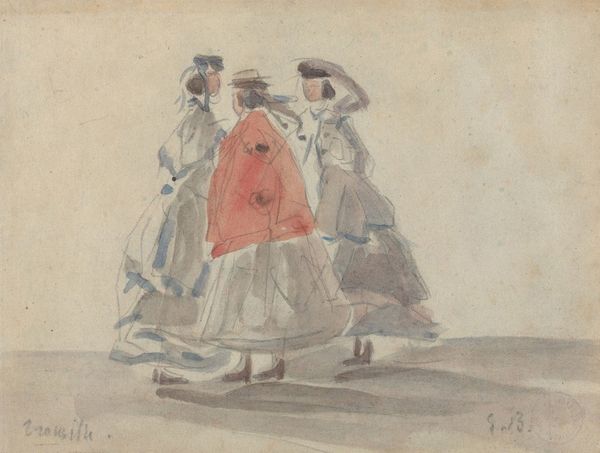
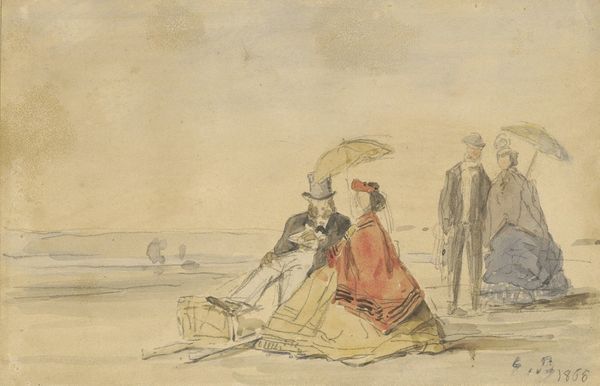
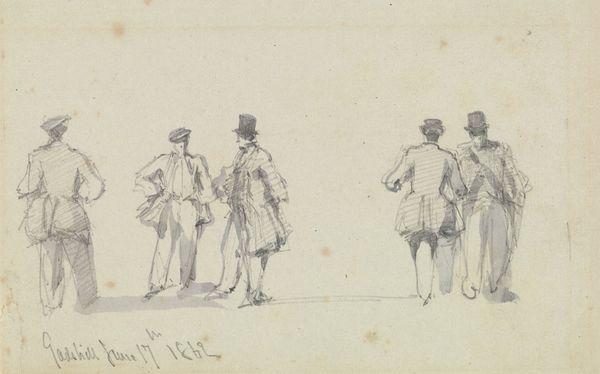
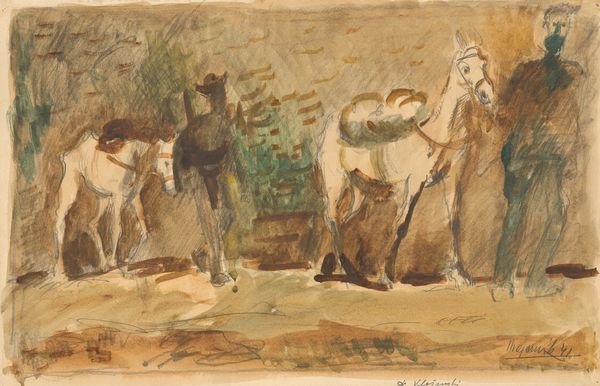
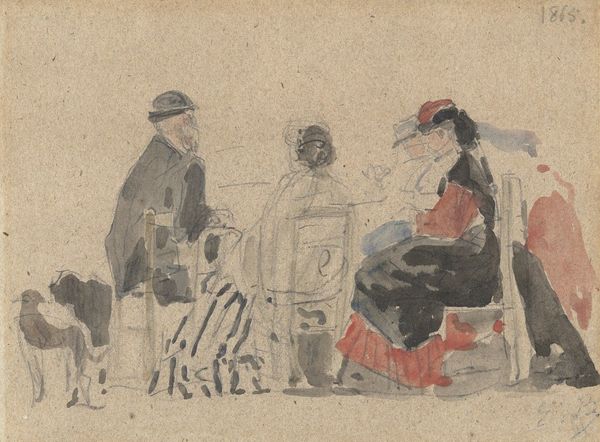
Eugène Boudin made this watercolor titled "Groupe au bord de la mer," which translates to "Group by the Sea," during a time when the French coastline was transforming into a leisure destination. Boudin’s focus isn't on the sea itself, but on the social rituals unfolding along the shore. The elegant figures, rendered with quick, fluid brushstrokes, are members of the emerging middle class, newly afforded the time and resources for seaside vacations. Their attire, though not meticulously detailed, speaks to a culture of conspicuous consumption and social performance. Boudin's work coincided with the rise of Impressionism. Unlike the Impressionists, he remained committed to capturing the nuances of social life. Understanding Boudin requires us to delve into the historical context of 19th-century France: the growth of tourism, the rise of the bourgeoisie, and the changing landscape of leisure. Art historians rely on travel guides, fashion plates, and social commentaries from the time to fully appreciate the significance of scenes like this.