About this artwork
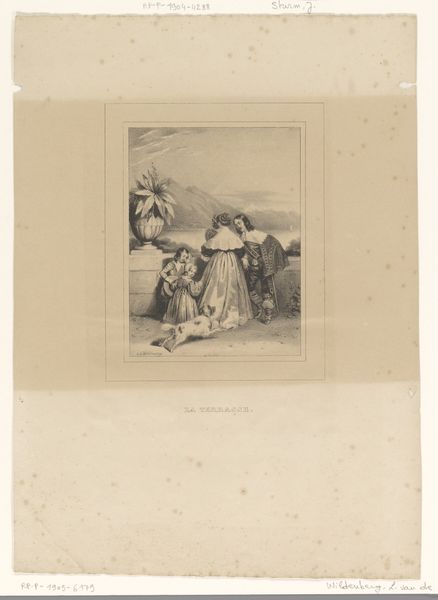
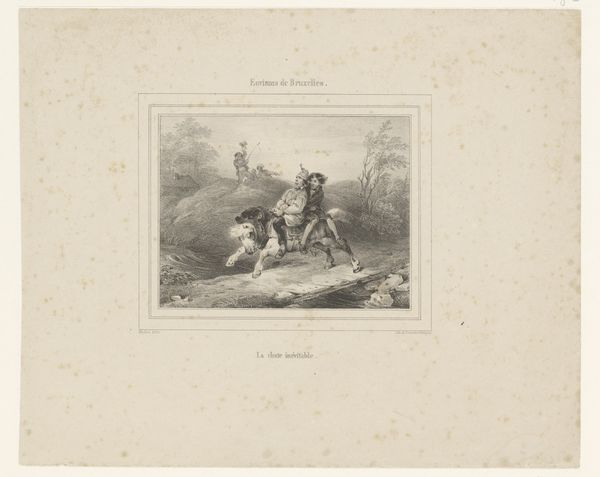
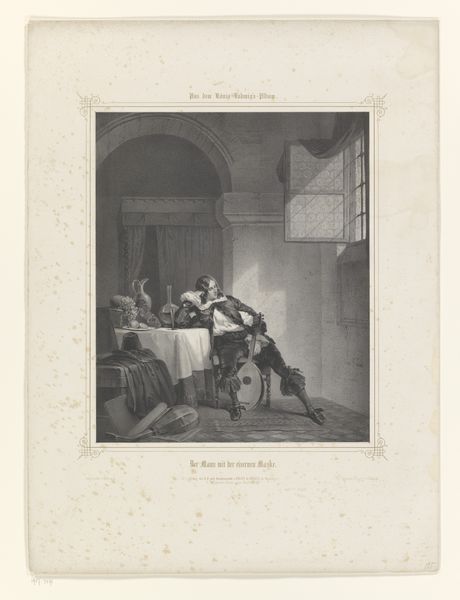
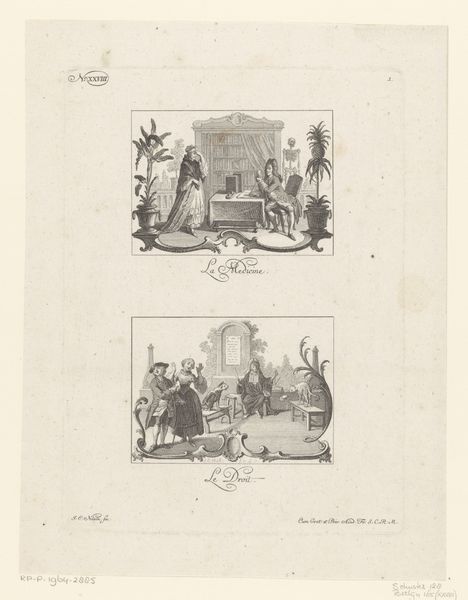
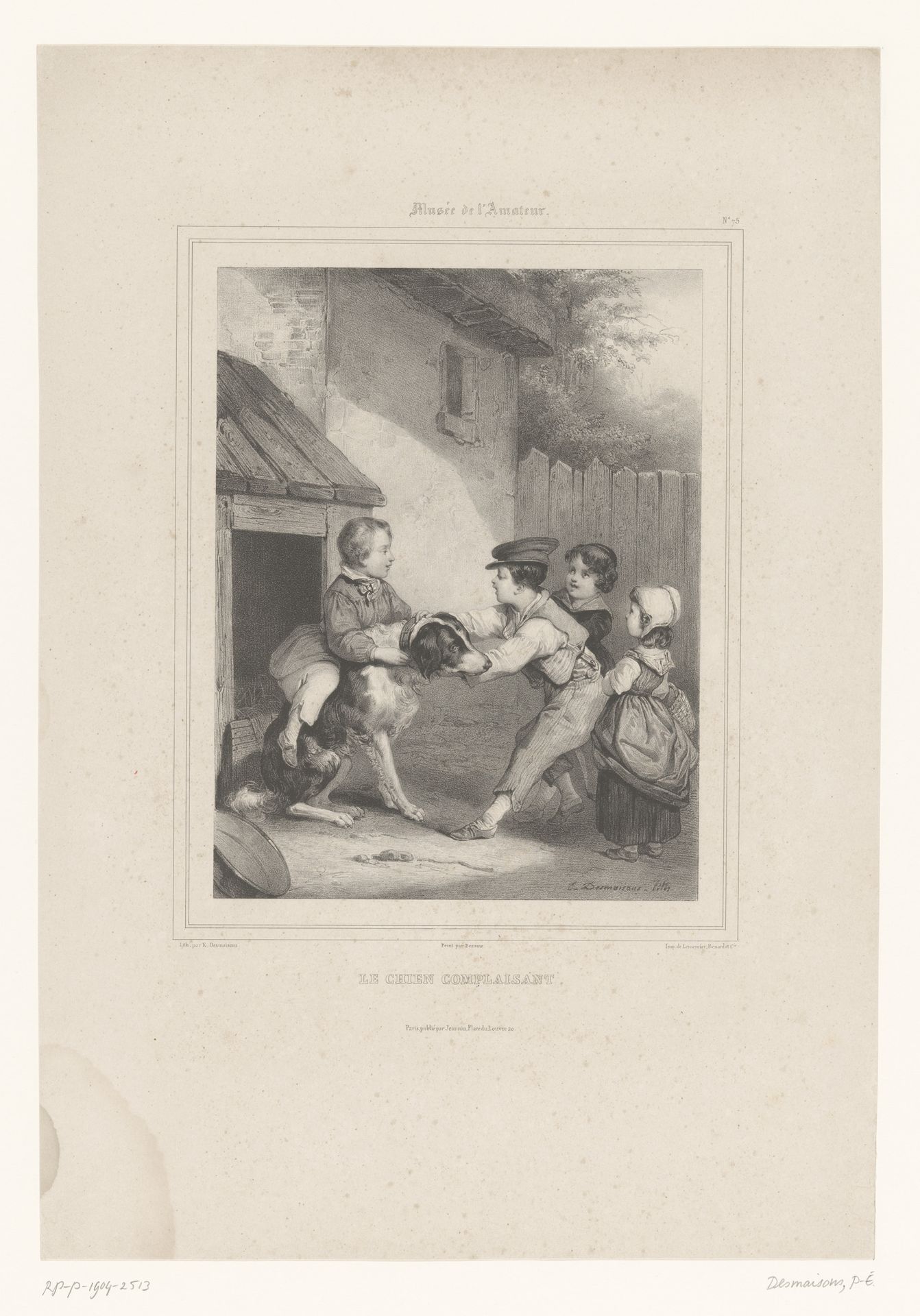
Émilien Desmaisons created this print, Vier kinderen spelen met een hond, using etching techniques. The scene immediately draws us into a playful moment, a snapshot of childhood rendered through a network of fine, deliberate lines. Notice how the composition is structured around the central figure of the dog, its body forming a diagonal axis that bisects the image. This compositional choice invests the animal with a dynamic presence. The artist uses light and shadow to define form, creating depth and volume. The contrast between the light falling on the children and the shaded areas around the dog's kennel adds a sense of theatricality to the everyday scene. Desmaisons uses line not just to delineate form but to convey texture and movement, and this etching captures a sense of animation, a fleeting moment of joy. It invites a formal reading attentive to how the artist's marks construct not just an image, but also a world of feeling and interaction. It serves as a cultural artifact, open to continuous interpretation.
Vier kinderen spelen met een hond
1838 - 1842

Émilien Desmaisons
1812 - 1880Location
RijksmuseumArtwork details
- Medium
- print, engraving
- Dimensions
- height 414 mm, width 288 mm
- Location
- Rijksmuseum
- Copyright
- Rijks Museum: Open Domain
Tags
Comments
Share your thoughts
About this artwork
Émilien Desmaisons created this print, Vier kinderen spelen met een hond, using etching techniques. The scene immediately draws us into a playful moment, a snapshot of childhood rendered through a network of fine, deliberate lines. Notice how the composition is structured around the central figure of the dog, its body forming a diagonal axis that bisects the image. This compositional choice invests the animal with a dynamic presence. The artist uses light and shadow to define form, creating depth and volume. The contrast between the light falling on the children and the shaded areas around the dog's kennel adds a sense of theatricality to the everyday scene. Desmaisons uses line not just to delineate form but to convey texture and movement, and this etching captures a sense of animation, a fleeting moment of joy. It invites a formal reading attentive to how the artist's marks construct not just an image, but also a world of feeling and interaction. It serves as a cultural artifact, open to continuous interpretation.
Comments
Share your thoughts