
Curatorial notes
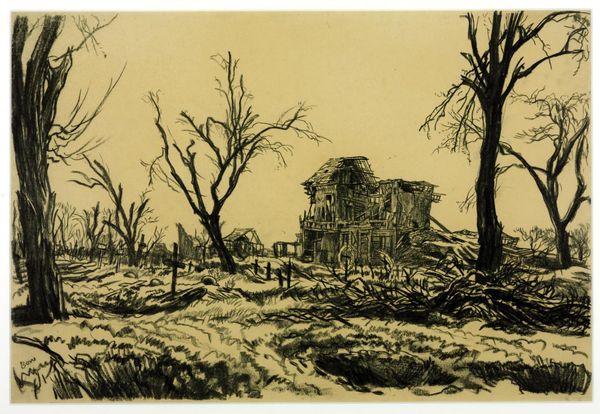
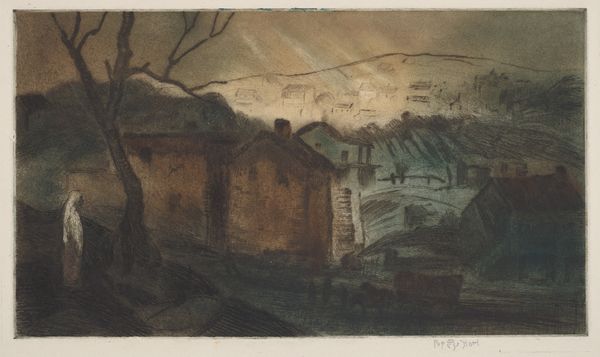
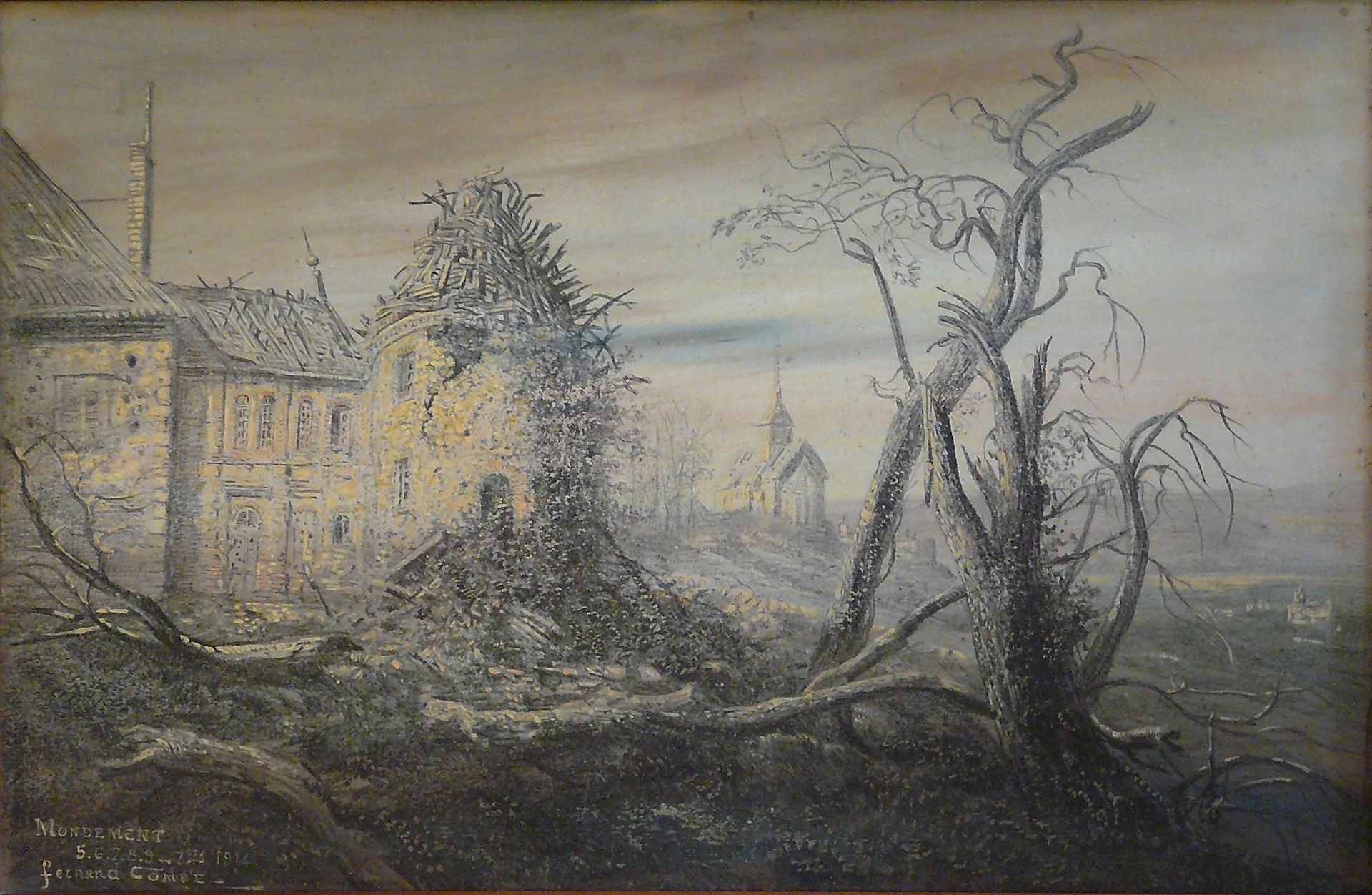
Curator: Immediately, I am struck by the desolation of the scene. Is this how Fernand Combes, in 1914, saw the landscape during the First World War? Editor: Precisely. What we’re viewing is “Mondement,” an ink and watercolor drawing on paper, completed en plein-air by Combes. Notice the contrasting delicate watercolor washes against the stark lines of the ink. Curator: The materiality almost amplifies the overall sense of decay. I mean, look at that bombed out building and the bare, skeletal trees. There's a rawness to it, given that it’s a "simple" drawing. You see all of those choices made on site, directly, impacting the visual weight, even the texture. Was paper rationing a factor here perhaps, leading to smaller formats? Editor: It's entirely plausible that material scarcity played a role. However, consider how landscapes during times of conflict often take on symbolic weight. This depiction of Mondement gains significance due to its historical moment. It’s less about romanticizing nature and more about recording devastation and the social impact of war, wouldn't you agree? Curator: I do, but to look at it purely for its political function is too reductive. Think about the labor itself: Combes, outdoors, battling the elements while documenting this scene. The choice of materials impacts how that process is perceived and understood. Those thin washes almost mirror the fragility of life and infrastructure during the war. It’s powerful. Editor: And this specific scene -- the Battle of the Marne took place just a few weeks after this work was completed! To think that museums and galleries then collected such stark, socially relevant imagery... It highlights the crucial public role that art could, and still can, play. It provides an unflinching view. Curator: But do those institutions today truly showcase these process-driven choices to audiences in ways that demystify art production? How many visitors really pause to think about paper types or ink mixtures of works such as these? Perhaps then the drawing is the real memorial, to artistic process as well as historic events. Editor: Ultimately, this small artwork asks big questions about conflict, the social responsibilities of artists, and how we choose to record it. Curator: A potent reminder, in a rather understated way.