drawing, pen
#
portrait
#
drawing
#
comic strip sketch
#
imaginative character sketch
#
cartoon sketch
#
figuration
#
personal sketchbook
#
idea generation sketch
#
sketchwork
#
romanticism
#
pen-ink sketch
#
line
#
sketchbook drawing
#
pen
#
genre-painting
#
storyboard and sketchbook work
#
initial sketch
Dimensions: height 212 mm, width 171 mm
Copyright: Rijks Museum: Open Domain
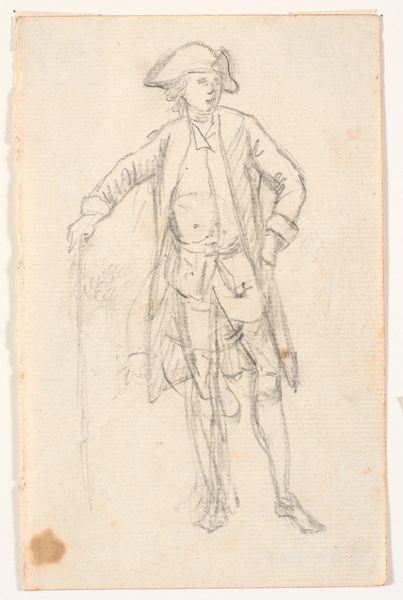
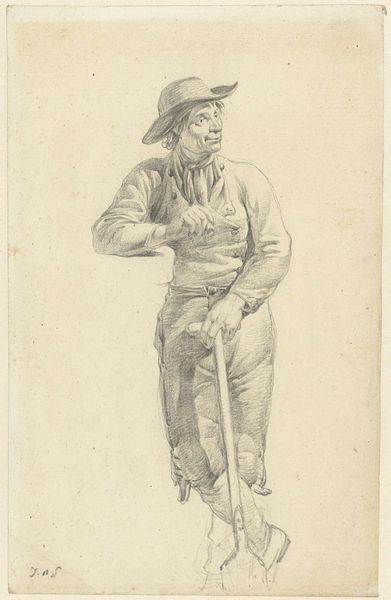
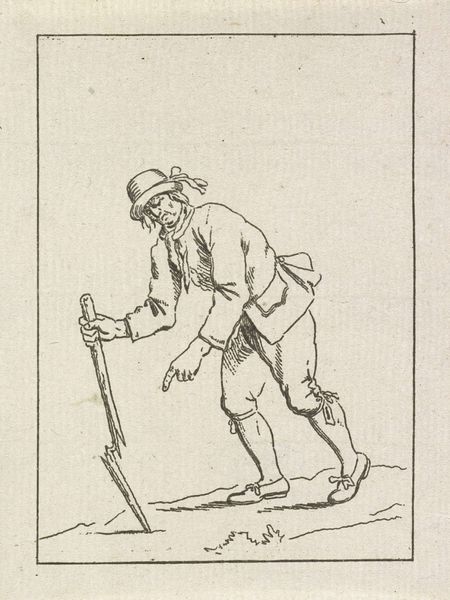
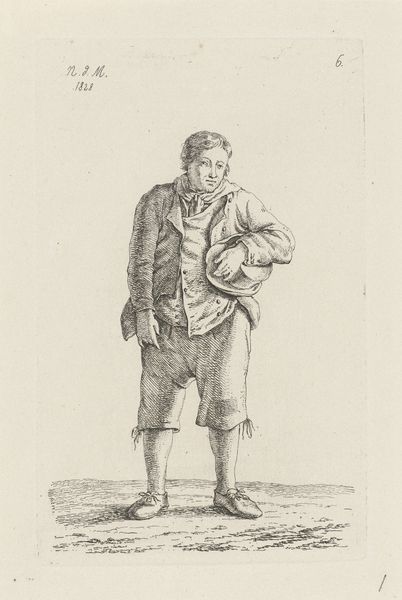
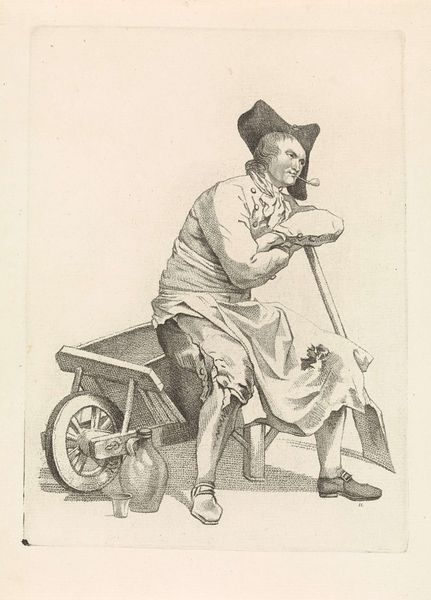
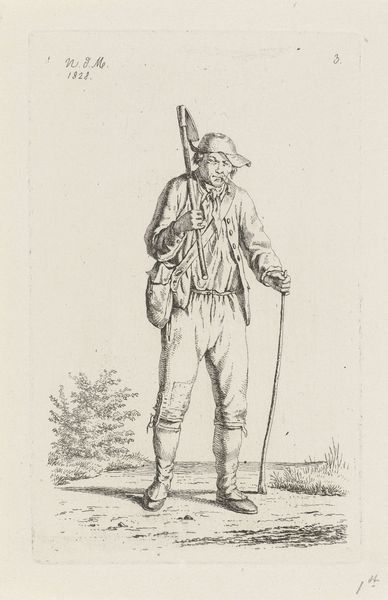
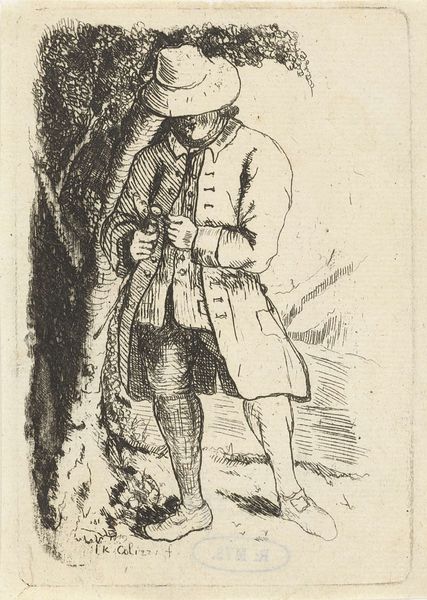
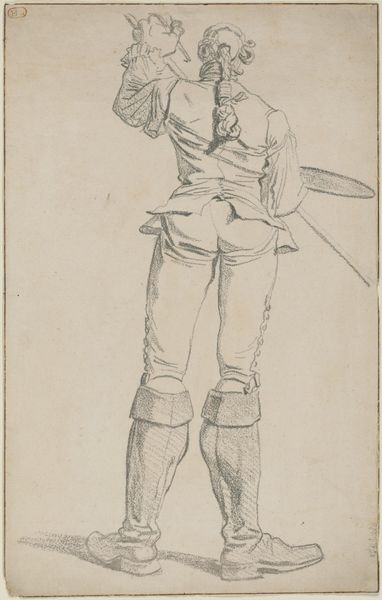
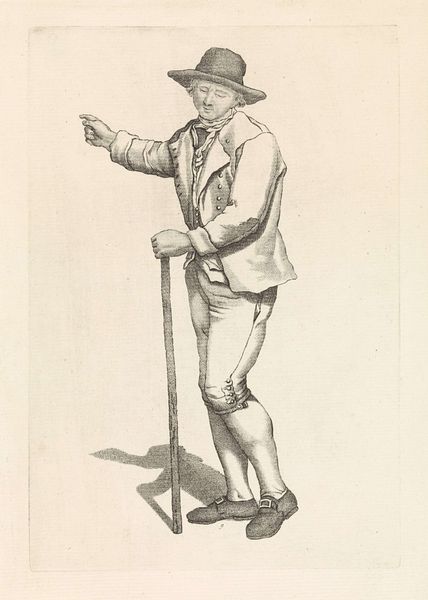
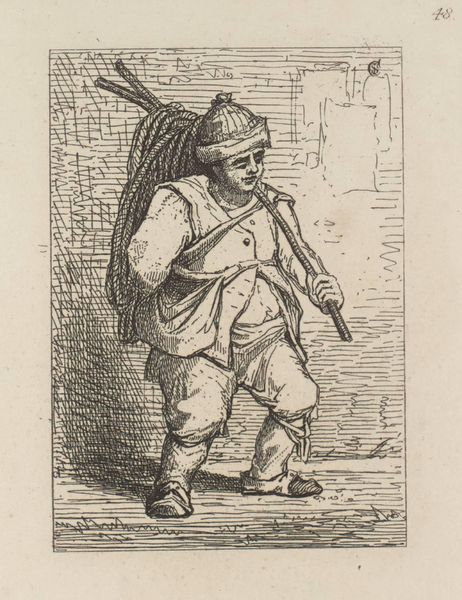
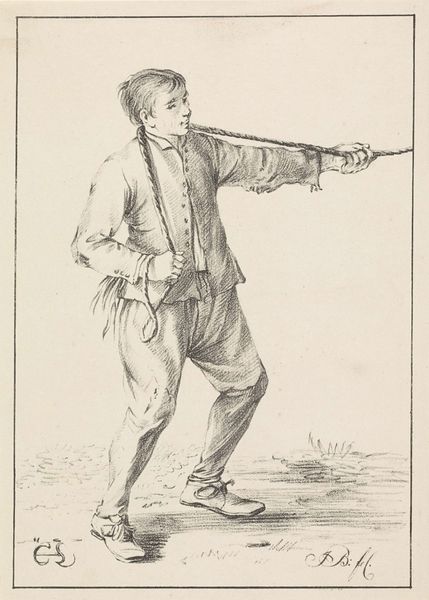
Curator: Looking at this piece, I am struck by the artist’s confidence in line, the composition immediately gives a sense of a slightly comical scene. Editor: This pen drawing by Johannes Jelgerhuis, created sometime between 1805 and 1836, titled "Theo Majofski in de rol van Mekéli," speaks volumes about early 19th-century societal perceptions of labor, theatre, and identity in the Netherlands. The sitter appears as a porter moving something between Armand en Constance, very likely a beer seller or storage place. Curator: You know, focusing on its structure, the barrel seems disproportionately large for the cart and the man pulling it. This exaggeration amplifies the drawing’s charm. The careful articulation of each wooden plank adds texture to the overall feel. Editor: And I'd argue that this careful rendering speaks to a romantic idealization, a popular theme at that moment: presenting laborers with a kind of dignity. The attire, however, looks staged: perhaps Mr. Majofski worked as a seller, maybe even an actor, embodying a specific character. Curator: Absolutely, you’ve hinted at a compelling point. It’s fascinating how Jelgerhuis employs light and shadow, especially noticeable on the man's face and clothing, considering it's a pen drawing, to define volume, structure, and direct our eye. The overall feeling, almost cartoonish in a way, contrasts with that attention to light—like caricature, it's carefully staged in reality to carry social commentary. Editor: This piece resonates with wider discussions around performance, authenticity, and class representation in the arts during that time. It prompts questions: was Majofski's role a critique, a celebration, or simply documentation of a persona of a changing Dutch society? It captures a particular social and perhaps theatrical moment through its narrative content and social references. Curator: This meticulous sketch demonstrates Jelgerhuis’ masterful control of a relatively unforgiving medium. It is compelling in how much meaning can be imbued by way of clear structural compositions with a delicate yet simple style. Editor: Absolutely, contemplating the drawing in this way reveals just how much art can do to help us engage with themes from the past that still resonate so profoundly today.
Comments
No comments
Be the first to comment and join the conversation on the ultimate creative platform.
 Collect
 React
React Comment
More like this