Copyright: Public domain
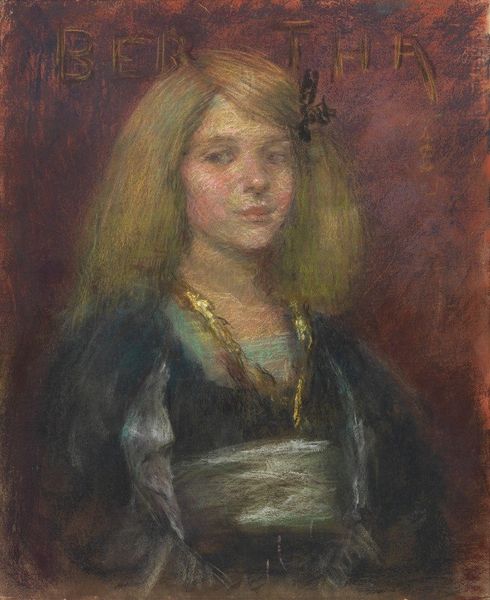
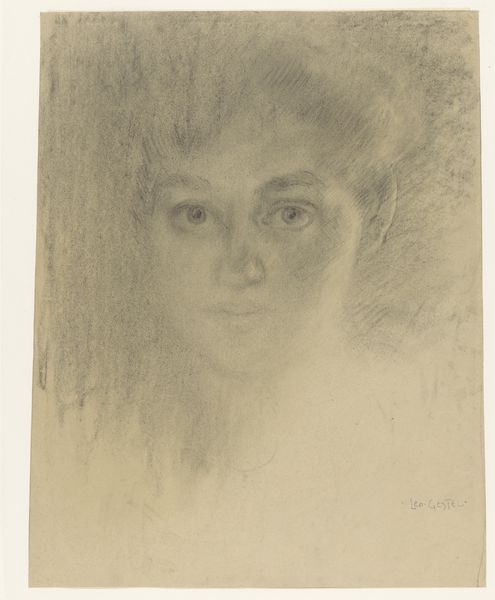
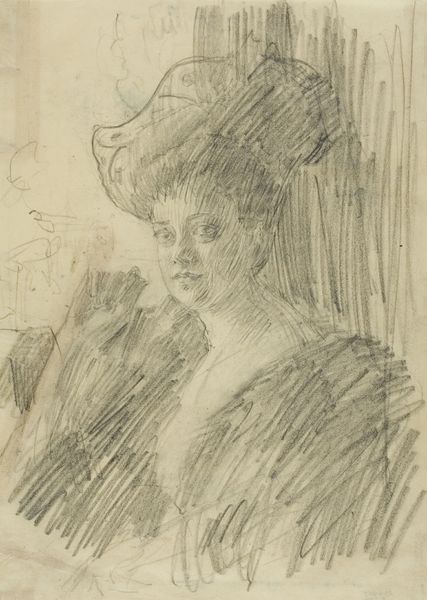
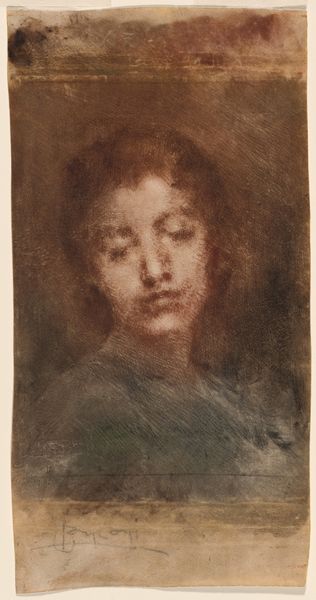
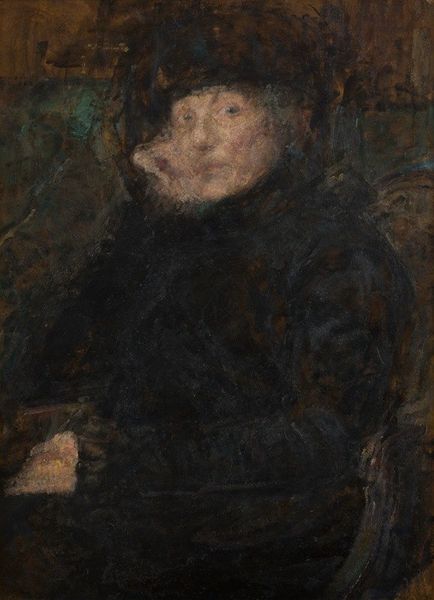
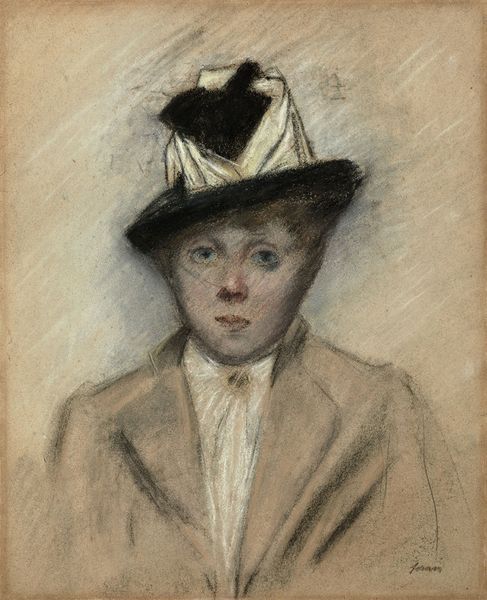
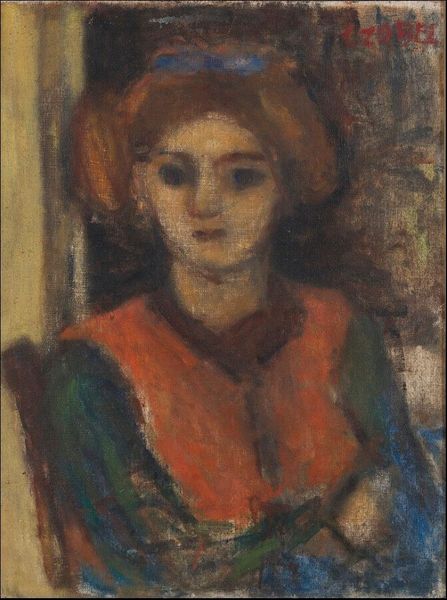
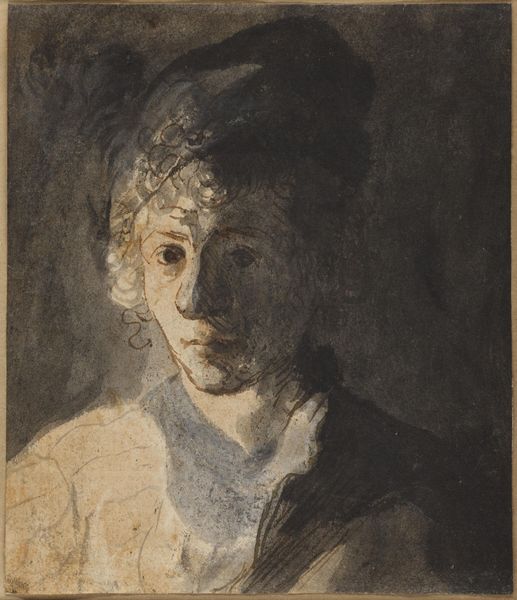
Editor: Here we have Théophile Alexandre Steinlen's "Portrait de Femme," created in 1903. It's a pastel drawing, and I find the muted colors quite striking. What can you tell me about this work? Curator: Well, considering Steinlen's history as an illustrator often depicting working-class life, it’s interesting to see him engage with portraiture using a medium like pastel. The softness of pastel, in contrast to the gritty realism he’s known for, almost romanticizes the subject, but we must look at the labor and industry surrounding its production. Where did Steinlen source these materials? Who was manufacturing the pastels themselves? And how did that process influence the aesthetic outcome? Editor: That's a good point. I hadn’t thought about where he got the materials. It feels almost contradictory to the typical depictions of the working class from the period. Curator: Exactly. Consider the social context. Who could afford to sit for a portrait? The manufacturing and acquisition of pastel sticks connects us to the consumption patterns of the bourgeoisie at the time. How does the texture of the pastel create a specific surface and therefore, perhaps, a superficial gloss that speaks to issues of class and presentation? Editor: So, you're suggesting that the *materiality* itself—the choice of pastel, its texture, its availability—tells us something significant about class and consumption in early 20th century Paris? Curator: Precisely. It’s a manufactured object wielded as a means of creating a representation of something else – here, a person, yes, but ultimately a social idea about beauty and wealth. The 'art' here isn’t solely the portrait, but also an articulation of labor, production and representation all coming together. Editor: I see. I'll definitely have to consider the implications of the medium beyond just the visual effect from now on! Curator: Excellent. The more we dig into the materiality, the more complex and telling the artwork becomes!
Comments
No comments
Be the first to comment and join the conversation on the ultimate creative platform.
 React
React Comment