1970 - 1971
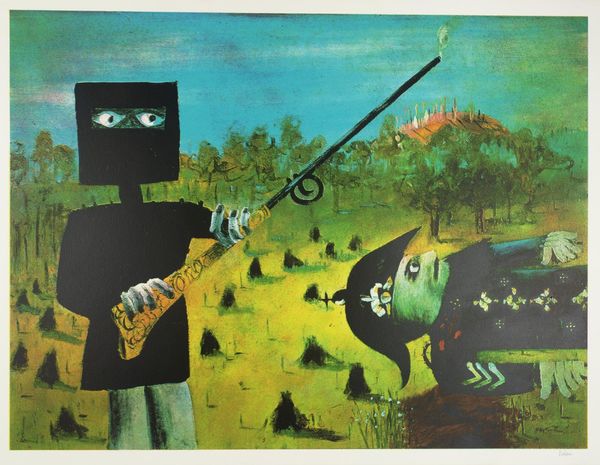
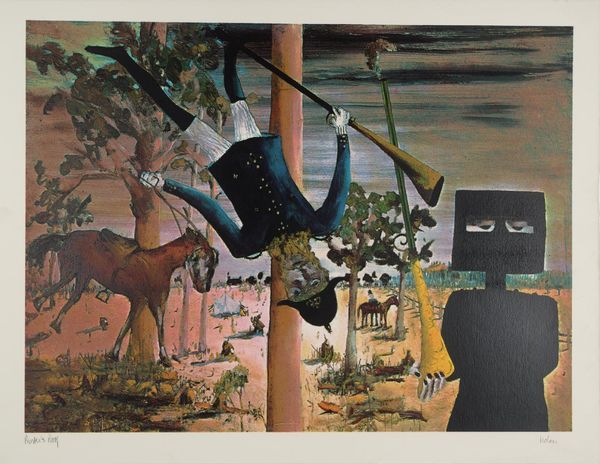
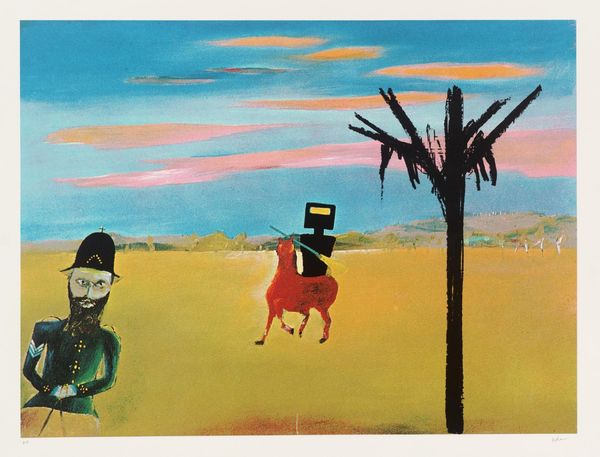
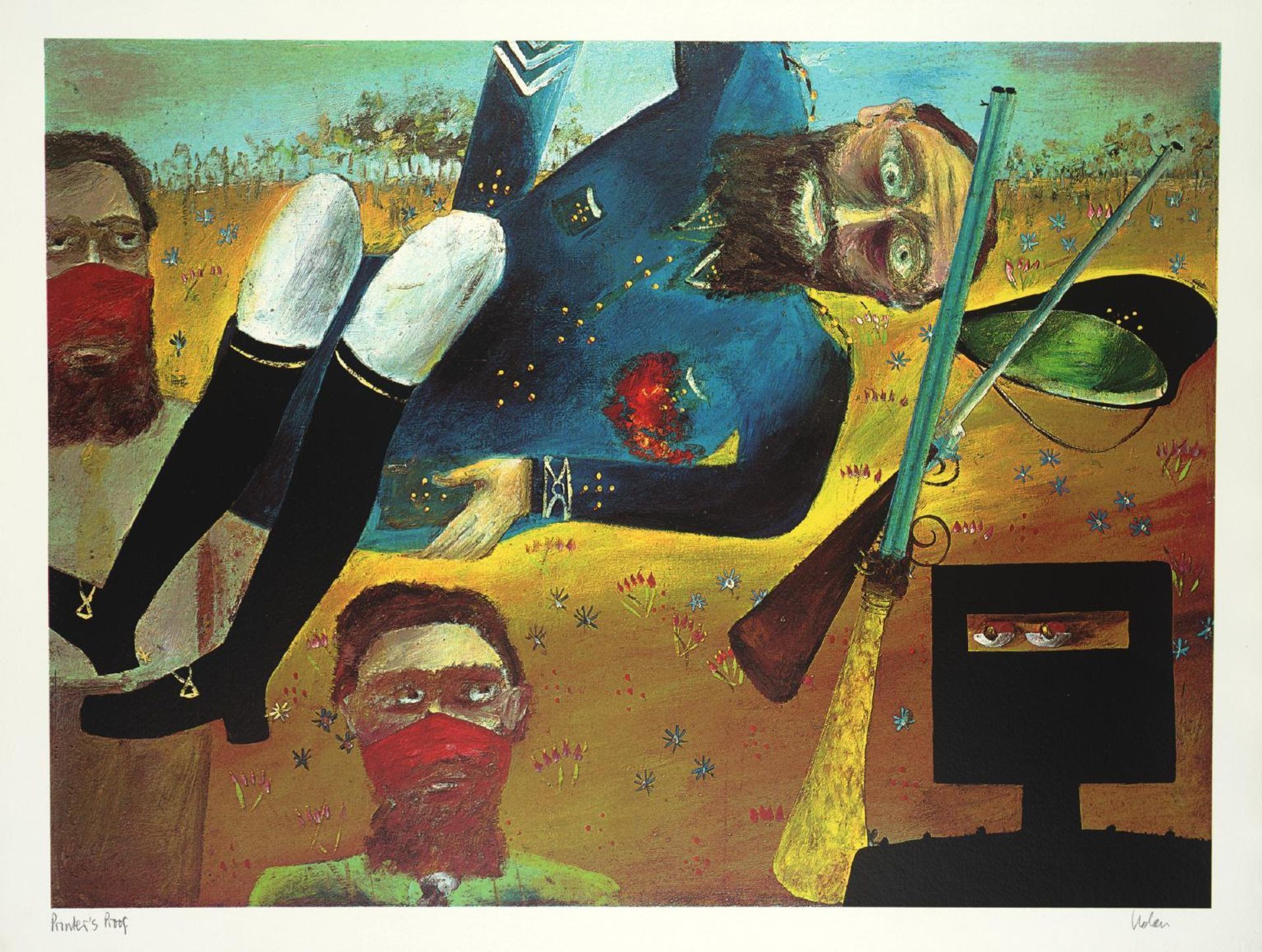
6. Death of Sergeant Kennedy

Listen to curator's interpretation
Curatorial notes
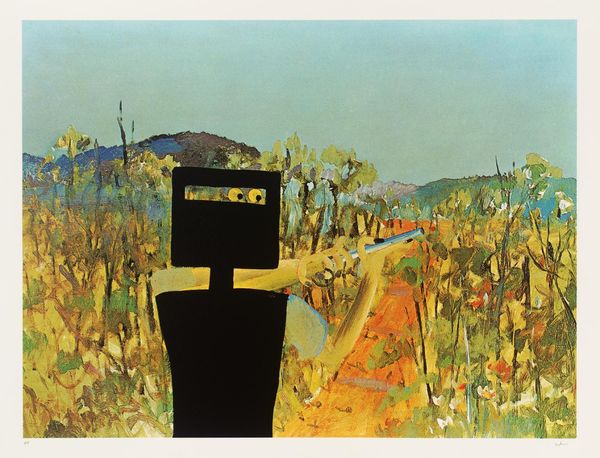
Curator: This unsettling work is Sir Sidney Nolan's "6. Death of Sergeant Kennedy." The image, now part of the Tate Collections, presents a jarring scene. What strikes you first? Editor: The sheer graphic quality, the flattened perspective and lurid colors create an almost theatrical sense of violence. It feels loaded with a critical perspective, doesn’t it? Curator: Absolutely. Nolan, born in 1917, was deeply engaged with the Ned Kelly story and its socio-political resonance. The materials themselves contribute; the stark, almost crude application of paint gives it a raw immediacy. Editor: The facelessness of Kelly contrasts sharply with Kennedy’s exposed face; it's a pointed statement about power, anonymity, and the construction of heroism in Australian history. It’s about more than just the event itself. Curator: Indeed. Nolan uses the very act of painting to explore the complex relationship between myth-making and the realities of colonial violence. Editor: This piece forces us to confront uncomfortable truths about our past, challenging us to reconsider whose stories are told and how. Curator: A potent reminder that art can be a powerful tool for social critique and historical revision. Editor: Agreed. It’s a conversation starter, to say the least.