21 - 1851
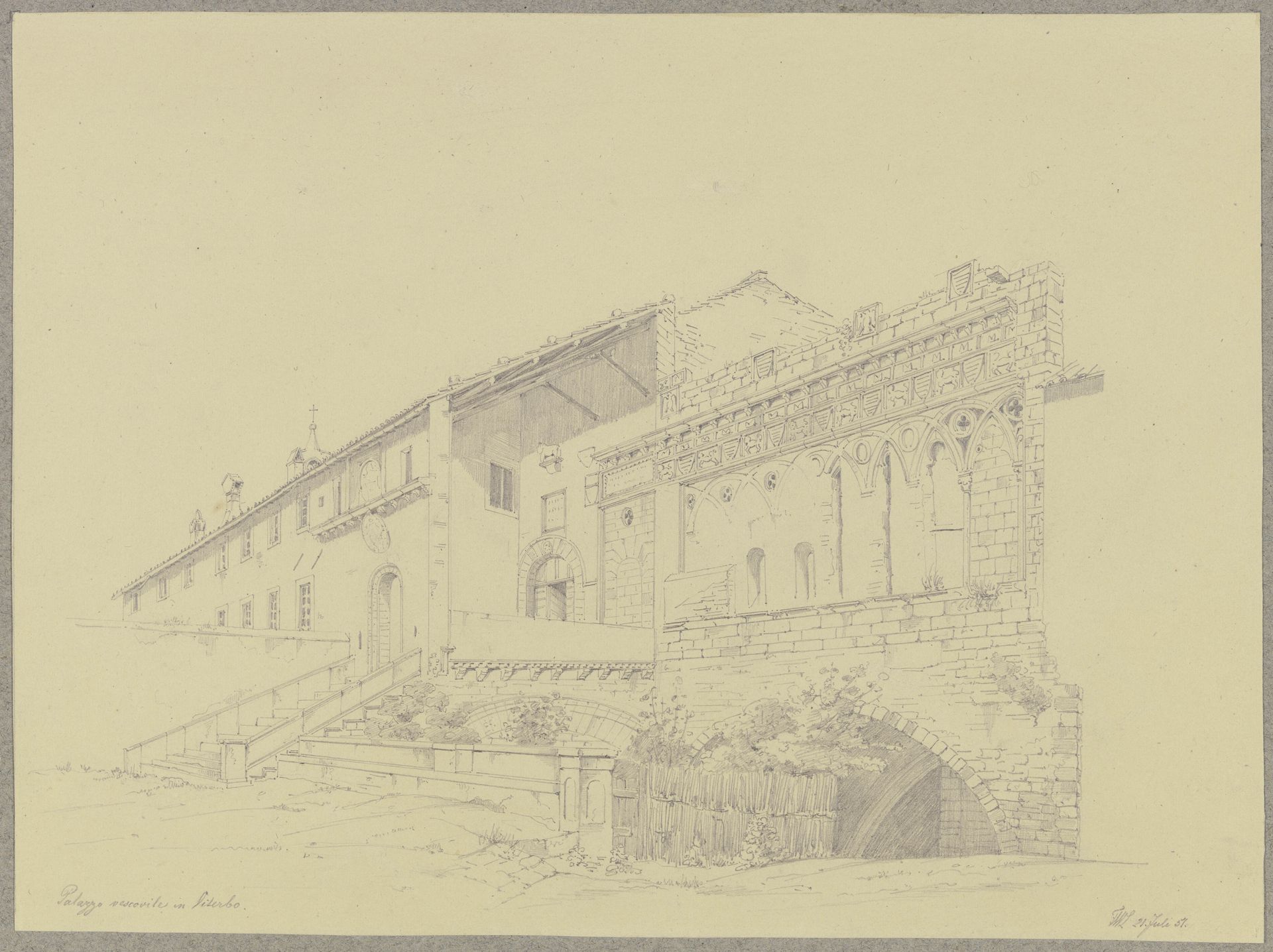
Der Palazzo vescovile in Viterbo


Listen to curator's interpretation
Curatorial notes
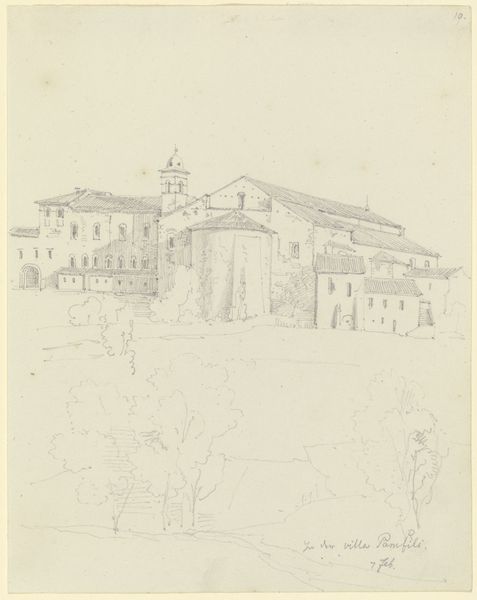
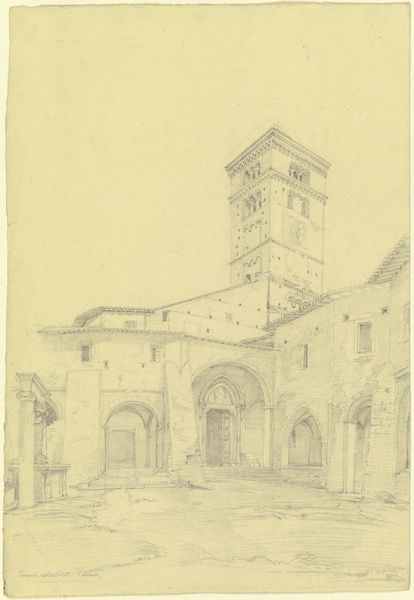
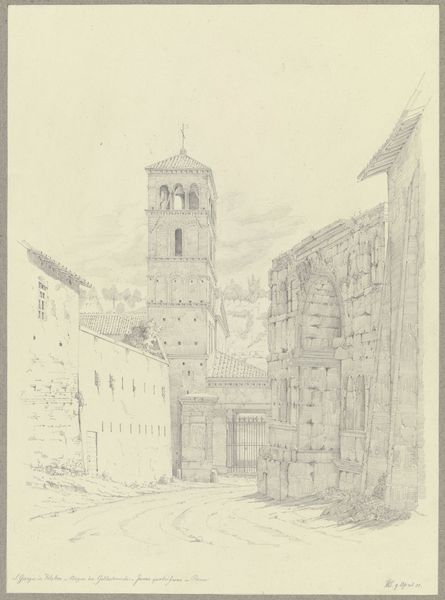
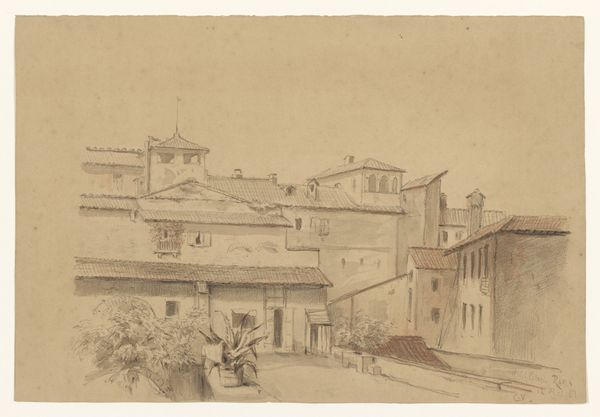
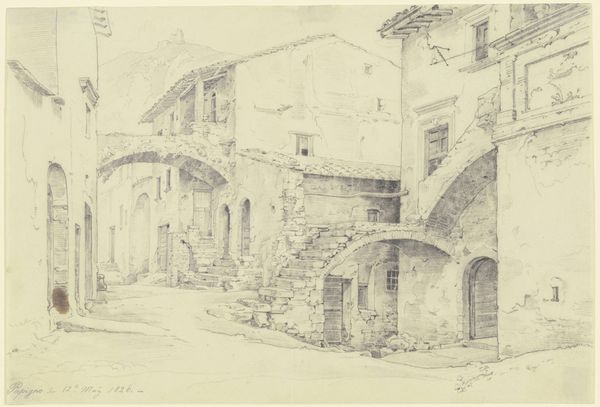
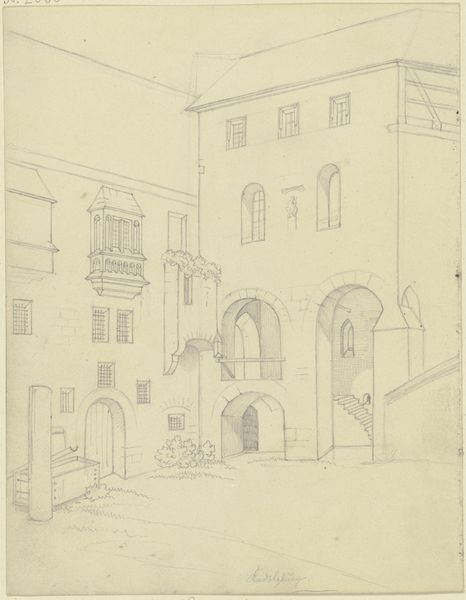
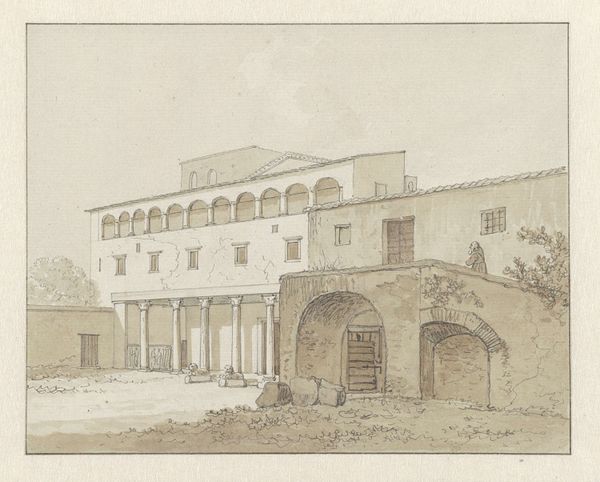
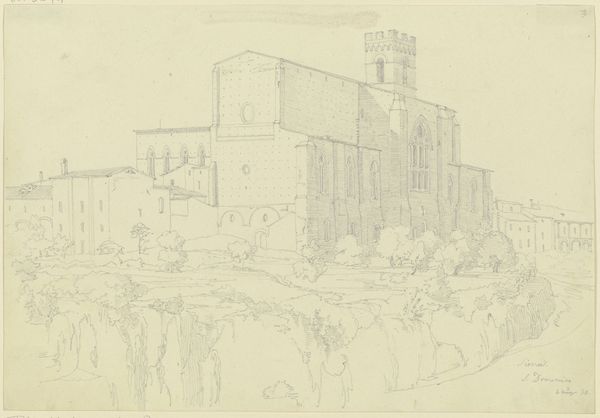
Editor: So, this is Friedrich Wilhelm Ludwig’s “Der Palazzo vescovile in Viterbo,” created in 1851. It’s a pencil and etching piece depicting, well, the Palazzo vescovile. The light touch of the pencil gives it a dreamlike quality, almost like looking at a faded memory. What strikes you about it? Curator: You know, it whispers a story of stillness to me, a frozen moment plucked from a sun-drenched afternoon in Italy. Ludwig's choice of pencil gives it that delicate touch, doesn't it? I can almost feel the warmth radiating from those stones. I’m also wondering about his process – do you get the sense he was working “en plein air”? Editor: It definitely feels like it. I'd imagine he spent hours sitting there, capturing every detail. It's amazing how much information he conveys with just a few lines. Do you think the Neoclassical style influenced his choice of subject? Curator: Absolutely! The grandeur of the architecture, that almost austere elegance…it screams Neoclassicism. And landscape, so often relegated to the background, here takes center stage. You see the tension? The man-made, so meticulously rendered, nestled in this... this suggestion of wildness. Is it really so wild though, or tamed into picture-perfect quaintness? Editor: That’s a good point. There is something intentionally picturesque about it. Perhaps a romanticised view of architecture. What I initially took as quiet simplicity seems more layered the more we talk. Curator: Isn’t it wonderful how art can do that? It’s a reminder that nothing is ever just *one* thing, not even an old building in the Italian sun. I leave with a richer feeling now of longing and contemplation for a very specific experience. Editor: Agreed! I never considered its idyllic simplicity to contain multiple levels. Now it really has given me new questions about landscape and buildings.