plein-air, photography
#
portrait
#
plein-air
#
photography
#
historical photography
Dimensions: height 244 mm, width 303 mm
Copyright: Rijks Museum: Open Domain
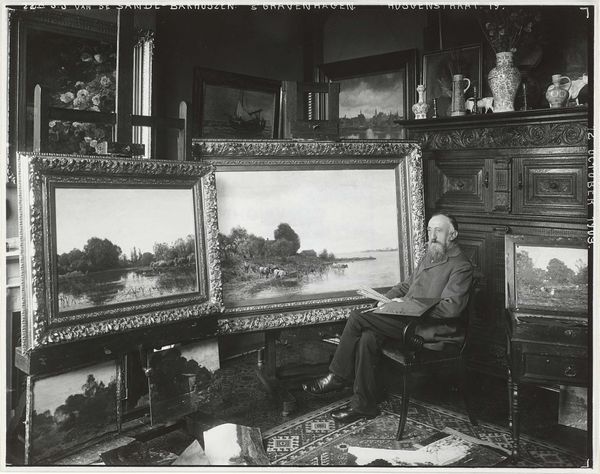
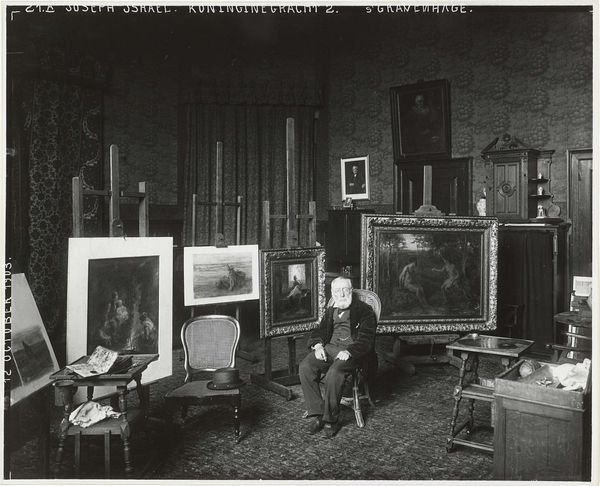
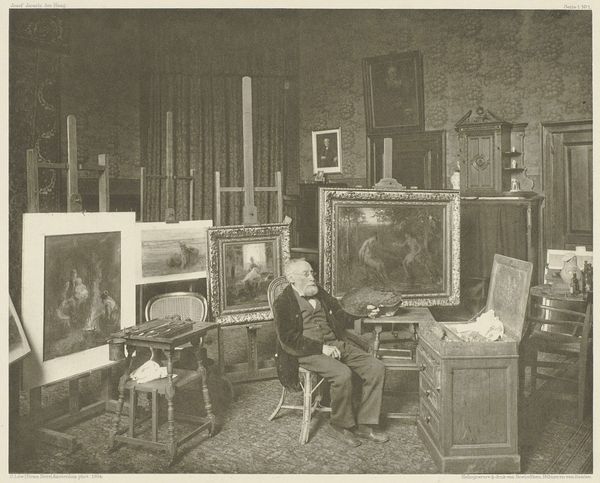
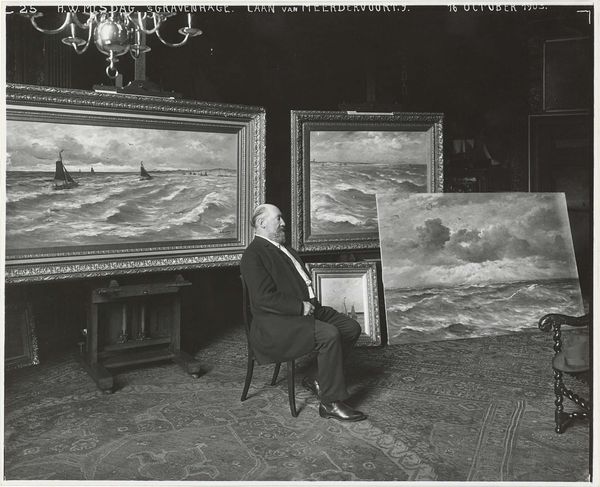
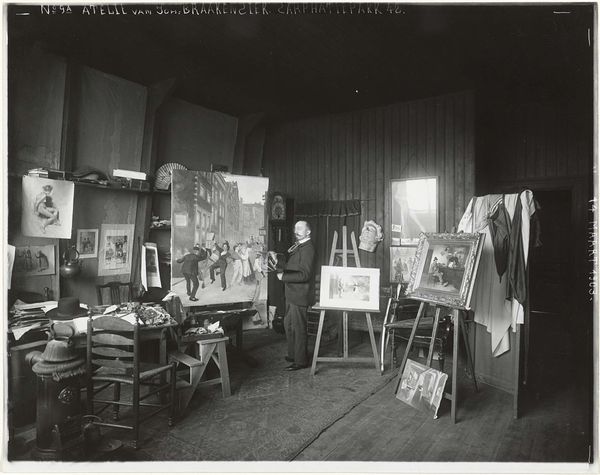
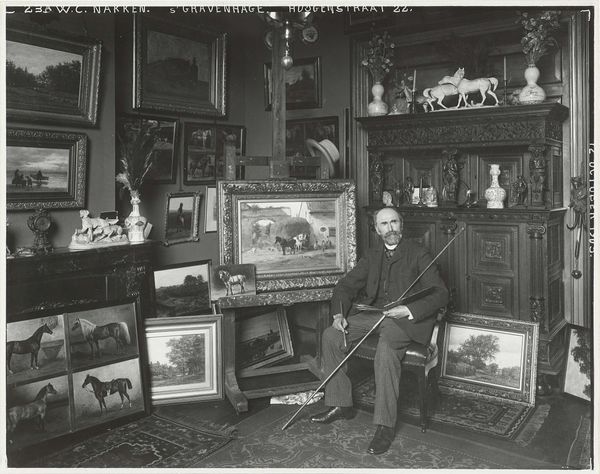
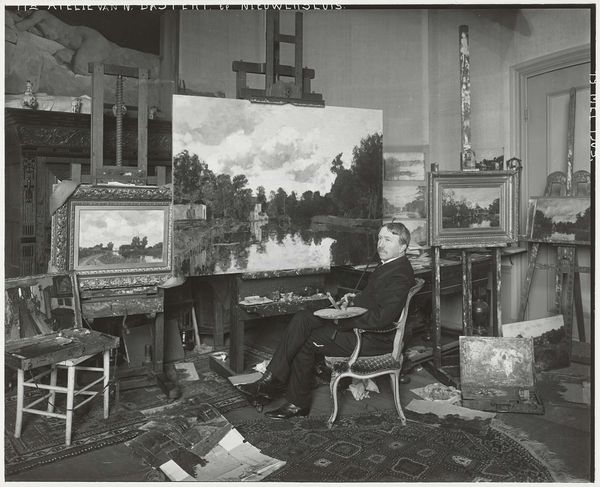
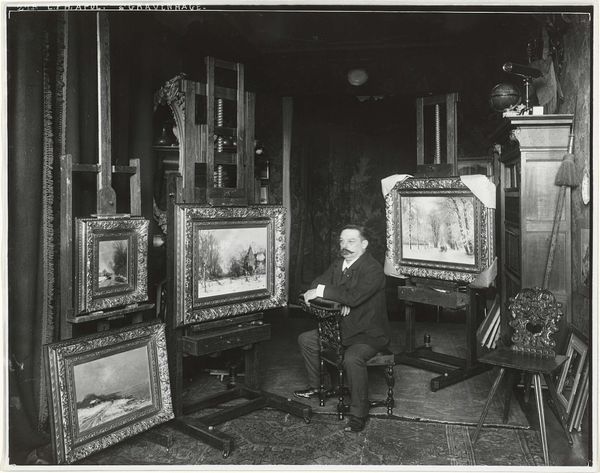
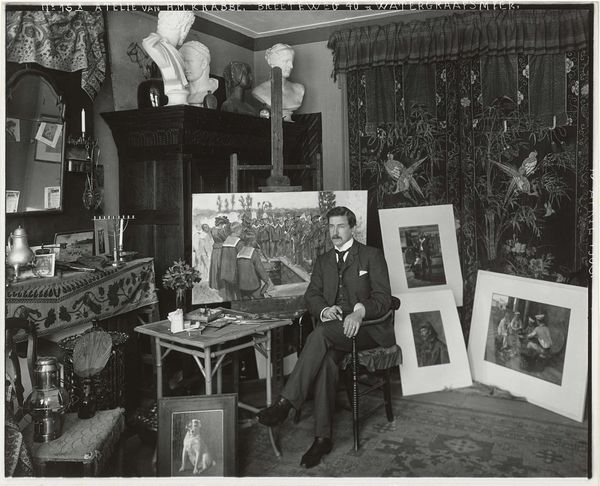
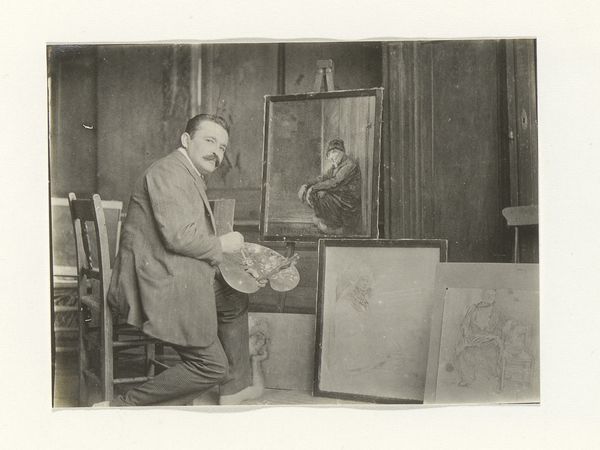
Editor: Here we have "Mari ten Kate in zijn atelier in de Wilhelminastraat 14 in Den Haag", a photograph taken after 1903, showing the artist in his studio. I'm struck by the intimacy of the image. It’s more than a portrait, it’s a glimpse into his creative space. What aspects of the scene grab your attention? Curator: It’s the abundance of *stuff*! The sheer density of paintings, the canvases stacked casually, it whispers stories, doesn't it? Look at his gaze—fixed on that one large landscape—while a flurry of potential landscapes surround him. Each holds a memory, a struggle, a spark of inspiration… I wonder, which one is his favorite? Or the one that eludes him the most? Editor: That’s interesting, because I hadn’t thought about how much a painting is a story of a painter’s struggle to master that single canvas. Do you think the photograph helps illuminate his artistic process, beyond simply documenting his studio? Curator: Absolutely. A photographer enters a painter’s inner sanctum, a dance commences between two forms of vision. Perhaps he seeks to distill the artistic essence into a still moment? Note how even in its stillness, this photograph evokes the palpable *presence* of artistic activity. I sense the fragrance of oils mixing with a quiet, industrious hum. This extends beyond merely documenting what *is*; the camera is *creating*. Editor: So, we're really looking at two artistic viewpoints, captured in one frame. Curator: Exactly! And isn’t that richer and stranger than simply the sum of its parts? This photograph has helped me think about a studio space not as just a workplace, but as an archive of one's evolving perception. Editor: Me too! Thinking of it as an "archive of perception" makes me want to go spend more time observing the painting on the easel...
Comments
No comments
Be the first to comment and join the conversation on the ultimate creative platform.
 Collect
 React
React Comment
More like this