1732
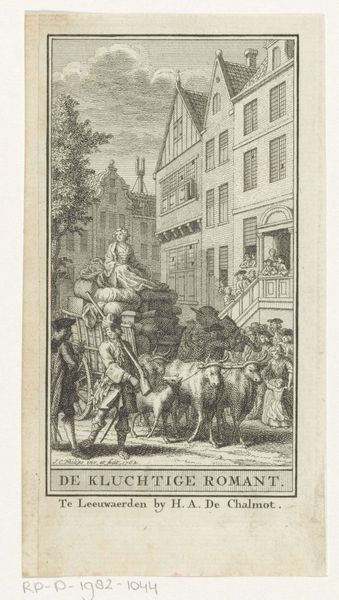
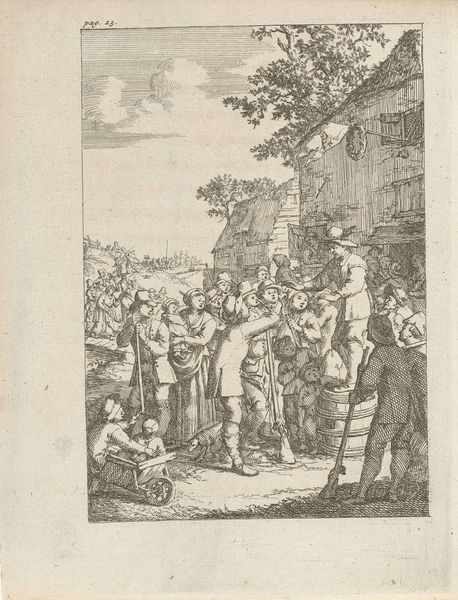
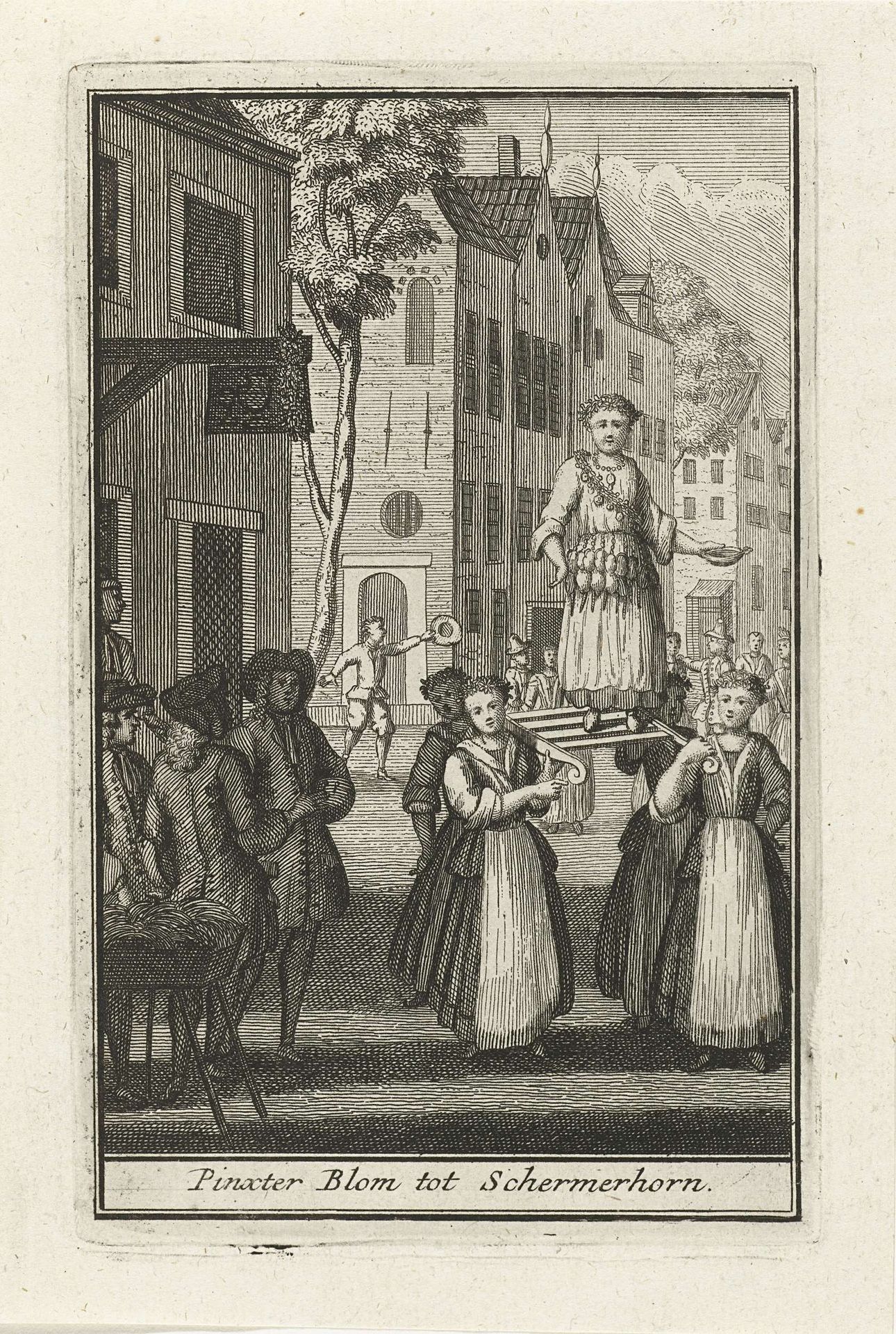
Optocht met de Pinksterblom te Schermerhorn, ca. 1750

Listen to curator's interpretation
Curatorial notes
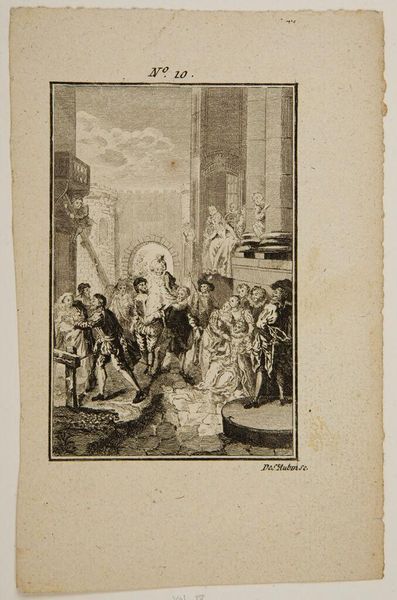
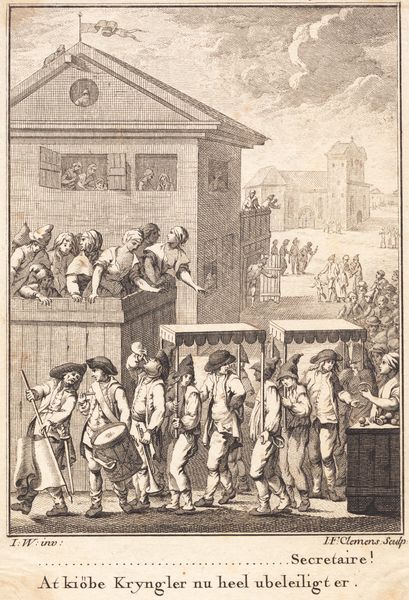
Editor: This is "Procession with the Pentecost Flower in Schermerhorn," an engraving made around 1750 by Abraham Zeeman. There’s such a lively, festive feeling here – you can almost hear the music. What can you tell me about its context? Curator: This engraving offers a window into the social rituals of 18th-century Dutch village life. The "Pinksterblom," or Pentecost Flower, procession, wasn't just a quaint tradition; it was deeply interwoven with community identity and seasonal rhythms. Think of it as a kind of public performance, reinforcing social bonds and expressing shared values. Notice the way Zeeman positions the central figure, elevated and adorned – what statement do you think it is making in regards to that particular person's identity? Editor: It seems like an important social role, almost ceremonial, given how they're being carried through town. Is that fair to say? Curator: Absolutely. These kinds of processions were carefully staged. The choice of who would be the "Pinksterblom," the clothing they wore, the route they took – everything would be imbued with meaning. This public display helps us to understand how visual culture actively shaped societal beliefs at the time, doesn't it? Editor: It really does! I hadn't considered how staged such "everyday" scenes might have been. I’ll look at genre scenes in a completely new way now. Curator: That’s the beauty of looking at art through a historical lens. What initially appears simple often holds surprisingly complex narratives about power, belief, and social practice.