About this artwork
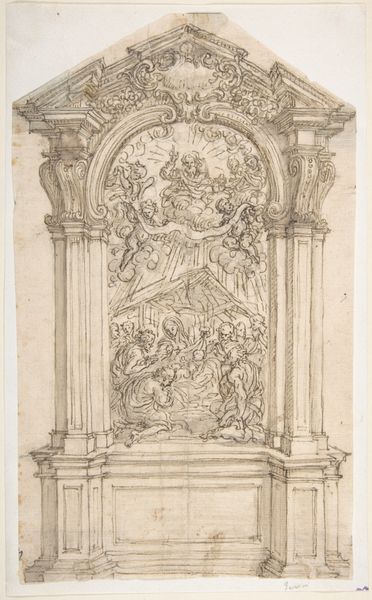
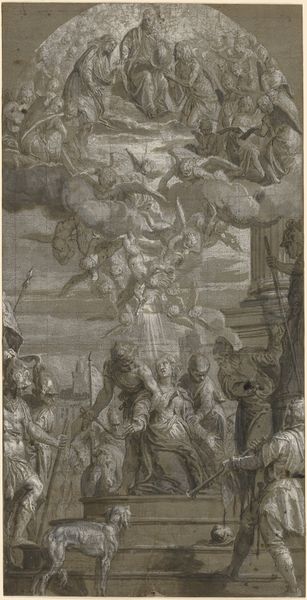
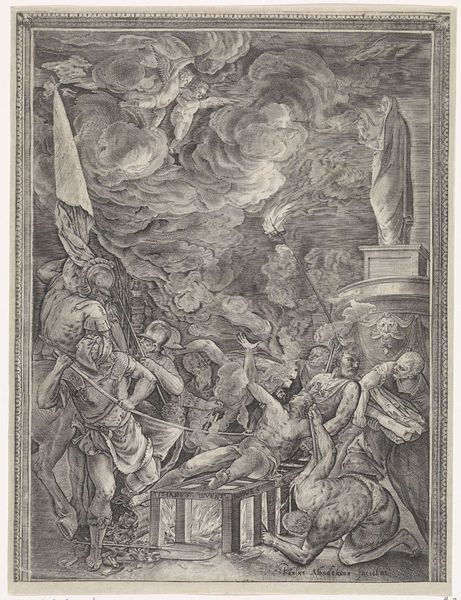
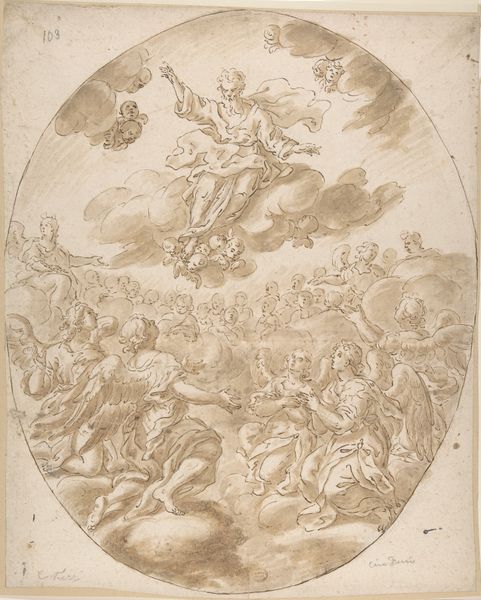
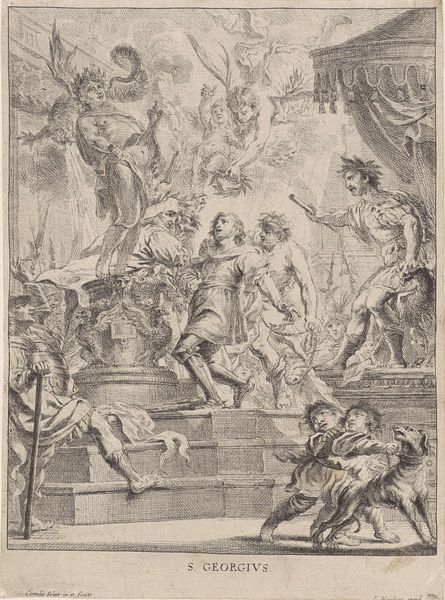
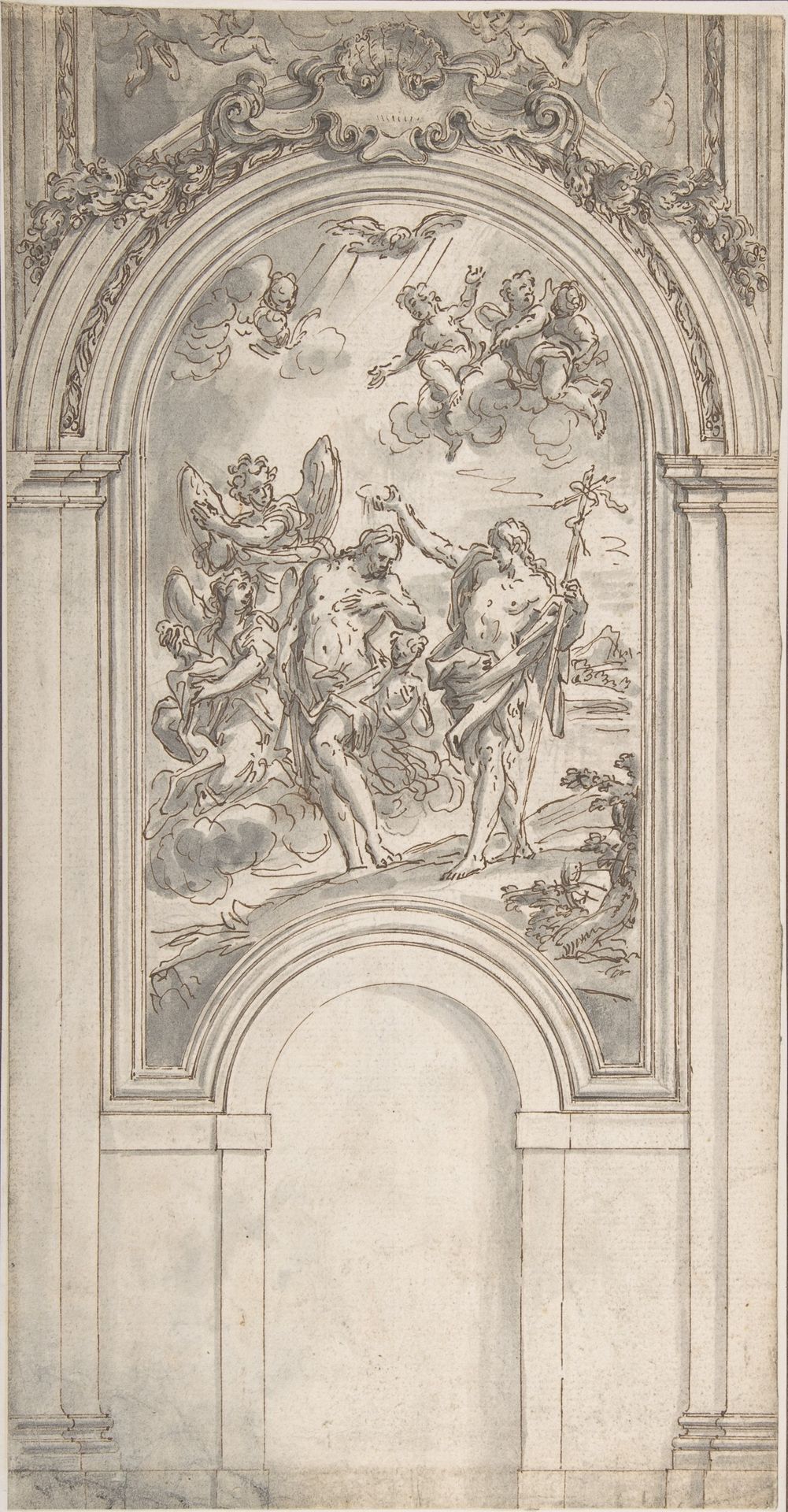
Sir James Thornhill rendered this pen and wash architectural design of the Baptism of Christ, brimming with symbols that echo through time. John the Baptist, with his cross-staff, pours water over Christ's head, a gesture symbolizing purification and spiritual rebirth, an echo of ancient ablutions. Consider the halo, a luminous disc above Christ, first seen in Hellenistic art to denote divinity and power. It reappears in countless forms, from Byzantine mosaics to Renaissance panels. These motifs are not static; they evolve, reflecting the spirit of each age. The emotional power of such a scene is undeniable. The act of baptism touches deep chords within us—a longing for cleansing, renewal, and connection to the divine. This scene, framed by classical architecture, reminds us that symbols are in constant flux. Their meanings are adapted, reinterpreted, and imbued with new life, creating a continuous, non-linear passage through history.
Design for a Baptism of Christ in an Architectural Setting
1700 - 1734

Sir James Thornhill
1675 - 1734
The Metropolitan Museum of Art
Metropolitan Museum of Art, New York, NYArtwork details
- Medium
- drawing, print, pencil
- Dimensions
- sheet: 14 1/2 x 7 1/2 in. (36.8 x 19.1 cm)
- Location
- Metropolitan Museum of Art, New York, NY
- Copyright
- Public Domain
Tags
Comments
Share your thoughts
About this artwork
Sir James Thornhill rendered this pen and wash architectural design of the Baptism of Christ, brimming with symbols that echo through time. John the Baptist, with his cross-staff, pours water over Christ's head, a gesture symbolizing purification and spiritual rebirth, an echo of ancient ablutions. Consider the halo, a luminous disc above Christ, first seen in Hellenistic art to denote divinity and power. It reappears in countless forms, from Byzantine mosaics to Renaissance panels. These motifs are not static; they evolve, reflecting the spirit of each age. The emotional power of such a scene is undeniable. The act of baptism touches deep chords within us—a longing for cleansing, renewal, and connection to the divine. This scene, framed by classical architecture, reminds us that symbols are in constant flux. Their meanings are adapted, reinterpreted, and imbued with new life, creating a continuous, non-linear passage through history.
Comments
Share your thoughts