c. 1455 - 1460
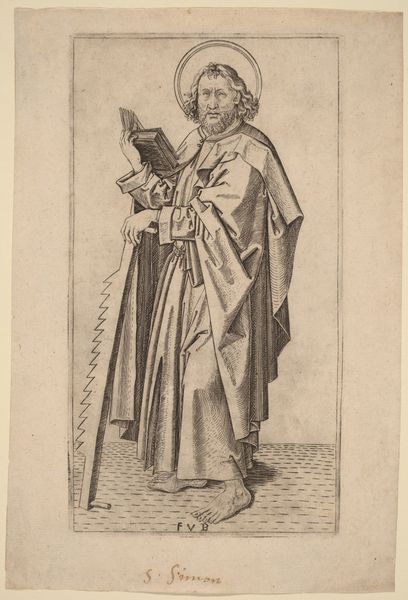
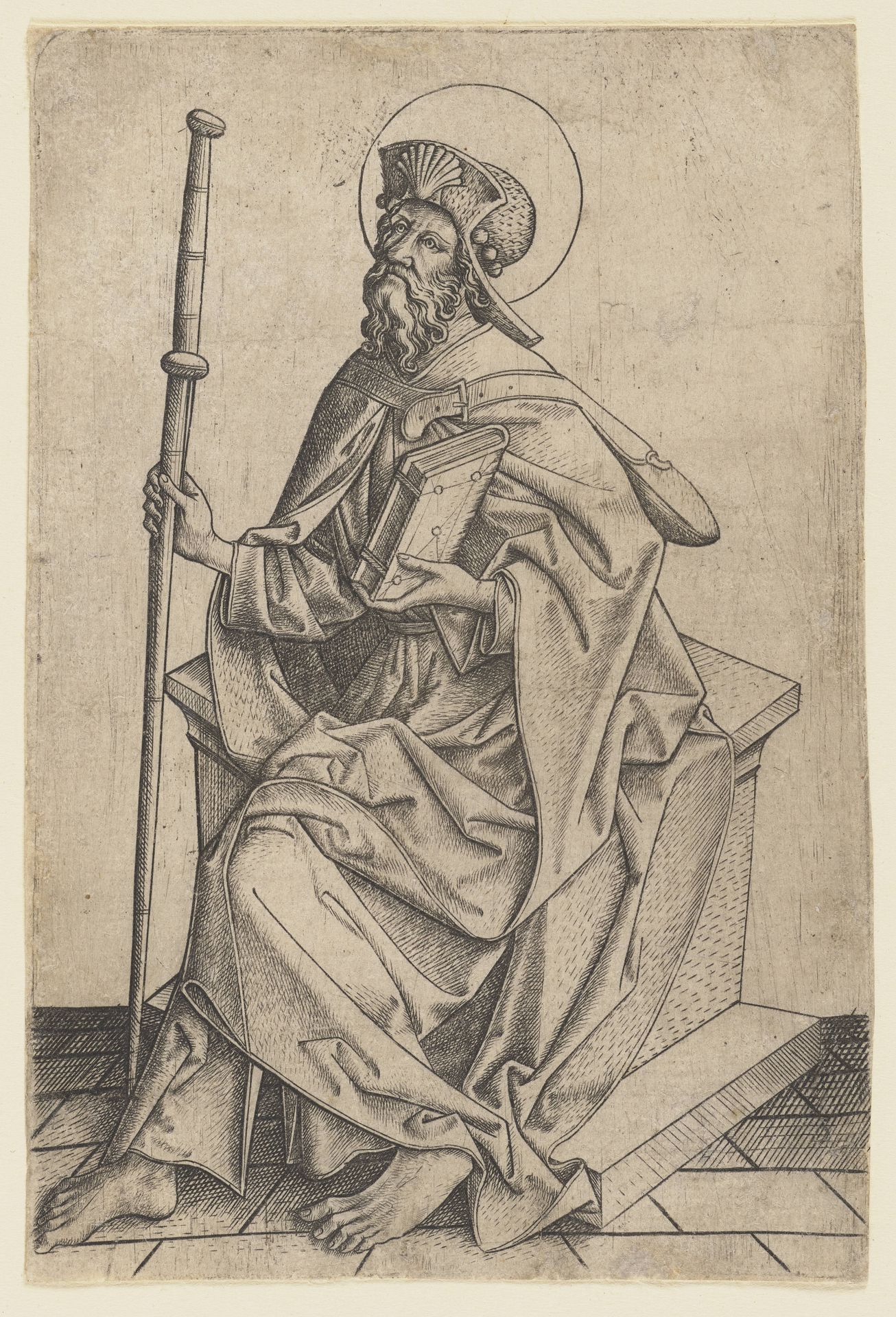
Saint James the GreaterFrom the 'Seated Apostles' series


Listen to curator's interpretation
Curatorial notes
This engraving of Saint James the Greater is part of an anonymous series of seated apostles. The composition emphasizes a play of textures and lines across various surfaces: the saint’s draped robes, the smooth staff, and the tiled floor. This engraving is striking in its formal arrangement; vertical lines of the staff and the saint's upright posture are juxtaposed with the geometric and architectural forms of the tiled floor. The Apostle sits on a stone block holding a book, and his halo is carefully rendered with linear precision. The architectural setting suggests an attempt to ground the divine in a structured, rational space. The lines of the engraving create depth and volume, and it uses a semiotic system where objects like the book and staff are not merely representational, but also carry symbolic weight. The apostle's bare feet can be interpreted as a sign of humility or connection to the earthly realm. The balance between detailed rendering and symbolic representation invites ongoing contemplation. The work reflects a period where religious art began to incorporate elements of classical order and humanist ideals.