painting, paper, watercolor
narrative-art
painting
asian-art
landscape
figuration
paper
watercolor
genre-painting
Copyright: Public domain
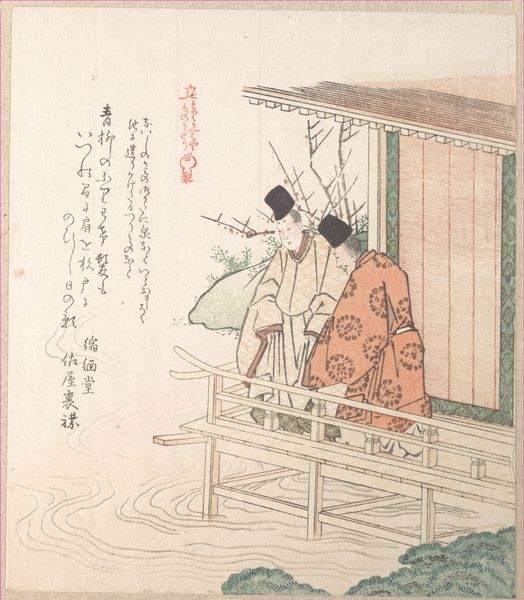
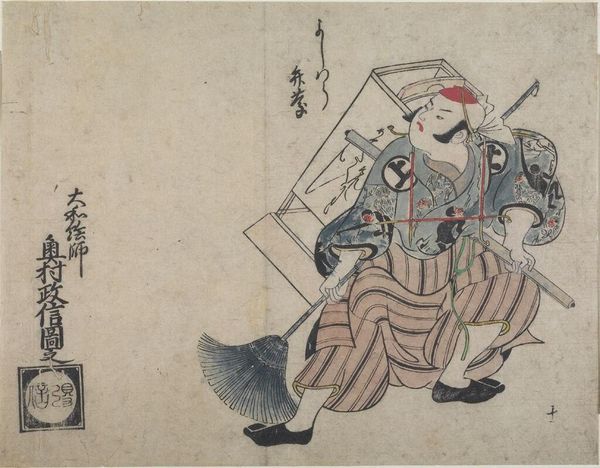
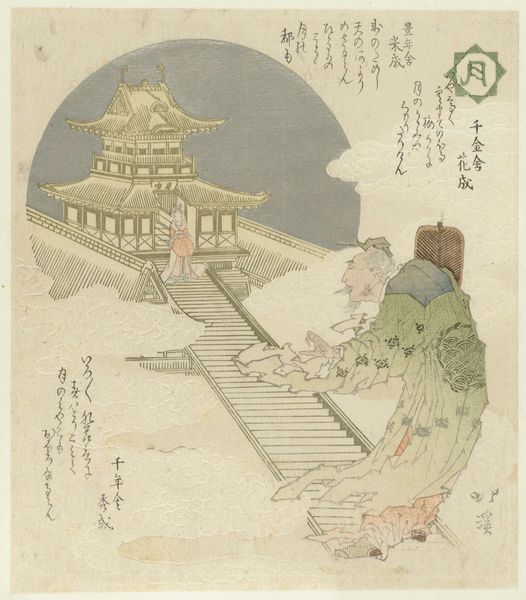
Curator: Ike no Taiga's "Chobenzu," created in 1771 using watercolor on paper, depicts a serene fishing scene. Editor: My initial impression is one of peaceful contemplation. The subdued colors and simple composition evoke a sense of quiet harmony, even though there’s clear figurative movement within the scene. Curator: The figures are deliberately arranged, each engaged in distinct actions that contribute to the overall structure. Note the lines formed by the fishing pole and boat. They draw the eye across the frame, balanced by the figures' postures. The inscription at the right is carefully integrated as part of the total visual picture. Editor: Yet the figures here are clearly part of an economic activity, but one overlaid with complex cultural meanings. These might be merchants or landowners with access to specialized modes of cultural production and philosophical ideals. The fishing, rather than the fishing as such, serves the composition’s themes of class and leisurely contemplation in the face of stark socioeconomic divides. Curator: It's more than just economic, I'd suggest. The technique used is vital. Taiga’s subtle use of color washes brings the image to life. His delicate brushwork allows the figures to have a weight without demanding literal density. There's an exceptional equilibrium of formal design achieved through calculated brushstrokes and compositional structure. Editor: Certainly. But, for me, to separate that skill from the socioeconomic dynamics from which it comes obscures the complete nature of "Chobenzu’s" power as a symbol of artistic expression amid structured power imbalance. Curator: It’s a confluence of factors then. What do you feel about Taiga’s combination of figuration, landscape, and genre? Editor: That amalgamation reveals a subtle narrative about belonging and separation within society, emphasizing the interconnectedness of class and environment. And also access. That it remains, and is interpreted, says a great deal about what still motivates our reading of art history now.
Comments
No comments
Be the first to comment and join the conversation on the ultimate creative platform.
 React
React Comment