
Curatorial notes
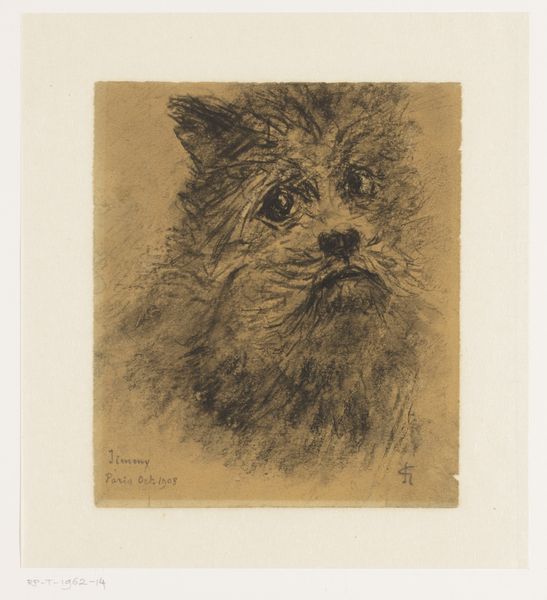
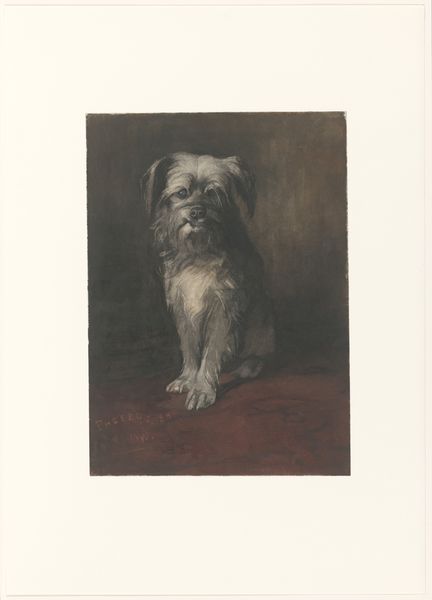
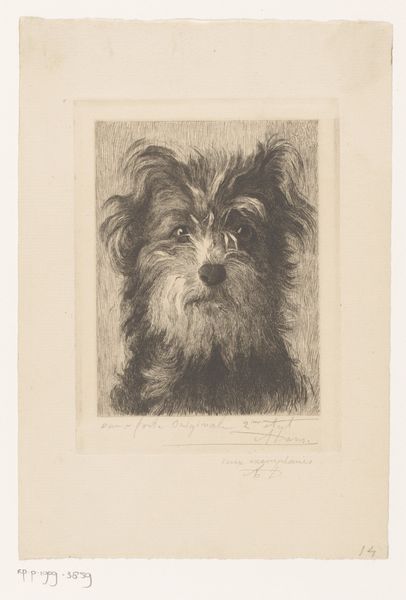
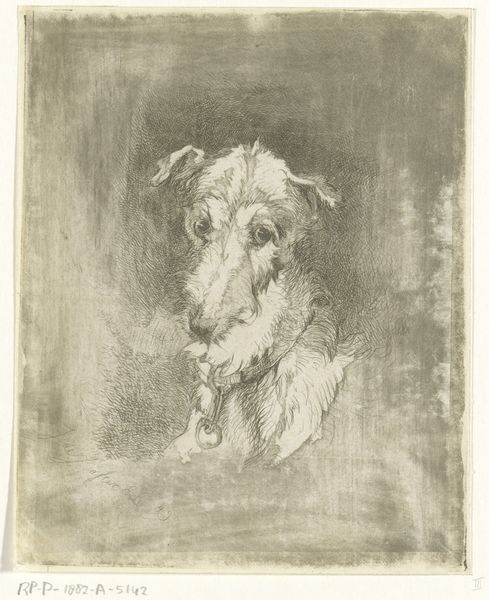
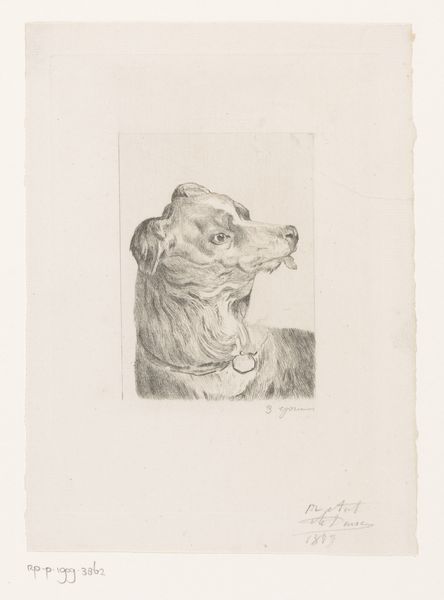
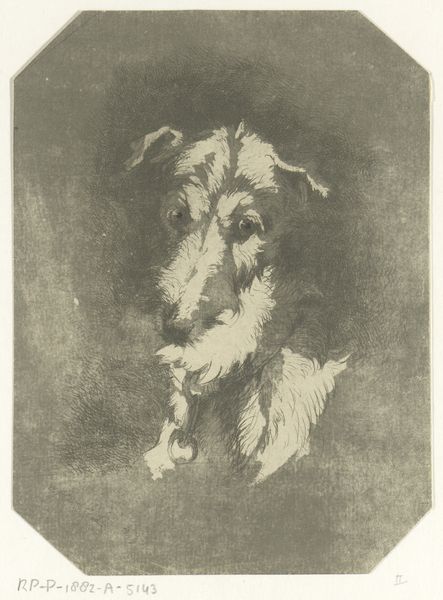
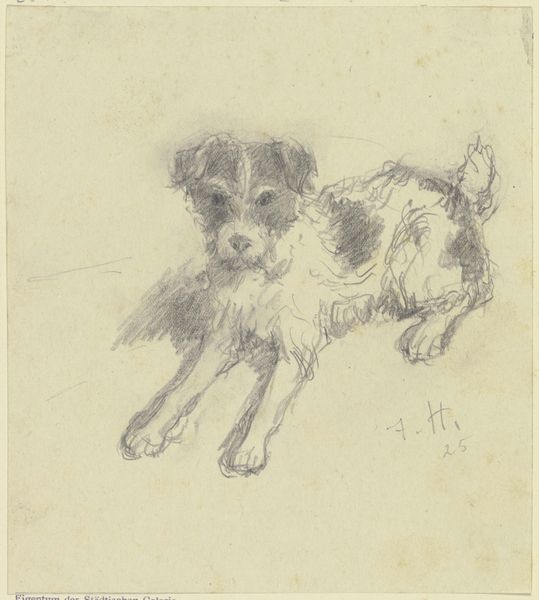
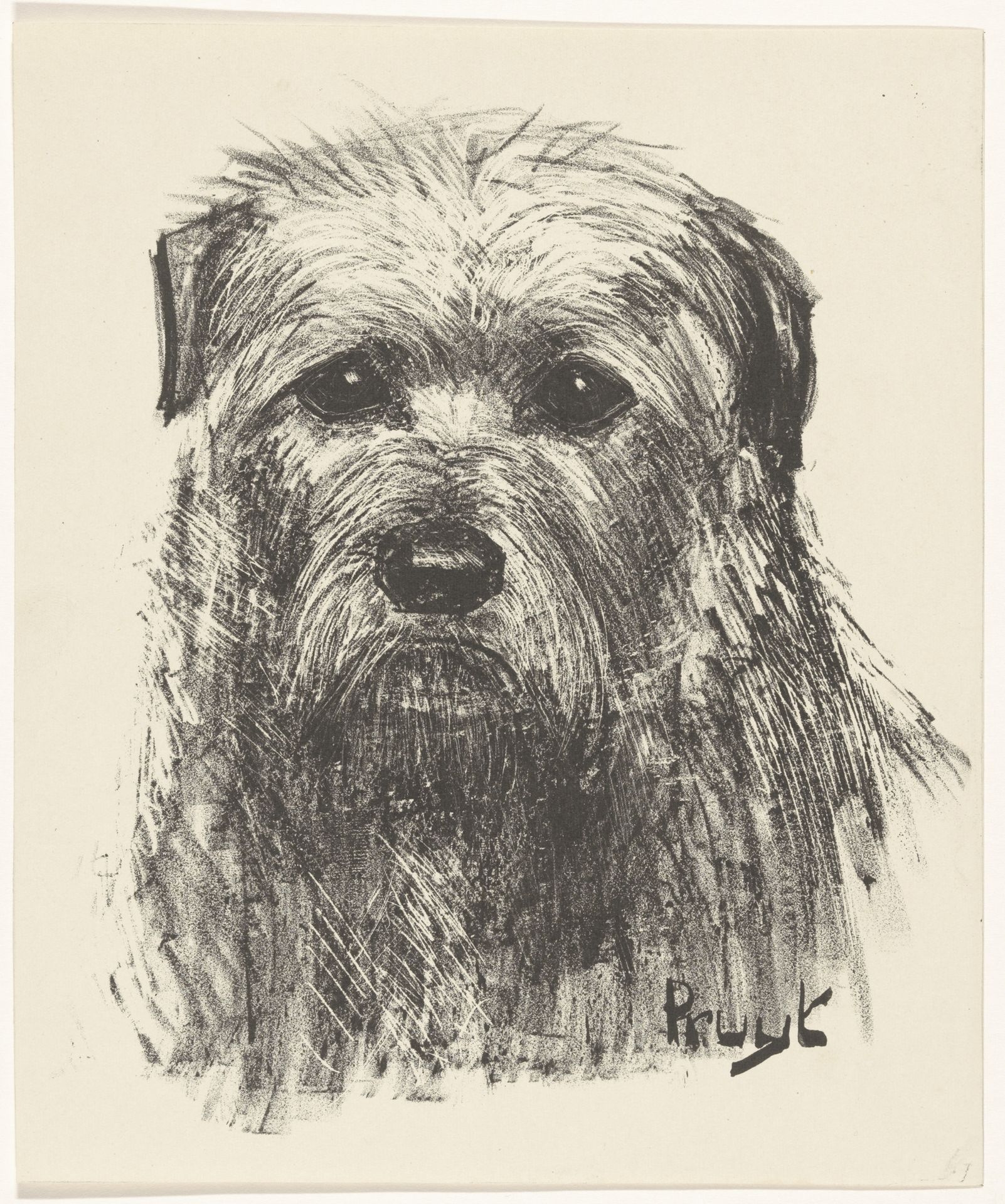
Curator: Standing before us, we have a pencil drawing titled "Hondenkop," which translates to "Dog Head," by Christinus Antonie Pruijt. The artwork dates roughly from 1902 to 1925. Editor: Oh, he looks so mournful! It's a beautiful study in light and shadow though, isn't it? Raw but sweet, makes you just want to pat his head and tell him everything will be okay. Curator: What’s intriguing is the accessibility of the medium—pencil. This democratizes the art-making process. Consider the availability of pencils during that time period; the sitter, even a canine, is memorialized affordably. Editor: I'm seeing this incredible texture! Those rapid strokes really give the impression of rough fur. It feels spontaneous, like a fleeting moment captured with immense skill, but also warmth. Curator: The rapid, almost scribbled lines also tell a story of production, revealing a swiftness and decisiveness on Pruijt's part. The paper is also allowed to peek through, becoming an active agent in defining form. It's far from overworked. Editor: It does carry a quiet narrative doesn't it? Makes me wonder who this dog was, what their life was like. I bet Pruijt was quite fond of him, captured that soulfulness that only someone with affection could. It’s lovely how he elevated such a simple subject with his sensitivity. Curator: Exactly. Everyday subjects, elevated through skill, and made accessible through material—a testament to artistic ingenuity that transcends time. Editor: It truly is touching how he uses those humble materials to portray something so tender, almost ephemeral. What do you know, sometimes less really is more.