
Curatorial notes
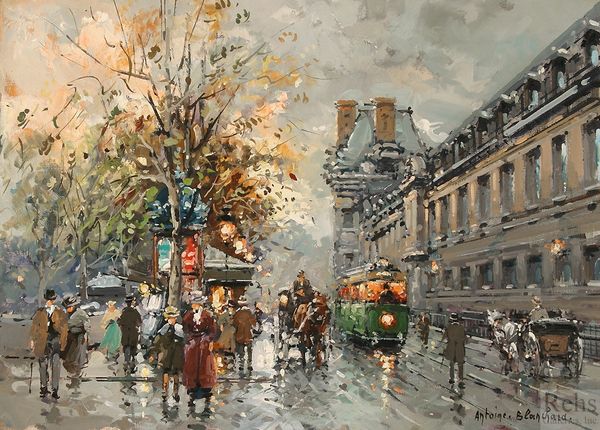
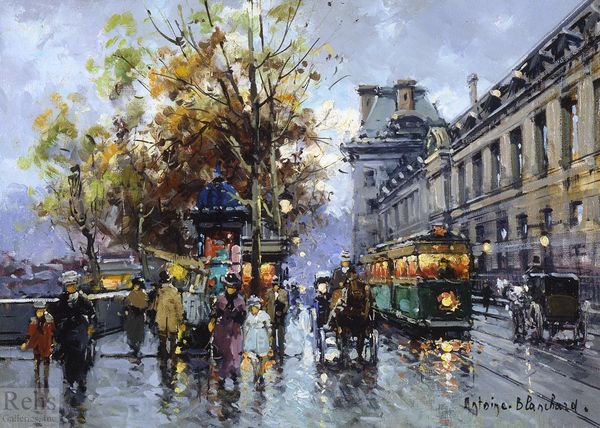
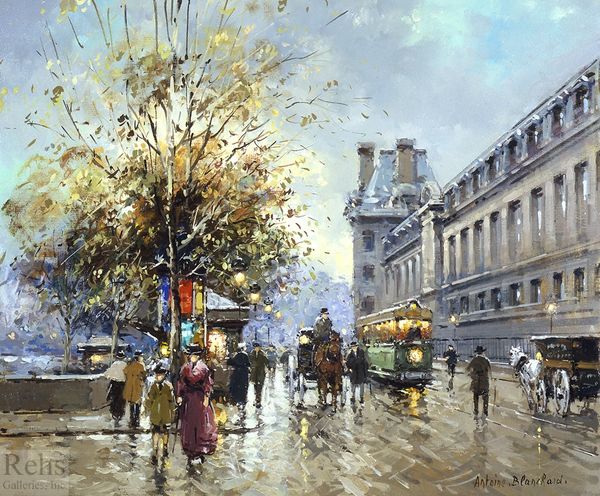
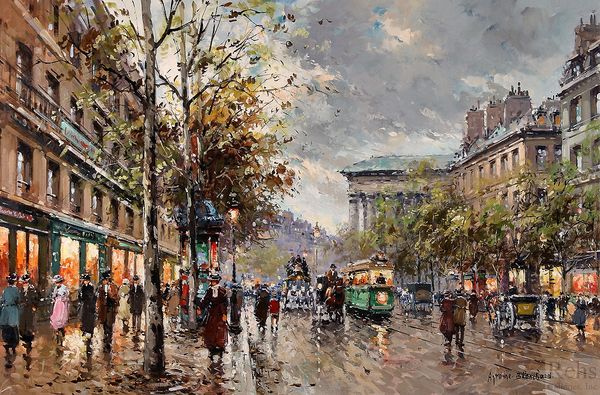
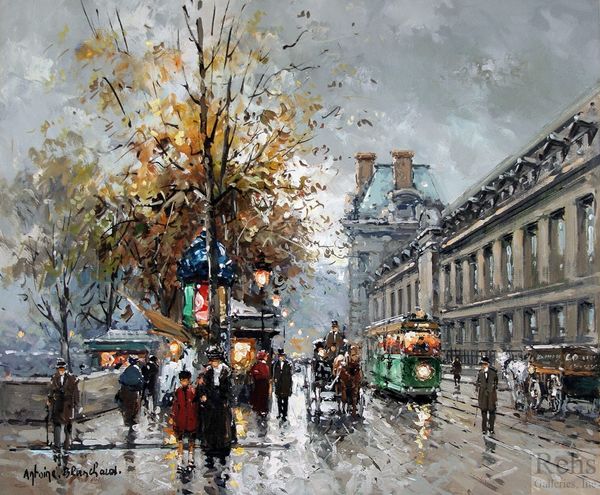
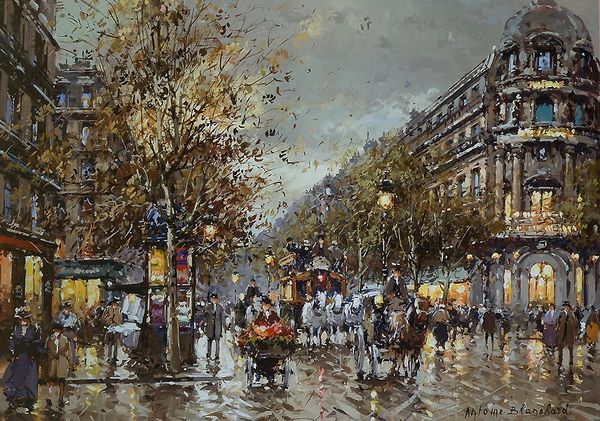
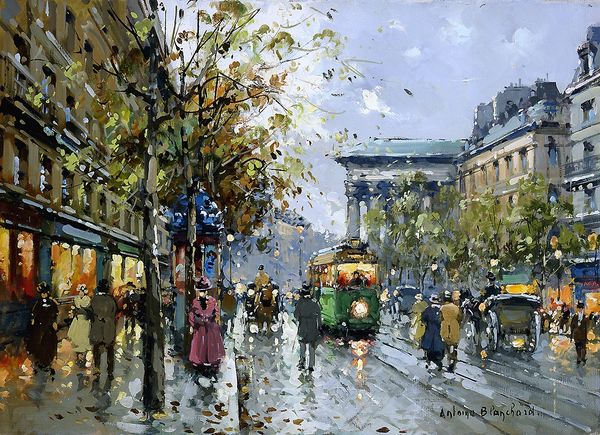
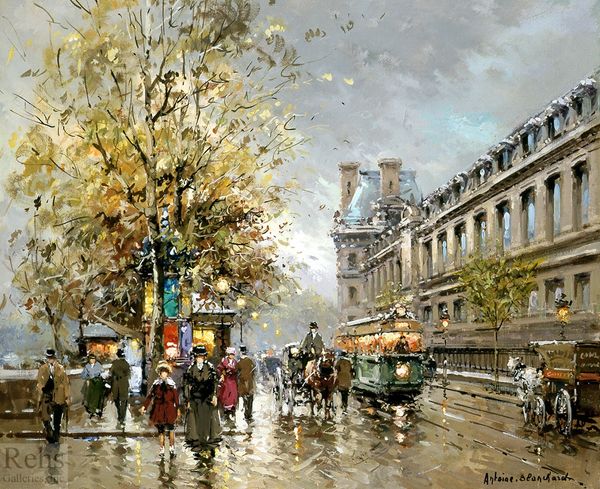
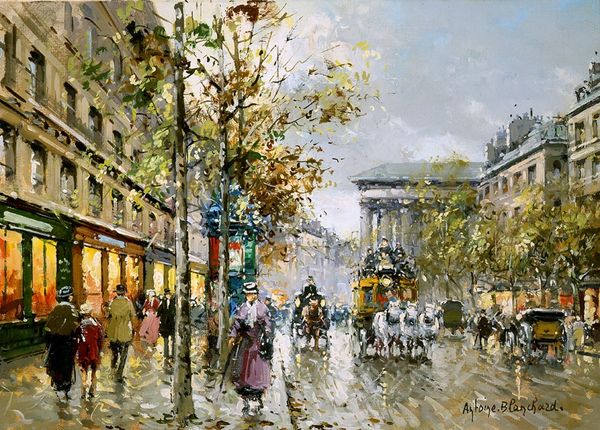
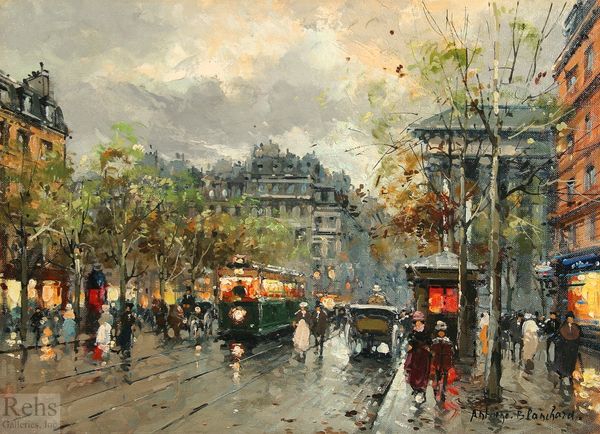
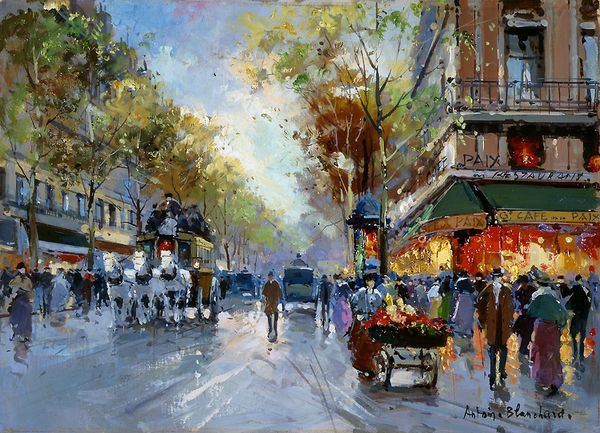
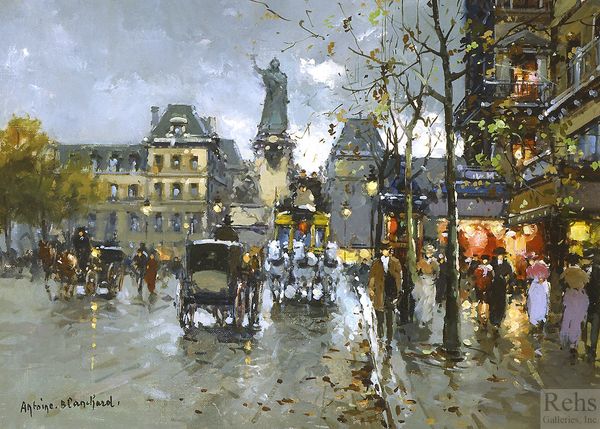
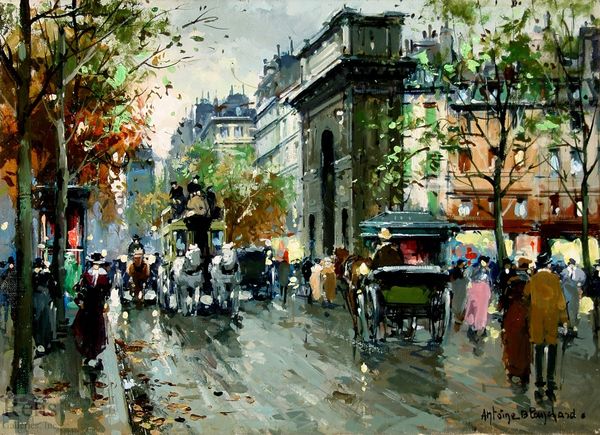
Editor: Antoine Blanchard's oil painting, "Porte St. Denis," presents a vibrant cityscape. The scene, bustling with people and transportation, almost feels like a snapshot of a moment in time, capturing the energy of city life, despite a rather grey sky. How would you interpret the social narrative unfolding in this piece? Curator: Considering the socio-political context, the piece presents a sanitized vision of Parisian life. The 'flâneur,' or urban wanderer, becomes a key figure. Blanchard, through his impressionistic lens, showcases the rise of consumer culture and leisure, appealing to a bourgeois audience. But what’s left out? Editor: I suppose it might be a more critical, less picturesque view. Curator: Precisely. Where is the industrial grime? Where are the stark realities of poverty that existed alongside this 'belle époque'? Blanchard is crafting an image, a product for consumption, if you will. He's selling a dream of Paris. Look at the light reflecting on the wet street; doesn't it create a sense of almost theatrical grandeur? How might the painting have functioned as propaganda of sorts? Editor: That’s interesting. It really reframes the image; I was mostly drawn in by its atmosphere! Now I see how carefully constructed it is to omit any unflattering realities. Curator: Exactly. Art often functions within these frameworks, either reinforcing or subverting dominant ideologies. Appreciating the 'Porte St. Denis' goes beyond admiring its aesthetic qualities; we have to critically engage with what it presents and what it strategically leaves unseen. It's a negotiation of reality. Editor: This has given me a lot to consider regarding the artist's decisions and the socio-political impact this work might have. Curator: It invites a continuous questioning of not just what we see, but why we see it that way. That is, in my opinion, what makes it worthwhile.